- 2B / BW Shalimar Bagh, Opp. BQ Market, Near DLF Mall New Delhi - 110088, India.
- :+91-9312-871-070

Manufacturers, Exporters, Suppliers of RO Antiscalants High Silica
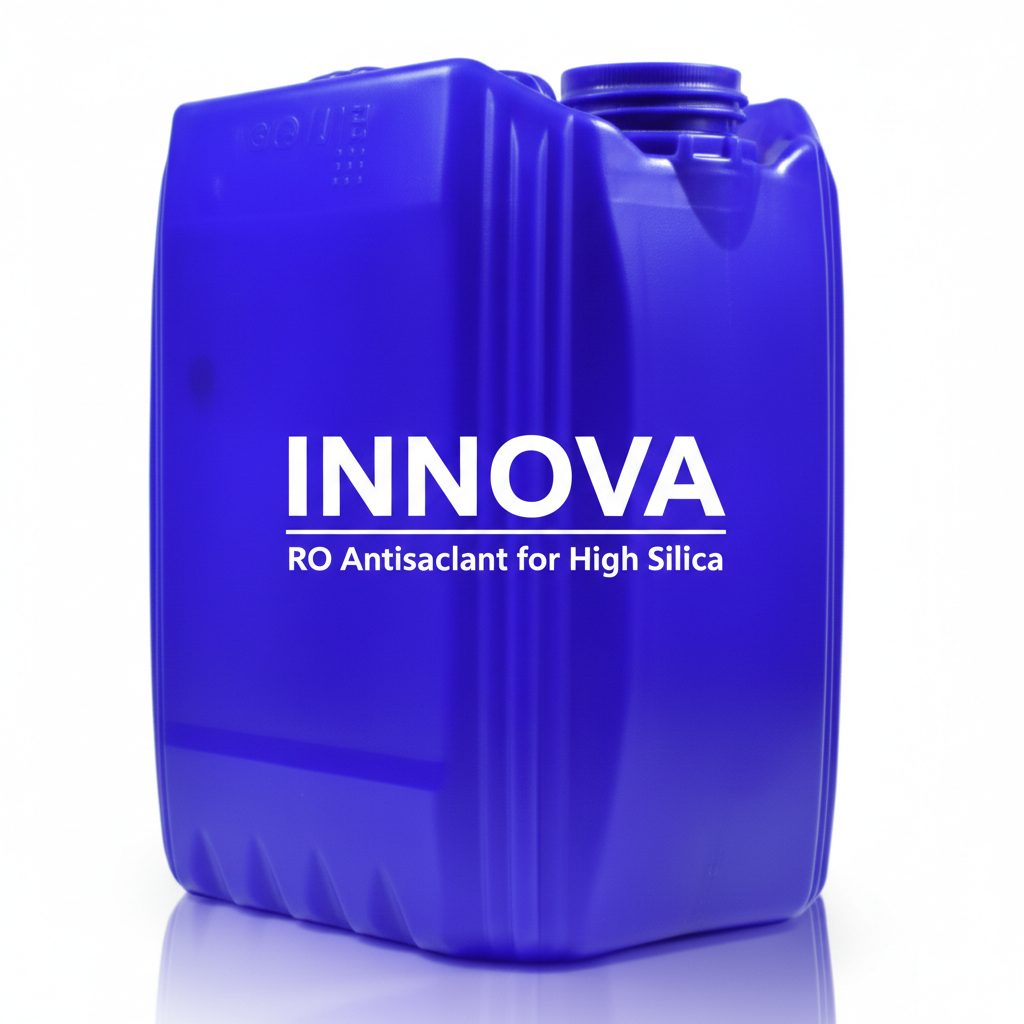
High Silica RO Antiscalant for Andhra Pradesh Coastal & Inland Water
Andhra Pradesh has two very different water problems, and both of them feed silica into RO systems. Along the Visakhapatnam and Kakinada coast, the challenge is saline intrusion mixed with dissolved silica from marine sediments. Inland, across the Godavari and Krishna delta belts around Rajahmundry, Vijayawada and Guntur, the problem is different — deep borewell water with naturally high silica, moderate hardness and variable iron. Then there's the granite and quartzite belt near Nellore and Tirupati, where silica levels in tube wells routinely cross 50 ppm before any concentration. Our high silica RO antiscalant is formulated to handle all three of these AP water profiles without falling back on a single generic chemistry.
Silica is not like calcium carbonate scale. It doesn't dissolve off with a simple acid CIP — once it polymerises on the membrane surface, it forms a glass-like layer that resists most cleaning chemicals. The Andhra Pradesh plants that struggle most are those running high recovery on silica-heavy feed without realising the risk until differential pressure has already climbed. Our formulation interrupts silica at the nucleation stage, keeping it dispersed through the concentrate path so it exits with the reject stream instead of anchoring to the membrane. It performs reliably at LSI up to +2.5, reject iron up to 1.5 ppm, and reject silica up to 325 ppm (mg/l) — a range that covers most heavy-duty AP installations, coastal or inland.
What This Antiscalant Does for Andhra Pradesh RO Plants:
- Coastal & Inland Silica Control: Handles both saline-intruded coastal water near Visakhapatnam and high-silica inland borewells across the Godavari-Krishna belt.
- Iron & Manganese Handling: Locks up dissolved iron commonly found in AP tube wells before it oxidises into red-brown membrane staining.
- Higher Recovery on Tight Water: Lets AP plants run at aggressive recovery on constrained water without risking silicate scaling.
- Broad Membrane Compatibility: Safe with polyamide, TFC and NF membranes used across Andhra Pradesh industrial RO systems.
- Biodegradable Liquid: Organic formulation — easier to handle and discharge than heavy phosphonate-only chemistries.
- Longer CIP Intervals: Extends the gap between cleaning cycles and element replacements, cutting downtime for AP operators.
Dosing Guidance for Andhra Pradesh Water Conditions:
Inject the antiscalant continuously into the RO feed line downstream of pretreatment and upstream of the cartridge filter. Because AP water varies sharply between coastal, delta and inland granite regions, dose should be set from your own feed analysis rather than a fixed figure. Typical working ranges:
- Delta belt, moderate hardness: 2–3 ppm covers alkalinity and hardness control for Godavari-Krishna delta supply water.
- Iron-bearing inland borewells (0.5–1.0 ppm): Raise to 5–7 ppm to hold iron in solution and prevent oxide fouling around Vijayawada and Guntur.
- High silica feed (reject up to 325 ppm): Around 10–15 ppm is needed to keep silica fully dispersed — common requirement in Nellore and Tirupati granite belt plants.
Storage & Handling: Keep the product in its original sealed drum, stored cool and dry at your Andhra Pradesh site, away from direct sun and heat. Do not dilute with untreated water. For a dose schedule matched to your specific feed analysis, refer to our Technical Data Sheet (TDS) or speak with our technical team — we support plants across Visakhapatnam, Vijayawada, Guntur, Nellore, Tirupati, Rajahmundry and Kakinada.