- 2B / BW Shalimar Bagh, Opp. BQ Market, Near DLF Mall New Delhi - 110088, India.
- :+91-9312-871-070

Manufacturers, Exporters, Suppliers of Drinking Water Disinfectant
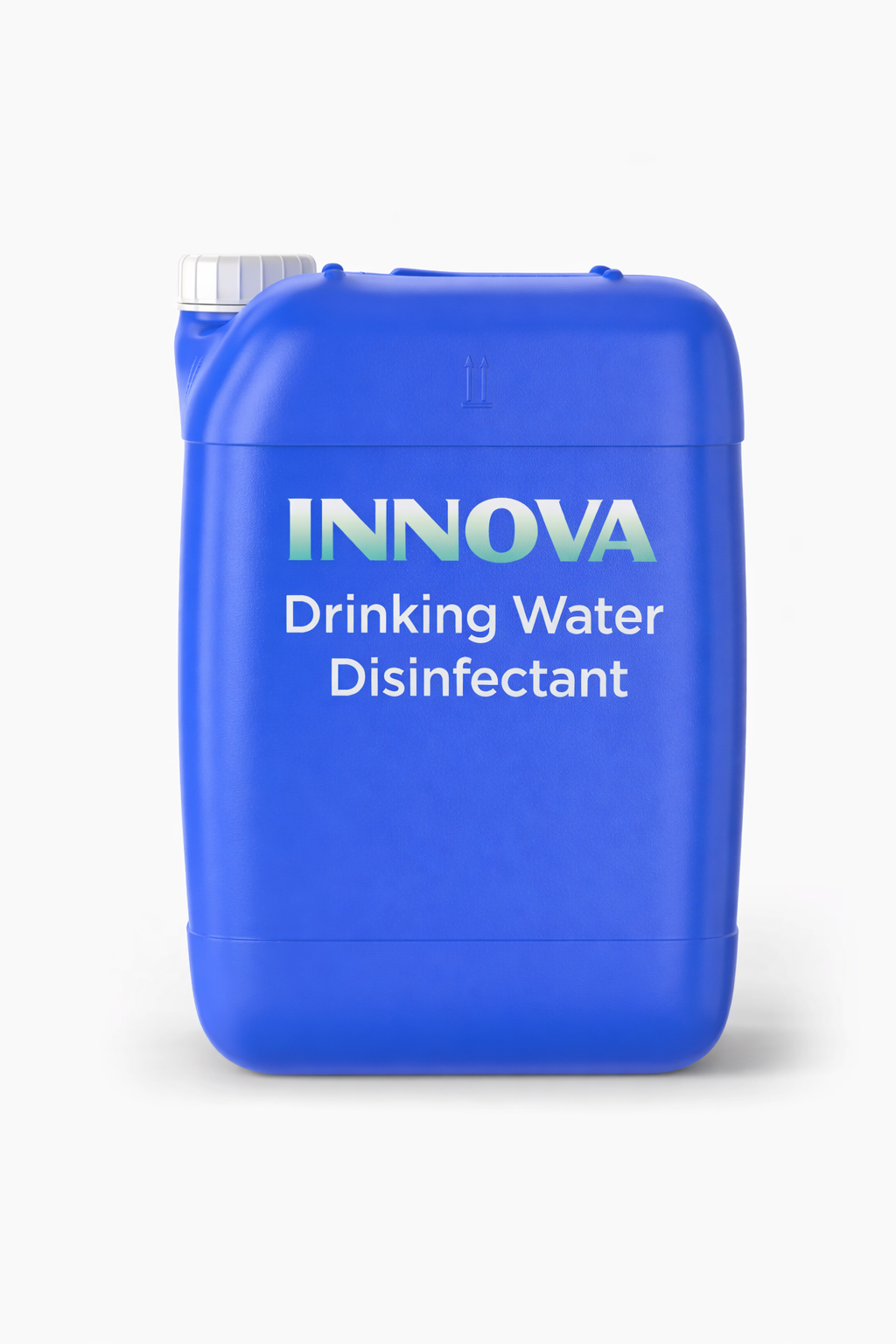
Silver-Hydrogen Peroxide Drinking Water Disinfectant for Badli Delhi
Badli has a water problem that most of Delhi shares but few neighbourhoods feel as sharply. Piped supply is intermittent, tanker water is unreliable, and groundwater from local borewells routinely shows TDS above 1,900 mg/l and hardness over 1,000 mg/l — numbers that make untreated water unsafe for daily drinking. Residents in Samaypur Badli and surrounding North Delhi areas have reported discoloured, foul-smelling water for years, and the recent sewer network work has made contamination complaints more frequent. For households and industrial units that cannot rely on the tap, our silver-hydrogen peroxide based drinking water disinfectant is a practical way to make stored and source water safe — without altering taste, colour or odour.
The chemistry is different from chlorine in an important way. Silver hydrogen peroxide breaks down into water and oxygen, leaving no toxic residue, no chlorinated by-products and no lingering chemical smell in the treated water. That makes it suitable for direct potable use, cooking, and food handling — a real advantage in Badli's residential colonies and the many food processing and packaging units operating in the industrial area. It stays effective even when the source water is cold, and it works across the entire storage and distribution line, not just at the point of entry.
What This Disinfectant Delivers for Badli Users:
- Broad-Spectrum Kill: Eliminates bacteria, viruses, algae and fungi — covers the microbial contamination risk common in Badli's tanker and borewell water.
- Safe for Direct Drinking: Leaves no toxic residue — safe for potable use in homes, factories, hotels and canteens across Badli.
- No Taste or Odour Change: Unlike chlorine, it does not alter the natural taste, colour or smell of water.
- Cold Water Effective: Remains active at low temperatures — useful in Delhi's winter months when other disinfectants slow down.
- Non-Corrosive: Safe for stainless steel pipelines, storage tanks and RO system components.
- Multipurpose: Suitable for drinking water, process water, fruit and vegetable washing, and AC filter sanitisation in Badli's commercial establishments.
Dosage & Application: Typical working dose ranges from 0.002% to 10% w/w depending on the source water quality and the microbial load. For drinking water disinfection in Badli homes and small commercial setups, the lower end of the range is sufficient. Industrial units with larger storage and distribution systems should work from a water analysis — particularly TDS and microbial count — to set an accurate dose. Because the disinfectant is non-foaming, it is also suitable for automated CIP lines.
Storage & Safety: Keep the product in its original sealed container, stored in a cool, ventilated and dry area at your Badli site, away from heat, open flame and direct sunlight. Full handling procedures, first-aid measures and dosage protocols are covered in the Technical Data Sheet (TDS) and Material Safety Data Sheet (MSDS).