- 2B / BW Shalimar Bagh, Opp. BQ Market, Near DLF Mall New Delhi - 110088, India.
- :+91-9312-871-070
Manufacturers, Exporters, Suppliers of RO Antiscalant Chemicals
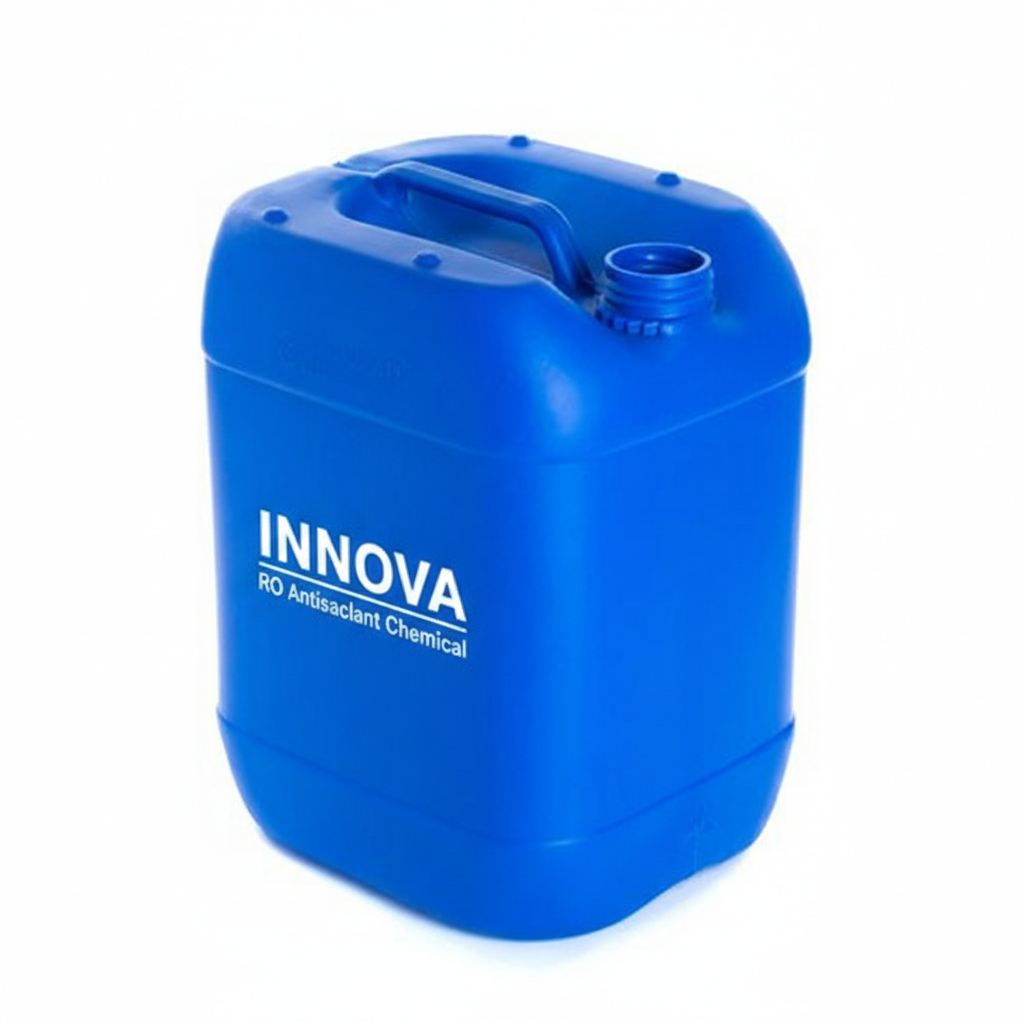
Phosphonate-Free RO Antiscalant Chemicals in Germany for Automotive, Chemical & Semiconductor RO Plants (High-Hardness Water)
Innova Corporate (India) supplies RO Antiscalant Chemicals in Germany for automotive RO in Bavaria and Baden-Württemberg, chemical plant process water in Ludwigshafen and Leverkusen, pharmaceutical water systems in Baden-Württemberg, and semiconductor ultrapure water in Dresden. German municipal water often has high hardness (up to 25° dH), and strict EU environmental regulations limit phosphorus discharge. Our phosphonate-free antiscalant is specifically formulated to prevent calcium carbonate, calcium sulfate and silica scaling in high-hardness water without adding phosphorus to wastewater — meeting German and EU environmental standards.
Our specialised antiscalant is designed for high-capacity membrane systems operating in Germany. It features a precise molecular weight range and a clear, impurity-free composition. This advanced formula effectively controls the scaling of carbonates and sulfate salts (Calcium, Magnesium, Barium and Strontium), while also preventing iron fouling and colloidal deposits common in German water sources. Whether for Reverse Osmosis (RO), Nanofiltration (NF) or Ultrafiltration (UF), our chemicals deliver exceptional results across a wide range of industrial applications in Germany, including brackish water treatment and specialised filtration for high-recovery systems.
Key Features & Strategic Advantages for German Industrial Plants:
- Phosphonate-Free Formula: Prevents calcium carbonate scaling without adding phosphorus to wastewater — compliant with German and EU environmental discharge standards.
- High-Hardness Water Ready: Effective in German municipal water up to 25° dH, common in Bavaria, Baden-Württemberg and North Rhine-Westphalia.
- Superior Scale Control: Effectively manages Calcium Carbonate up to LSI +3.0, Calcium Sulfate, Barium Sulfate and Strontium Sulfate.
- Semiconductor Ultra-Low TOC: Suitable for ultrapure water RO systems in Dresden semiconductor fabs with strict TOC limits.
- Softener Alternative: Cost-effective, low-maintenance replacement for traditional softener filters in German industries.
- Potable Water Certified: Safe for use in systems producing drinking water for German communities, meeting DVGW and EU drinking water standards.
- Metallic Oxide Tolerance: High tolerance to aluminium and iron oxides, preventing metallic fouling common in local water sources.
- Wide Compatibility: Fully compatible with all leading RO membranes and downstream coagulants used in Germany.
Industries We Serve Across Germany:
Automotive Manufacturing (Bavaria, Baden-Württemberg): BMW, Audi, Mercedes and Porsche plants use RO antiscalant for process water and boiler feed in high-hardness municipal water areas.
Chemical Plants (Ludwigshafen, Leverkusen): BASF and Bayer chemical facilities use RO antiscalant for process water and cooling make-up in high-sulfate feed water.
Pharmaceutical Water Systems (Baden-Württemberg): Boehringer Ingelheim and other pharma plants use RO antiscalant for purified water systems, meeting EU GMP guidelines.
Semiconductor Fabs (Dresden): Infineon and GlobalFoundries fabs use RO antiscalant with ultra-low TOC for ultrapure water systems.
Food & Beverage Processing (Bavaria, Lower Saxony): German food and beverage plants use RO antiscalant for process water in high-hardness areas.
Power Generation (North Rhine-Westphalia): Power plant boiler feed RO systems use antiscalant for reliable scale prevention in high-recovery systems.
Why Phosphonate-Free Antiscalant Matters in Germany:
| Parameter | Phosphonate-Based Antiscalant | Phosphonate-Free Antiscalant |
|---|---|---|
| Phosphorus Discharge | High — causes eutrophication | None — no phosphorus added |
| EU Water Framework Compliance | Restricted in many regions | Fully compliant |
| German Municipal Discharge | Requires additional treatment | Direct discharge allowed |
| Scale Control Performance | Good | Equivalent or better |
Dosage & Application Guide for German RO Plants:
- Standard Dosage: 2–6 ppm in feed water, depending on water hardness, silica levels, recovery rate and temperature.
- High-Hardness Bavarian Water: For water up to 25° dH in Bavaria and Baden-Württemberg, dosage may go up to 8 ppm.
- Injection Point: Before the cartridge filter and static mixer, on the feed side of the RO membranes.
- Dilution: Can be fed neat or diluted up to 10% with RO permeate water. Never dilute with raw water.
- Monitoring: Track LSI, SDI, differential pressure and permeate flow to confirm antiscalant effectiveness.
Common Scale Problems in German RO Systems:
Calcium Carbonate Scaling: Most common in high-hardness municipal water areas of Bavaria, Baden-Württemberg and North Rhine-Westphalia. Prevented by phosphonate-free antiscalant and threshold inhibition chemistry.
Calcium Sulfate Scaling: Occurs in high-sulfate industrial feed water at Ludwigshafen and Leverkusen chemical plants. Prevented by broad-spectrum antiscalant with crystal modification.
Silica Scaling: Common in some German groundwater sources. Prevented by silica-tolerant antiscalant formulation.
Iron & Manganese Fouling: Common in North Rhine-Westphalia and Saxony groundwater. Controlled by iron-tolerant antiscalant.
Phosphorus Discharge Compliance: German and EU regulations strictly limit phosphorus in industrial discharge. Phosphonate-free antiscalant ensures compliance without additional treatment.
Technical Specifications:
| Appearance | Clear to pale yellow liquid |
| pH (as is) | 2.0 – 4.0 |
| Specific Gravity | 1.10 – 1.25 |
| LSI Tolerance | Up to +3.0 |
| Phosphorus Content | Phosphonate-free (0% phosphorus) |
| Recommended Dosage | 2 – 6 ppm (up to 8 ppm for 25° dH water) |
| Shelf Life | 12 months in original sealed container |
Frequently Asked Questions (Germany):
Q: What are RO antiscalant chemicals used for in Germany?
A: They prevent calcium carbonate, calcium sulfate and silica scale from forming on RO membranes in automotive plants in Bavaria, chemical facilities in Ludwigshafen, pharmaceutical water systems in Baden-Württemberg and semiconductor fabs in Dresden.
Q: Why does German water need phosphonate-free antiscalant?
A: German municipal water often has high hardness (up to 25° dH) and strict environmental discharge regulations. Phosphonate-free antiscalant prevents calcium carbonate scaling without adding phosphorus to wastewater, complying with German and EU environmental standards.
Q: Which German industries use RO antiscalant the most?
A: Automotive manufacturing in Bavaria and Baden-Württemberg, chemical plants in Ludwigshafen and Leverkusen, pharmaceutical water systems in Baden-Württemberg, semiconductor fabs in Dresden, and food and beverage processing across Germany.
Q: Can phosphonate-free antiscalant handle 25° dH hard water in Germany?
A: Yes. Our phosphonate-free RO antiscalant is specifically formulated for German high-hardness water up to 25° dH. It controls calcium carbonate scaling at LSI up to +3.0 and is compatible with all major polyamide and TFC membranes.
Q: What dosage of RO antiscalant is recommended for German plants?
A: Typical dosage ranges from 2 to 6 ppm in feed water, depending on water hardness, silica levels, recovery rate and temperature. For high-hardness Bavarian water, dosage may go up to 8 ppm.
Q: Do you supply RO antiscalant across German industrial regions?
A: Yes, we supply to automotive, chemical, pharmaceutical, semiconductor and food processing plants across Germany, including Bavaria (Munich, Nuremberg), Baden-Württemberg (Stuttgart, Mannheim), North Rhine-Westphalia (Cologne, Düsseldorf), Hesse (Frankfurt, Ludwigshafen) and Saxony (Dresden, Leipzig).
Storage & Safety: Store in original containers in a cool, dry place at your Germany facility, away from heat sources and direct sunlight. For comprehensive safety data and dosage guidance, please refer to the Material Safety Data Sheet (MSDS) and Technical Data Sheet (TDS).
Related Products: Explore our Low pH Membrane Cleaner, Membrane Biocides, and RO Membrane Cleaner for a complete RO chemical programme across Germany.