- 2B / BW Shalimar Bagh, Opp. BQ Market, Near DLF Mall New Delhi - 110088, India.
- :+91-9312-871-070

Manufacturers, Exporters, Suppliers of Silica Antiscalant High pH
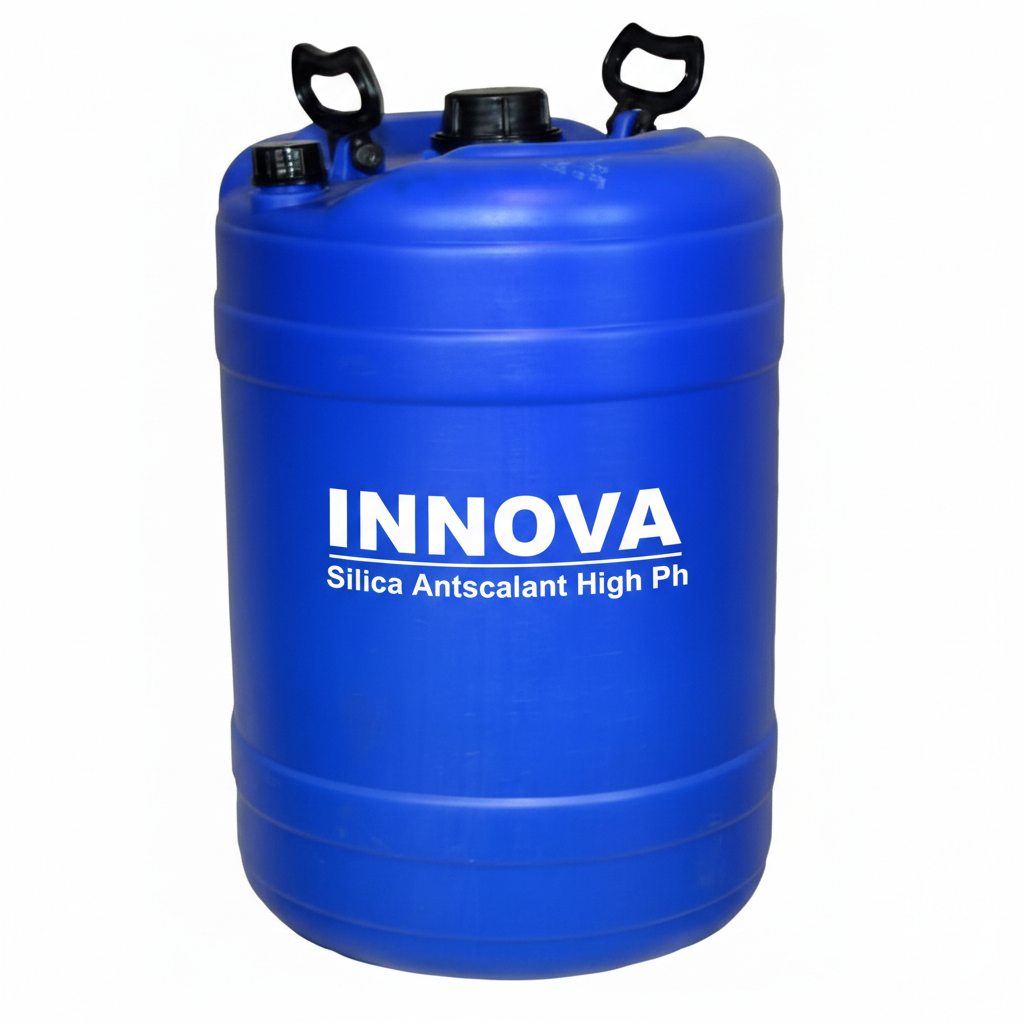
Silica Antiscalant in Guwahati (High pH)
Reactive silica is a different kind of problem. It does not behave like hardness salts, and it does not respond to standard antiscalants. Once it polymerises on a membrane, it forms a hard, glass-like layer that is extremely difficult to remove with normal CIP chemicals. Innova Corporate (India) supplies a High pH Silica Antiscalant in Guwahati that is formulated to keep silica in solution, even at the elevated pH and high TDS levels typical of Guwahati industrial RO feed water drawn from the Brahmaputra belt.
Our Silica Antiscalant in Guwahati is an alkaline liquid compatible with potable water treatment. Because it works by holding silica particles in suspension rather than letting them deposit, it prevents membrane plugging at the source. Plant operators in Guwahati see the benefit in three visible ways — fewer CIP shutdowns, stable differential pressure across the elements, and membranes that last noticeably longer before replacement.
Key Benefits & Salient Features for Guwahati:
- High Silica Tolerance: Handles the elevated reactive silica levels that appear in Guwahati feed water during summer and monsoon cycles.
- Anti-Abrasive Action: Keeps sharp silica crystals from forming, which is what causes irreversible scratches and surface damage on membrane elements.
- Potable Water Compatible: Built from ingredients that are safe for systems producing drinking water.
- Lower Operating Cost: Fewer CIP cycles mean less downtime, less cleaning chemical consumption and lower overall plant maintenance spend in Guwahati.
Application & Dosage in Guwahati:
- 1. Dosage Range: Typical dosing sits between 2 ppm and 10 ppm. For severe silica loading or smaller Guwahati installations, dosing may go up to 15 ppm. Always confirm the exact figure with an Innova representative after reviewing your water analysis.
- 2. Storage: Keep the container sealed and store it in a cool, dry area of your Guwahati facility, clear of heat sources, open flame and direct sunlight.
- 3. Technical Support: Full dosage tables, shelf-life details and handling guidance are covered in the Technical Data Sheet (TDS), product label and MSDS.