- 2B / BW Shalimar Bagh, Opp. BQ Market, Near DLF Mall New Delhi - 110088, India.
- :+91-9312-871-070

Manufacturers, Exporters, Suppliers of Silica Antiscalant High pH
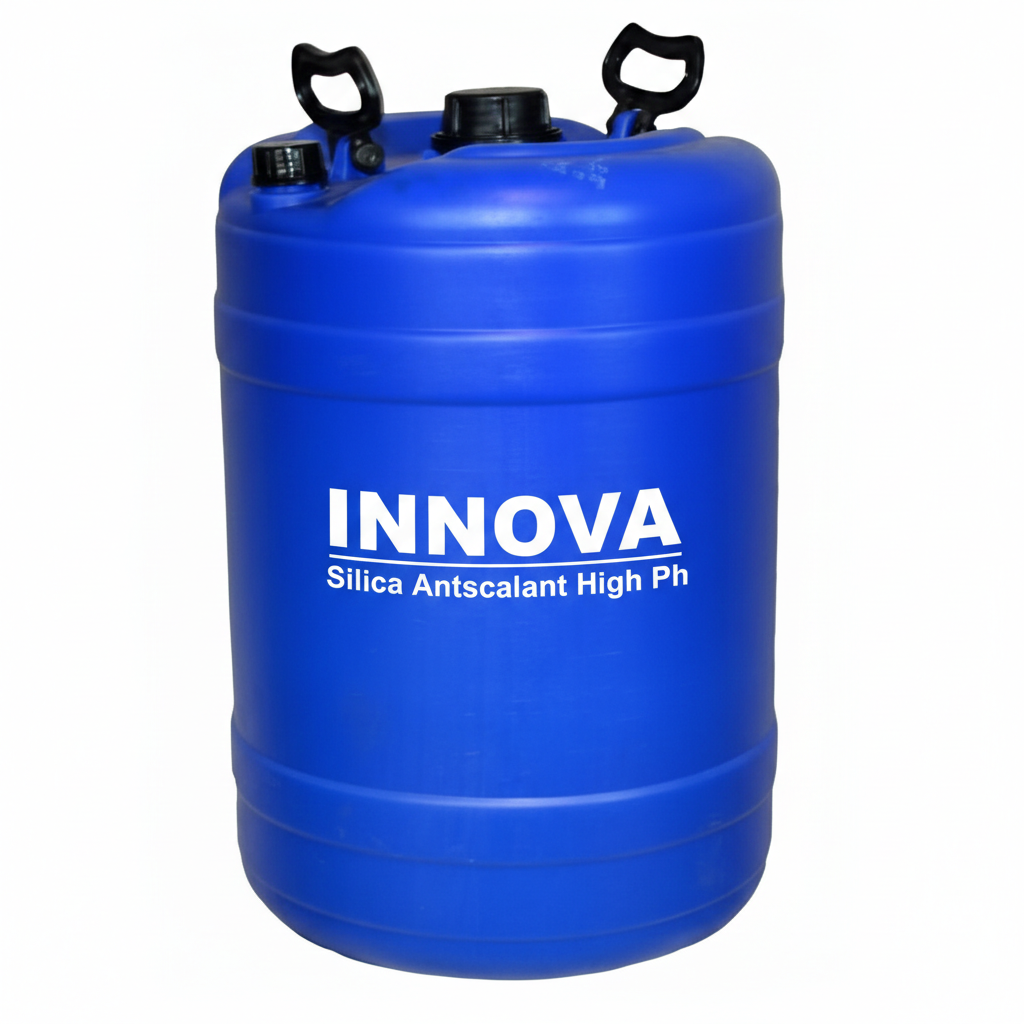
Silica Antiscalant in India (High pH)
Innova Corporate (India) is a specialized manufacturer and supplier of High pH Silica Antiscalants in India. Silica fouling is one of the most severe challenges in RO operations as it forms a hard, glass-like scale. Our advanced alkaline formulation is specifically engineered to inhibit silica precipitation for India industrial units, ensuring smooth operation even in water with high reactive silica content.
Our Silica Antiscalant in India is a high-performance alkaline product that is fully compatible with drinking water systems. By keeping silica in suspension, it prevents membrane plugging, reduces the frequency of chemical cleanings (CIP), and significantly extends the life of your RO membranes in India.
What makes silica uniquely difficult to manage is its polymerization behaviour. Unlike calcium or magnesium salts that precipitate as discrete crystals, silicic acid undergoes a condensation reaction that forms an amorphous, glass-like network on the membrane surface. This network is chemically inert — it does not respond to acid CIP, caustic CIP or standard chelating agents. Our alkaline formulation interrupts this polymerization at the earliest stage, keeping silica in its monomeric form where it can be safely flushed away in the concentrate stream.
The choice of high pH operation is itself a strategic decision. At elevated pH (above 9.0), a larger fraction of silica exists in its ionized form rather than as neutral silicic acid. Ionized silica is far more soluble and dramatically easier to inhibit. This synergy between high pH operation and our specialized antiscalant chemistry allows plants to safely run at recoveries that would be impossible under neutral pH conditions — a critical advantage for industries facing water scarcity and strict discharge norms.
Key Benefits & Salient Features for India:
- Superior Silica Control: Effectively manages high levels of silica in India feed water.
- Membrane Protection: Prevents irreversible physical damage caused by sharp silica crystals.
- Drinking Water Safe: Formulated with ingredients suitable for potable water applications.
- Cost-Efficiency: Minimizes downtime and reduces the need for expensive silica-specific cleaning cycles.
- Anti-Polymerization Action: Interrupts silicic acid condensation at the monomeric stage before glass-like networks can form.
- High pH Synergy: Specifically designed to work in the alkaline pH range where silica solubility is naturally higher — enabling higher recoveries than neutral pH operation.
- Broad Compatibility: Effective with polyamide, TFC, and other RO membrane chemistries widely used in Indian industrial plants.
- Stable Formulation: Maintains full activity across a wide temperature range typical of Indian climate conditions (25–40°C).
Application & Dosage in India:
- 1. Dosage Range: The usual dosage for silica antiscalant ranges from 2-10 ppm. In severe conditions or smaller installations in India, this may increase up to 15 ppm. We recommend consulting an Innova representative to determine the optimal dosage based on your water analysis.
- 2. Storage: Store in original containers in a cool, dry place in India away from heat, flame, and direct sunlight.
- 3. Technical Support: Please refer to the Technical Data Sheet (TDS), Label, and MSDS for comprehensive details on safety and shelf life.
Signs Your RO System Is Suffering from Silica Scaling:
- Refractory Flux Decline: Permeate flow drops steadily, and unlike organic fouling, it does not recover after standard caustic cleaning.
- Ineffective Acid CIP: Acid cleaning fails to restore performance — a classic indicator that the deposit is silica, not carbonate scale.
- White Glassy Deposits: Visible examination of membrane end caps reveals hard, glass-like white deposits that cannot be scratched off.
- Elevated Differential Pressure: Pressure drop across the membrane bank increases as silica restricts flow channels, particularly in tail elements.
- Higher Salt Passage: Silica crystals physically damage the polyamide layer, causing increased TDS in the permeate over time.
- Post-Monsoon Worsening: Silica levels in many Indian water sources rise sharply after monsoon due to increased run-off and aquifer recharge.
Best Practices for Silica Control in High pH RO Systems:
- Maintain Stable pH: Keep pH consistently above 9.0 — pH swings below this threshold can trigger sudden silica precipitation.
- Monitor Silica Weekly: Test both feed and concentrate silica levels at least once a week to track concentration factors.
- Respect Solubility Limits: Operate within the silica solubility envelope for your specific pH and temperature — do not exceed design recovery without re-validation.
- Temperature Awareness: Silica solubility decreases sharply below 20°C — winter operation may require reduced recovery or higher antiscalant dose.
- Avoid Air Contact: Keep feed tanks covered to prevent CO₂ absorption, which can lower pH and destabilize silica.