- 2B / BW Shalimar Bagh, Opp. BQ Market, Near DLF Mall New Delhi - 110088, India.
- :+91-9312-871-070

Manufacturers, Exporters, Suppliers of Silver Hydrogen Peroxide Based Disinfectant
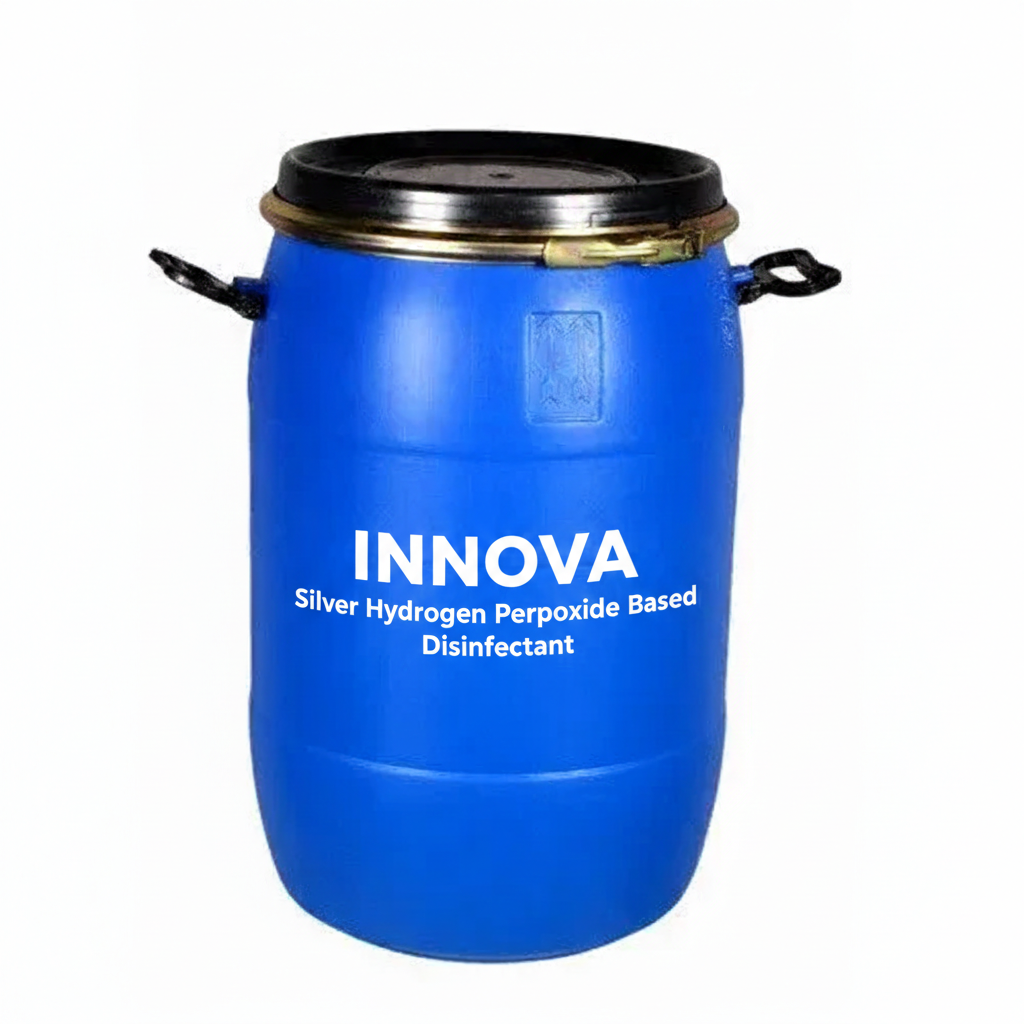
Silver Hydrogen Peroxide Based Disinfectant in Ireland
Innova Corporate (India) is a trusted manufacturer and supplier of Silver Hydrogen Peroxide in Ireland. This advanced disinfectant is a synergized blend of IP-grade hydrogen peroxide and silver nitrate, stabilised through a precise pH and temperature-controlled process. It is a powerful, biodegradable cold sterilant that requires no heat for effective disinfection across Ireland industrial sectors. Ireland's food and beverage industry — dairy processing, brewing, distilling, meat and prepared foods — places specific demands on water hygiene that silver peroxide meets without the chlorinated by-products that would complicate EPA discharge reporting or affect product quality.
Our formulation is manufactured to food-grade standards and is non-toxic at use concentrations, making it ideal for potable water disinfection and CIP (Clean-In-Place) of food and beverage equipment in Ireland. It is extensively used in local dairies, breweries, distilleries, pharmaceutical units and food processing plants for sterilising pipelines, tanks, evaporators and aseptic packaging equipment. Documentation aligned with Food Safety Authority of Ireland (FSAI) requirements and EU food-contact regulations is provided with each shipment. For potable water applications, the formulation is compatible with EU Drinking Water Directive requirements as implemented in Ireland.
Key Features & Strategic Benefits for Ireland:
- Cold Sterilant: Works without heat — ideal for Irish plants where CIP is performed at ambient water temperatures.
- Broad Spectrum: Effective against bacteria, fungi, viruses and Legionella — covering the full range of microbial risks in Irish water systems.
- Eco-Friendly: Completely biodegradable, leaves no toxic residue — EPA Ireland discharge compatible.
- Non-Carcinogenic: A safe alternative to formalin and chlorine, particularly for food-contact applications where chlorinated by-products are unacceptable.
- Biofilm Destroyer: Penetrates and destroys tough biofilms in cooling towers and industrial water circuits.
- Versatile Use: Suitable for fogging, spraying and fumigation across different equipment types.
- Non-Tainting: Does not leave odour or stains — critical for dairy, brewing and distilling where flavour and appearance matter.
- Oligo-Dynamic: Added benefit of silver as a bacteriostat providing residual protection between dosing cycles.
- Food Contact Compatible: Formulated to meet FSAI and EU food-contact hygiene requirements for CIP applications.
- Cold-Water Performance: Effective across the 6°C to 16°C range typical of Irish water systems without requiring heating.
Irish Industry Applications:
- Dairy Processing: CIP disinfection of pipelines, tanks and evaporators where chlorinated residues would affect milk and cheese quality.
- Brewing and Distilling: Sanitisation of fermentation vessels, bottling lines and process water where flavour neutrality is essential.
- Meat and Prepared Foods: Hygiene-critical water and surface disinfection where FSAI inspection requires documented microbial control.
- Pharmaceutical and Biotech: High-purity water systems requiring residue-free disinfection compatible with downstream processes.
- Potable Water Treatment: Municipal and industrial drinking water disinfection compliant with EU Drinking Water Directive.
- Cooling Towers and HVAC: Legionella prevention and biofilm control in data centres, hospitals and commercial buildings.
- Fruit and Vegetable Processing: Wash water disinfection for produce destined for domestic and export markets.
Strategic Benefits Delivered to Irish Plants:
Application & Dosage in Ireland:
This disinfectant is used for bacterial eradication in process water, fruits and vegetables, cooling towers and air-conditioning ducts in Ireland. The dosage typically ranges from 0.002% to 0.5% w/w, depending on the application:
- CIP of dairy and brewery equipment: 0.1% to 0.5% w/w with 15 to 30 minute contact time.
- Process water disinfection: 0.002% to 0.01% w/w continuous or intermittent dosing.
- Cooling tower shock treatment: 0.05% to 0.1% w/w with monitoring of microbial counts before and after.
- Fogging and surface disinfection: Diluted per the recommended protocol for airborne and surface treatment.
- RO membrane sanitation: 0.1% to 0.3% w/w for CIP, followed by thorough permeate flush.
Note: Please consult your Innova technical representative in Ireland for specific dosage protocols based on your system requirements and the regulatory context of your facility.
Storage & Handling: Store in original containers in a cool, dry place in Ireland away from heat, flame and direct sunlight. Ireland's temperate climate is generally suitable for storage in shaded warehouses without special cooling requirements. Silver peroxide formulations should be protected from freezing during winter transport to higher elevation regions and from prolonged exposure to direct sunlight in summer. Shelf life is 18 to 24 months under recommended conditions.
Safety & Handling:
While handling at your Ireland facility, wear splash goggles, lab coats, vapour respirators and gloves. In case of skin contact, wash with water immediately. For eye splashes, flush with fresh water and seek medical attention. Do not inject. Refer to the MSDS for comprehensive safety data. Documentation compliant with Irish workplace safety requirements is provided with each shipment.
Frequently Asked Questions — Silver Hydrogen Peroxide Disinfectant in Ireland
1. What is silver hydrogen peroxide and how does it work as a disinfectant?
Silver hydrogen peroxide is a synergized blend of hydrogen peroxide and silver nitrate, stabilised through a controlled manufacturing process. It works through two complementary mechanisms. Hydrogen peroxide is a strong oxidant that damages bacterial cell walls, proteins and DNA. Silver ions interfere with key metabolic enzymes and disrupt DNA replication. Together they create a synergistic effect where silver makes the cell more vulnerable to oxidative attack, and peroxide delivers the lethal damage. The silver also provides residual bacteriostatic protection because it remains active in the water longer than peroxide alone. The breakdown products are water, oxygen and trace silver — no chlorinated by-products.
2. Why is silver peroxide preferred over chlorine for Irish food and beverage processing?
Irish food and beverage processing has two specific reasons to prefer silver peroxide. First, chlorine reacts with organic matter to form trihalomethanes and other chlorinated by-products. These compounds are regulated under EPA Ireland discharge licences and, for potable water, under the EU Drinking Water Directive. Silver peroxide produces no such by-products. Second, chlorinated residues can affect product taste, odour and appearance — a serious problem in dairy, brewing and distilling where flavour neutrality is essential. Silver peroxide leaves no residue after proper rinse procedures, which is why it is widely used in these sectors.
3. How does the formulation handle Ireland's agricultural runoff variability?
Ireland's surface water sources receive runoff from pasture, dairy operations and tillage, and bacterial loads can spike dramatically after heavy rainfall. Chlorine-based disinfection struggles with this variability because chlorine demand spikes unpredictably, and maintaining a consistent residual becomes difficult. Silver peroxide works differently — it kills microorganisms on contact without needing to maintain a residual through the treatment train, and the silver ion provides a bacteriostatic effect that prevents regrowth. For Irish facilities drawing from surface water with variable quality, silver peroxide delivers more consistent microbial control across the full range of weather conditions.
4. What documentation accompanies silver peroxide shipments to Ireland?
Every shipment to Ireland includes Material Safety Data Sheet (MSDS), Technical Data Sheet (TDS), Certificate of Analysis (COA) and dosing guidelines. For potable water applications, we provide documentation aligned with EU Drinking Water Directive requirements as implemented in Ireland. For discharge compliance, we supply decomposition product information suitable for EPA Ireland reporting. For food and beverage applications, we provide documentation relevant to Food Safety Authority of Ireland (FSAI) hygiene requirements and EU food-contact regulations. Documentation is in English, with Irish language summaries available on request.
5. How does silver peroxide perform across Ireland's seasonal temperature range?
Ireland's water temperatures range from about 6°C in winter to 16°C in summer, depending on location and depth. Silver peroxide remains effective across this entire range. Cool water slows microbial growth, which reduces the biological load that the disinfectant needs to handle. Cold water also slows the decomposition of hydrogen peroxide, so the disinfectant remains active for longer contact time — an advantage for CIP applications. In summer months when water warms, reaction kinetics speed up, and we may recommend slight dose adjustment to maintain consistent kill rates. The formulation is tested across the full seasonal range typical of Irish water systems.
6. Can silver peroxide disinfectant handle biofilm in Irish cooling systems?
Yes. Biofilm is a concern in Irish cooling systems, particularly in food processing, pharmaceutical and data centre facilities where continuous cooling is essential. Silver peroxide penetrates biofilm more effectively than chlorine because its oxidation mechanism disrupts the extracellular polymer matrix that protects bacterial communities, not just the cells inside. Once the matrix is broken, the disinfectant kills the bacteria and the debris is flushed away during system cleaning or blowdown. For facilities with Legionella management requirements — increasingly relevant under Irish workplace safety regulations — silver peroxide provides effective control as part of a broader water safety program.
7. Is silver peroxide safe for potable water applications in Ireland?
Yes, when used according to the recommended dosing and flush procedures. Silver peroxide is suitable for potable water disinfection under the EU Drinking Water Directive as implemented in Ireland. After treatment, the residual concentrations of hydrogen peroxide and silver are below the limits specified in the Directive, and the breakdown products are benign. We provide documentation including residual verification procedures and maximum permissible concentration data for regulatory reporting. For municipal or industrial drinking water systems, the documentation package supports compliance with Irish drinking water regulations.
8. How does silver peroxide compare to peracetic acid for Irish applications?
Silver peroxide and peracetic acid are both non-chlorine oxidising disinfectants, but they have different characteristics. Peracetic acid is a stronger, faster-acting oxidant, which makes it suitable for heavy-duty CIP and shock sanitation. Silver peroxide has slower kill kinetics but provides residual bacteriostatic protection through the silver ion, which is useful for continuous or intermittent disinfection. Peracetic acid decomposes into acetic acid and oxygen; silver peroxide decomposes into water, oxygen and trace silver. For Irish plants, the choice depends on the application — peracetic acid for intensive cleaning, silver peroxide for continuous disinfection and residual protection. Many facilities use both in a combined program.
9. What industries in Ireland use silver peroxide disinfectant?
The main sectors are dairy processing, brewing and distilling, meat and prepared food production, pharmaceutical and biotech manufacturing, municipal and industrial drinking water treatment, and cooling tower management for data centres and commercial buildings. Each application has specific requirements — flavour neutrality for dairy and brewing, FSAI documentation for food processing, EU DWD compliance for potable water, and Legionella control for cooling systems. Silver peroxide is suitable across all these applications because it provides effective microbial control without the chlorinated by-products or residual flavour issues that would complicate operations in these sectors.
10. How do you ship silver peroxide disinfectant to Irish ports?
We ship from Indian ports to Dublin, Cork, Limerick, Waterford and Rosslare, covering Ireland's main commercial ports. Because Ireland is an EU member state, import procedures follow EU harmonised rules — customs clearance at the first EU entry point, with free movement to Ireland thereafter. All shipments include commercial invoice, packing list, certificate of origin, MSDS and any certificates required by Irish Customs and the Environmental Protection Agency. Silver peroxide formulations are classified as oxidizers for transport and are packed in UN-approved containers with proper classification, labelling and dangerous goods documentation.