- 2B / BW Shalimar Bagh, Opp. BQ Market, Near DLF Mall New Delhi - 110088, India.
- :+91-9312-871-070

Manufacturers, Exporters, Suppliers of RO Membrane Preservative
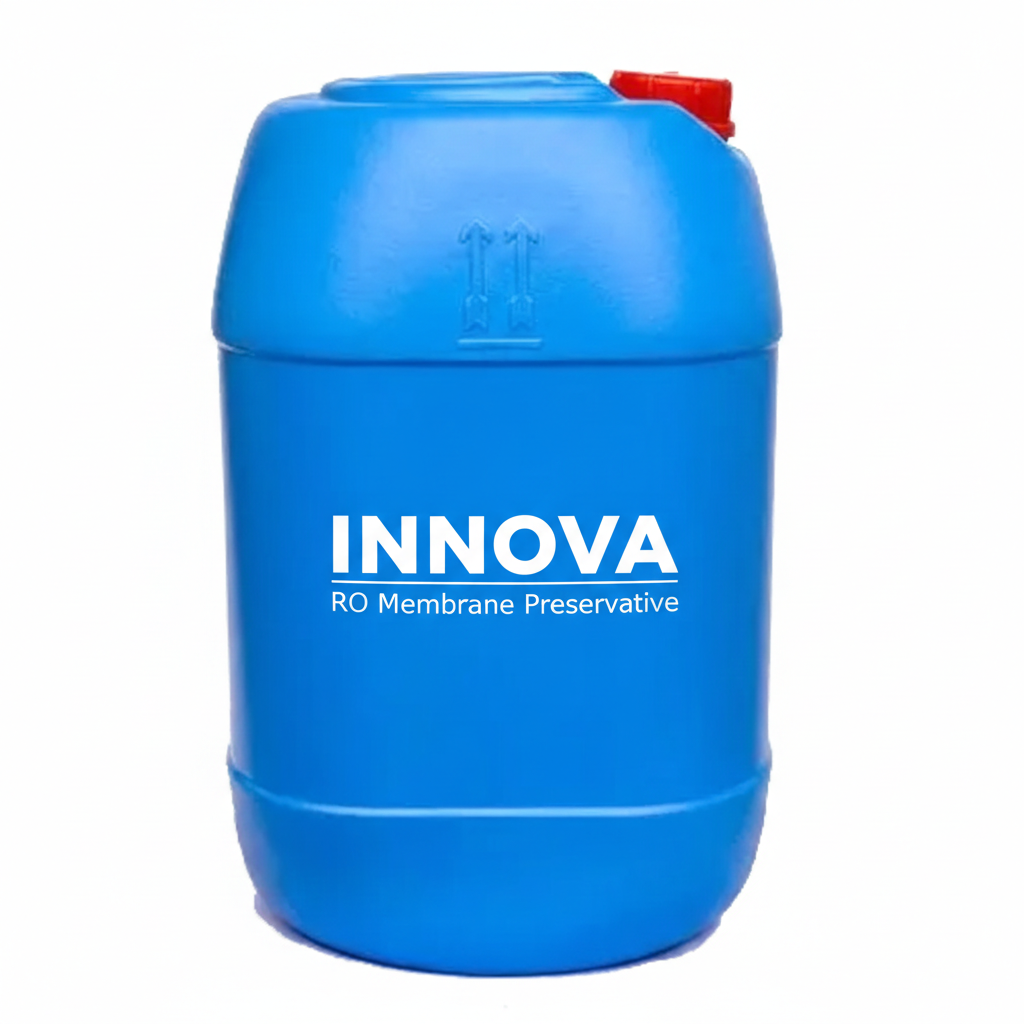
RO Membrane Preservative for Norway's Offshore, Aquaculture & Hydropower Operations
Innova Corporate (India) manufactures and supplies high-performance RO Membrane Preservatives for Norway — engineered specifically for the long idle periods that define Norwegian water treatment operations. Offshore platforms in the North Sea and Norwegian Sea shut down RO units during turnaround campaigns and reduced-manning periods. Municipal desalination plants along the fjord coast reduce output through the winter months. Salmon hatcheries in Troms and Nordland follow seasonal production cycles. Hydropower stations in Telemark perform planned maintenance shutdowns. In every case, idle membranes face the same silent threats: microbial growth, oxidation and dehydration.
Our Membrane Preservative in Norway acts as a protective shield, preventing the growth of bacteria, fungi and algae within membrane elements during storage. It ensures that Polyamide and TFC layers remain moist, biologically inactive and chemically stable — allowing for a smooth, efficient system restart in your Norway facility without loss of performance or flux. Norwegian operators often report that preserved membranes restart with the same salt rejection and pressure drop as before shutdown, avoiding the costly surprise of irreversible biofouling discovered only after restart.
Norway's cold climate introduces a specific challenge. Storage temperatures in unheated facilities and offshore modules frequently drop to 2°C to 10°C. Many conventional preservatives crystallize or separate at these temperatures, leaving parts of the membrane unprotected. Our formulations remain fully soluble and effective across this range. For installations in Finnmark and Svalbard where temperatures can fall below freezing, we recommend adding a freezing-point depressant or storing indoors above 0°C.
Industries & Applications Across Norway:
- Offshore Oil & Gas (North Sea & Norwegian Sea): Lay-up preservation during turnaround campaigns, reduced manning and platform maintenance windows — where restart reliability is non-negotiable.
- Aquaculture & Salmon Farming: Seasonal shutdown preservation for hatcheries, smolt facilities and RAS systems in Troms, Nordland, Møre og Romsdal and Hordaland — with full Mattilsynet compliance documentation.
- Municipal Desalination: Winter shutdown protection for coastal plants in Oslo, Bergen, Stavanger, Trondheim and Tromsø, complying with FHI and EU drinking water norms.
- Hydropower & Energy: Preservation during planned turbine and cooling system maintenance at Norway's hydroelectric stations.
- Maritime & Shipping: Onboard RO system preservation during vessel lay-up periods for ferries, cruise ships and fishing vessels.
- Food & Beverage: Seasonal shutdown preservation for seafood processing, dairy and brewery plants with strict hygiene requirements.
Application & Dosage for Norway Plants:
The application method involves displacing the feed water with a prepared preservative solution, then sealing all valves to prevent air ingress. Typical preservation concentrations range from 1–2% sodium metabisulfite or 100–200 ppm DBNPA-based preservative, depending on shutdown duration and system size. Standard protection lasts up to six months; extended-life formulations protect for up to twelve months for remote installations. Since requirements vary based on shutdown duration, feedwater chemistry and membrane type, you are requested to contact our Norway representative for advice on the best dosage and application protocol for your specific plant.
Complete Preservation Procedure:
- Step 1 — Clean: Perform thorough CIP cleaning to remove any existing scale, biofilm or organic deposits before preservation begins.
- Step 2 — Flush: Rinse membrane with RO permeate to remove residual cleaning chemicals.
- Step 3 — Circulate: Circulate prepared preservative solution through the membrane at the recommended dose, ensuring complete displacement of feed water.
- Step 4 — Seal: Close all valves to prevent air ingress and keep the membrane fully submerged throughout storage.
- Step 5 — Monitor: Check preservative solution every three months and refresh if necessary, especially for storage longer than six months.
- Step 6 — Restart: Flush thoroughly with permeate before returning to normal operation to ensure no residue carryover.
Handling Measures & Safety Precautions:
Proper human safety gear such as splash goggles, lab coats, vapor
respirators, gloves, and boots must be worn while handling and applying
chemicals at your Norway site — whether onshore or offshore.
* Skin Contact: Wash off with water immediately.
* Eye Contact: Flush with fresh water and seek medical attention
immediately.
* Important: Product should not be injected. Please refer to the
MSDS for comprehensive safety details.
Storage: This product should be stored in original containers in a cool and dry place in Norway, away from sources of heat, flame, and direct sunlight. For northern regions and offshore bases, protect from freezing during transport and storage. If the product freezes, thaw gradually at room temperature and stir before use — performance remains unchanged. Refer to the Technical Data Sheet (TDS) and Label for shelf-life information.
Frequently Asked Questions — RO Membrane Preservative in Norway
1. Why is RO membrane preservative essential for Norwegian offshore platforms during lay-up?
Norwegian offshore platforms in the North Sea and Norwegian Sea often shut down RO units during maintenance campaigns, turnaround periods or when the platform is on reduced manning. During these idle periods, stagnant water inside membrane elements becomes an ideal breeding ground for bacteria, fungi and algae. Without preservative, biofilm forms within days and can permanently damage membranes. Our preservative keeps membranes biologically stable for up to six months, so they perform exactly as before when the platform restarts.
2. How does your preservative protect RO membranes during Norway's winter shutdown?
Many Norwegian industrial and municipal RO plants reduce operations or shut down completely during winter — especially in northern regions where feedwater freezes and demand drops. Our preservative is designed to remain stable at low temperatures and protect membranes for extended idle periods. It prevents microbial growth, inhibits oxidation and keeps membrane pores free. We recommend a full preservation procedure before the first frost and a controlled restart in spring with proper flushing.
3. Is your membrane preservative safe for aquaculture and salmon farming RO systems in Norway?
Yes. Our preservative formulations are manufactured using food-grade raw materials suitable for aquaculture applications. They are compatible with RAS (Recirculating Aquaculture Systems), hatcheries and smolt facilities in Troms, Nordland, Møre og Romsdal and Hordaland. Correct preservation followed by thorough flushing ensures no residue carryover into fish-rearing water. Complete documentation is provided for Mattilsynet (Norwegian Food Safety Authority) compliance.
4. What is the correct procedure for preserving RO membranes in Norway before winter shutdown?
First, perform a thorough CIP cleaning to remove any existing scale or biofilm. Then flush the membrane with permeate to remove residual chemicals. Next, circulate the preservative solution through the membrane at the recommended dose — typically 1 to 2 percent sodium metabisulfite or 100 to 200 ppm DBNPA-based preservative. Close all valves to prevent air ingress and keep the membrane fully submerged. Store below 25°C and above 0°C. We provide detailed step-by-step protocols with each shipment.
5. How long can RO membranes be preserved with your chemicals in Norwegian storage conditions?
With our preservative, RO membranes can be safely stored for up to six months without performance loss. For offshore platforms and remote installations in Finnmark and Svalbard where access is limited, we offer extended-life formulations that protect for up to twelve months. We recommend checking the preservative solution every three months and refreshing if necessary. Detailed monitoring guidelines are provided with each shipment.
6. How does your preservative handle Norway's cold storage temperatures?
Norwegian storage facilities and offshore modules often experience temperatures between 2°C and 10°C. Our preservative formulations remain fully soluble and effective at these temperatures. Unlike some conventional preservatives that crystallize or separate in cold conditions, our chemistry stays stable. For unheated storage in northern Norway, we recommend adding a freezing-point depressant or storing indoors above 0°C to prevent ice formation inside membrane elements.
7. Do you supply RO membrane preservative to Oslo, Bergen, Stavanger, Trondheim and northern Norway?
Yes. We ship to all major Norwegian ports and cities including Oslo, Bergen, Stavanger, Trondheim, Tromsø, Kristiansand, Drammen and Bodø. Delivery to offshore supply bases for platform transfers is also available. For remote installations in Finnmark and Svalbard, we arrange consolidated shipments with UN-approved packaging. Express delivery is available for emergency shutdown situations.
8. What is the difference between RO membrane preservative and RO biocide?
RO biocide is used during active operation to kill microorganisms in the feedwater and prevent biofilm formation on running membranes. RO membrane preservative is used during shutdown, storage or lay-up to protect idle membranes from microbial growth, oxidation and physical degradation. Both are essential in Norwegian plants — biocide during operation, preservative during shutdown. We supply both products and combined treatment programs.
9. Can your preservative be used for hydropower and municipal desalination plants in Norway?
Yes. Hydropower stations use RO for cooling water and turbine protection, and coastal municipalities operate desalination plants that may reduce output or shut down seasonally. Our preservative is suitable for both applications. For municipal drinking water plants, the formulation complies with EU drinking water norms and Norwegian Institute of Public Health (FHI) guidelines. Full flushing before restart ensures permeate safety.
10. What documentation is provided with RO membrane preservative shipments to Norway?
Every shipment to Norway includes a complete documentation package: Material Safety Data Sheet (MSDS), Technical Data Sheet (TDS), Certificate of Analysis (COA), recommended preservation and restart procedures, and compliance certificates for Mattilsynet, FHI and REACH requirements. For offshore deliveries, we also provide UN packaging certificates and supply vessel documentation.