- 2B / BW Shalimar Bagh, Opp. BQ Market, Near DLF Mall New Delhi - 110088, India.
- :+91-9312-871-070

Manufacturers, Exporters, Suppliers of Membrane Biocides
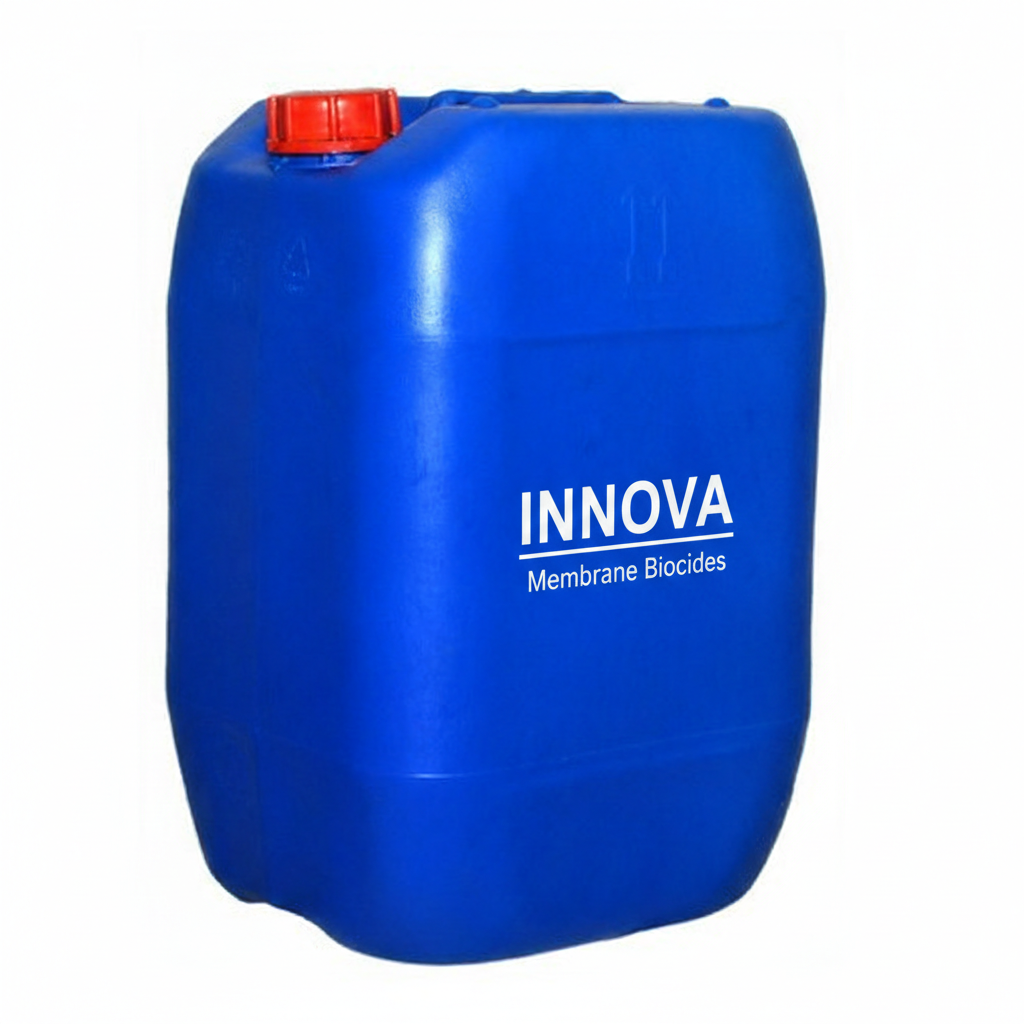
Membrane Biocides for Philippines Plants (Non-Oxidizing Biofilm & Bacteria Control)
The Philippines' tropical climate creates a microbial problem that RO plants in cooler countries simply don't face. Year-round temperatures between 26 and 32°C, combined with high humidity and frequent rainfall, make feed water an ideal environment for bacterial growth. Biofilm can form inside RO pretreatment and on membrane surfaces within 7 to 10 days if untreated. Innova Corporate (India) supplies this non-oxidizing membrane biocide for Philippines plants specifically to control that microbial load without the membrane damage caused by chlorine-based alternatives.
The formula targets bacteria, fungi, algae, and the polysaccharide matrix that holds biofilm together — not just surface organisms. This is critical because Philippines plants in Laguna, Cebu, and Metro Manila that run on surface water or brackish groundwater frequently deal with established biofilm, not just free-floating bacteria. Standard disinfectants kill the outer layer but leave the matrix intact, allowing rapid regrowth. This biocide penetrates and disperses the full structure.
It is particularly important for Philippines' food processing, beverage bottling, dairy, and pharmaceutical plants, where microbial limits are regulated by FDA Philippines and where Halal certification often requires documented water treatment controls. The biocide is also used by resort SWRO systems in Mactan, Boracay, and Palawan, and by semiconductor plants in Cavite where ultrapure water quality directly affects product yield.
Key Features & Strategic Benefits for Philippines Industries:
- Broad-Spectrum Microbial Control: Rapidly eliminates bacteria, fungi, algae, and established biofilm — effective in Philippines' year-round warm feed water where microbial regrowth is fast.
- Chlorine-Free Formula: Totally chlorine-free — no oxidative damage to polyamide or TFC membranes, no irreversible salt rejection loss, no accelerated membrane replacement.
- Potable Water Safe: Formulations available that are fully compliant with Philippines drinking water safety standards and FDA Philippines requirements.
- Halal & Export Compliant: Suitable for Philippines food and beverage plants supplying Halal-certified markets across Southeast Asia and the Middle East, with documentation support.
- Biodegradable & Eco-Friendly: Breaks down into non-toxic components — compliant with Philippines DENR discharge norms and safe for coastal resort operations near ecologically sensitive areas.
- System Compatibility: Fully compatible with all RO, NF, and UF membrane types, housings, gaskets, and CIP skid components used across Philippines industrial plants.
- Enhanced Flux Maintenance: Prevents slimy deposits that cause pressure drop and flux decline — critical for Philippines plants running continuous 24/7 operations where downtime is expensive.
- Typhoon-Season Stability: Maintains efficacy even when feed water turbidity and organic load spike during Philippines' June–November typhoon season.
Regular application of our membrane biocides in the Philippines not only ensures sterile water output but also significantly extends membrane life by preventing irreversible biological fouling. The products are highly effective even at low concentrations, making them a cost-efficient choice for industrial and municipal water plants across the Philippines. Plants that previously cleaned membranes weekly during humid months often move to a monthly or quarterly schedule after switching — cutting downtime, chemical consumption, and membrane replacement cost together.
Recommended Applications in Philippines: Laguna and Batangas food processing and beverage bottling plants requiring FDA Philippines and Halal compliance; Cebu dairy and juice manufacturers; Metro Manila pharmaceutical and cosmetic production; Mactan, Boracay, and Palawan resort SWRO systems; Cavite and Laguna semiconductor plants requiring ultrapure RO permeate; municipal water utilities in Metro Manila, Cebu, and Davao; and any Philippines plant where microbial contamination affects product quality or regulatory compliance.
Dosage & Application: Dose based on the severity of microbial load in your feed water and the regulatory requirements of your industry. Continuous dosing for round-the-clock control, or periodic shock dosing for systems that need immediate disinfection. Our technical team provides free dosing guidance based on your feed water analysis, microbial load, and compliance requirements — including support for FDA Philippines and Halal certification documentation.
Storage & Handling: Store in original, tightly sealed containers in a cool, dry, and well-ventilated area at your Philippines facility. Keep away from direct sunlight, heat sources, and incompatible materials. During typhoon season, keep containers off damp floors and away from condensation to prevent contamination. For detailed dosing instructions, efficacy data, and safety protocols, refer to the Technical Data Sheet (TDS) and Material Safety Data Sheet (MSDS).
Export & Technical Support for Philippines: We ship regularly to Manila Port (South Harbor and MICT) with onward transport to Cebu, Davao, Laguna, Cavite, Batangas, and other industrial cities across the Philippines, with complete customs documentation including Bureau of Customs and FDA Philippines requirements. Our technical team provides free dosing guidance tailored to your plant's water chemistry, industry, and compliance requirements.