- 2B / BW Shalimar Bagh, Opp. BQ Market, Near DLF Mall New Delhi - 110088, India.
- :+91-9312-871-070

Manufacturers, Exporters, Suppliers of RO Membrane Preservative
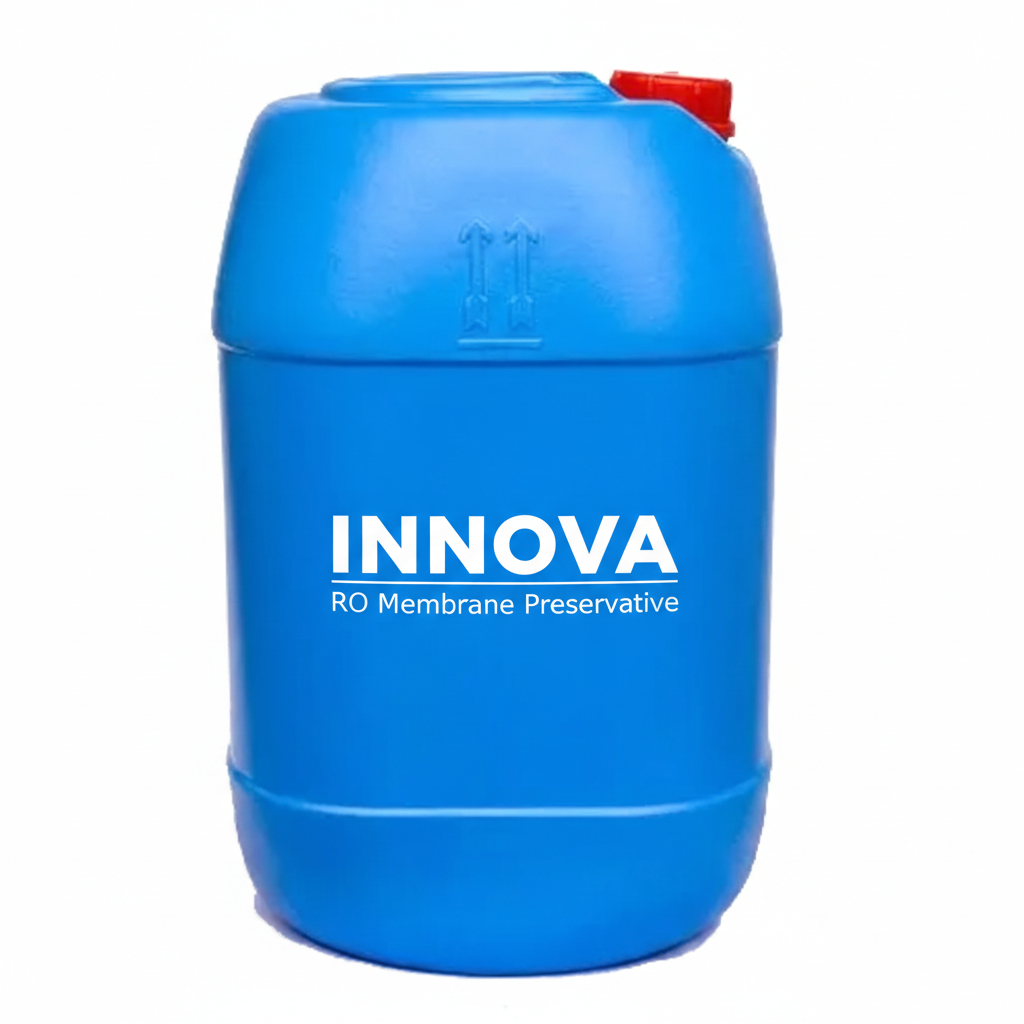
RO Membrane Preservative in Sri Lanka
Innova Corporate (India) is a trusted manufacturer and supplier of RO Membrane Preservatives in Sri Lanka. When an RO plant sits idle for more than a couple of days, the membrane elements remain wet and warm inside their pressure vessels — an ideal environment for bacteria, fungi and iron oxidation to take hold. Apparel units in Biyagama and Katunayake that close over long holidays, tea processing plants across the Central Highlands near Kandy that pause for seasonal breaks, and food processing lines in the Gampaha district all face this same risk. Left unprotected, a two-week shutdown is enough to trigger biofilm formation on the membrane surface, and a three-month break can permanently reduce flux and salt rejection. Our preservative is formulated to hold membrane health steady through both short pauses and long storage periods for our Sri Lanka based clients.
Our Membrane Preservative in Sri Lanka works as a protective barrier inside the element. The chemistry displaces the residual feed water and fills the membrane envelope with a stabilising solution that keeps the Polyamide or TFC layer moist and biologically inactive. This prevents the two main causes of shutdown damage — microbial colonisation of the membrane surface and oxidation of iron traces left behind in the feed channels. Plants in the Western Province that run on hard borewell water with visible iron are especially vulnerable to the second problem, and this preservative specifically addresses that. The formulation is compatible with all standard RO, NF and UF membranes used across Sri Lankan industrial plants, and does not require any modification to the existing CIP or flushing setup.
The difference between a preserved and an unpreserved shutdown becomes obvious at restart. Unpreserved membranes typically come back with a 10-20% flux loss and a rise in differential pressure that triggers an emergency CIP cycle in the first week. Preserved membranes restart close to their pre-shutdown performance, with stable rejection and no biological load. For Sri Lanka's tea, apparel and food processing sectors that run seasonal shifts, this directly translates into fewer unplanned cleaning cycles and a longer membrane replacement interval. Both effects lower the total cost of ownership per litre of treated water, which matters more than the upfront chemical cost.
Application & Dosage for Sri Lanka Plants:
The application method involves displacing the feed water with a prepared preservative solution after a thorough permeate flush to remove loose foulants. The solution is then circulated through the pressure vessels and left in place for the duration of the shutdown. Since requirements vary based on the duration of the shutdown, feed water chemistry and system size, you are requested to contact our Sri Lanka representative for advice on the best dosage and application protocol for your specific plant. For shutdowans longer than three months, a top-up or re-preservation cycle is recommended to maintain full protection.
Handling Measures & Safety Precautions:
Proper human safety gear such as splash goggles, lab coats, vapor
respirators, gloves and boots must be worn while handling and applying
chemicals at your Sri Lanka site.
* Skin Contact: Wash off with water immediately.
* Eye Contact: Flush with fresh water and seek medical attention
immediately.
* Important: Product should not be injected. Please refer to the
MSDS for comprehensive safety details.
Storage: This product should be stored in original containers in a cool and dry place in Sri Lanka, away from sources of heat, flame and direct sunlight. Refer to the Technical Data Sheet (TDS) and Label for shelf-life information.