- 2B / BW Shalimar Bagh, Opp. BQ Market, Near DLF Mall New Delhi - 110088, India.
- :+91-9312-871-070

Manufacturers, Exporters, Suppliers of Peracetic Acid Based RO Disinfectant
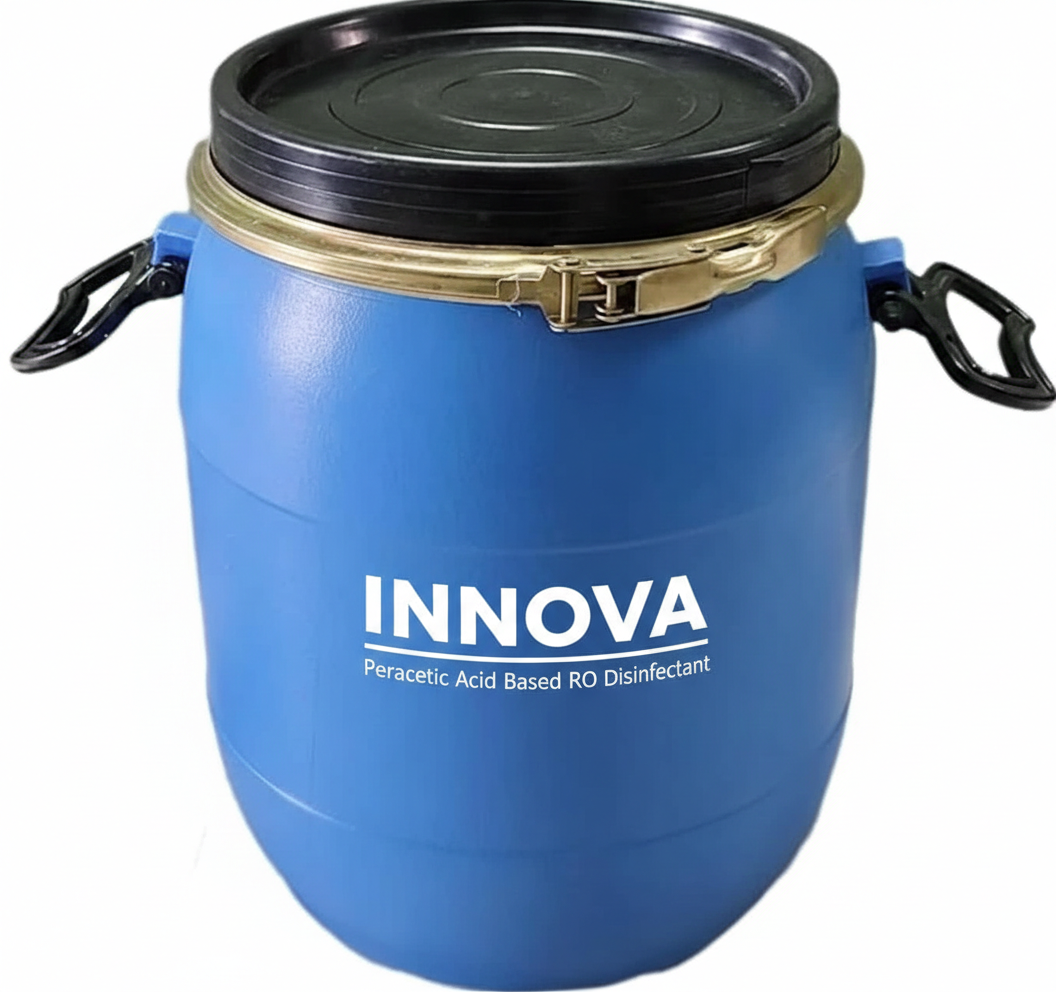
Peracetic Acid RO Disinfectant for Srinagar (Potable & Hospitality Grade)
Srinagar's RO market is different from most Indian cities. The biggest users here aren't heavy industry — they're hotels, houseboats, hospitals, pharmaceutical units and packaged drinking water plants that have to meet strict hygiene standards on water that comes from the Dal lake, the Jhelum river, shallow borewells and municipal supply. In each of these, microbial contamination is the primary concern, not scale. And unlike industrial plants where a bit of chemical residue in the reject stream is acceptable, Srinagar's hospitality and healthcare RO systems must leave zero toxic residue in the treated water. That is exactly what peracetic acid delivers.
Peracetic acid — PAA — is an oxidising biocide that decomposes into acetic acid, oxygen and water. No chlorinated by-products. No THMs. No residue that fails a potability test. It penetrates established biofilm and kills bacteria, viruses, fungi, moulds and spores at ambient temperature, which matters in a Valley where water can be cold through much of the year and heating for disinfection is not practical. Where chlorine damages polyamide membranes at the concentrations needed for RO sanitisation, PAA works safely at the same strength — and does not need a dechlorination step before the membranes. For Srinagar facilities, that means a simpler pretreatment train and safer water at the tap.
Why Srinagar Water Plants Choose This Disinfectant:
- Zero Toxic Residue: Decomposes into harmless by-products — meets potable water standards for Srinagar's hotels, hospitals and packaged drinking water plants.
- Biofilm Penetration: Breaks through established microbial layers on membranes fed from Dal lake, Jhelum and local borewell sources.
- Cold Water Effective: Works at ambient temperature without heating — practical for Srinagar's year-round cool water conditions.
- Broad-Spectrum Kill: Effective against bacteria, viruses, fungi, moulds and spores — covers the microbial profile of Valley surface and groundwater sources.
- Chlorine-Free: No membrane damage, no THM formation, no dechlorination step — simpler and safer for RO operation.
- Material Compatible: Safe with RO, NF and UF elements, standard housings and distribution loop materials.
Dosing & Sanitisation Protocol for Srinagar RO Systems:
Peracetic acid is used as a shock disinfectant during CIP or periodic sanitisation, not as a continuous feed. Typical working ranges:
- Shock disinfection: Prepare a working solution at 5–10% v/v of the concentrate, or as recommended for your membrane type, and circulate through the system.
- Contact time: Allow a soak of 1–2 hours for full biofilm penetration. Severely fouled membranes may need longer — refer to the membrane manufacturer's limits.
- Rinse sequence: Flush thoroughly with permeate water after the soak. An alkaline (high pH) cleaner is used before PAA, not after, to remove organic load first — never after the acid disinfectant.
- Continuous microbial control: For round-the-clock protection, pair with a non-oxidising biocide rather than feeding PAA continuously — this protects membrane integrity over long run times.
Storage & Safety: Peracetic acid is a strong oxidiser. Store in original vented containers in a cool, well-ventilated area at your Srinagar site, away from heat, open flame and direct sunlight. Never mix with alkalis or reducing agents. Full handling procedures, first-aid measures and compatibility details are in the Material Safety Data Sheet (MSDS) and Technical Data Sheet (TDS).