- 2B / BW Shalimar Bagh, Opp. BQ Market, Near DLF Mall New Delhi - 110088, India.
- :+91-9312-871-070

Manufacturers, Exporters, Suppliers of Silver Hydrogen Peroxide Based Disinfectant
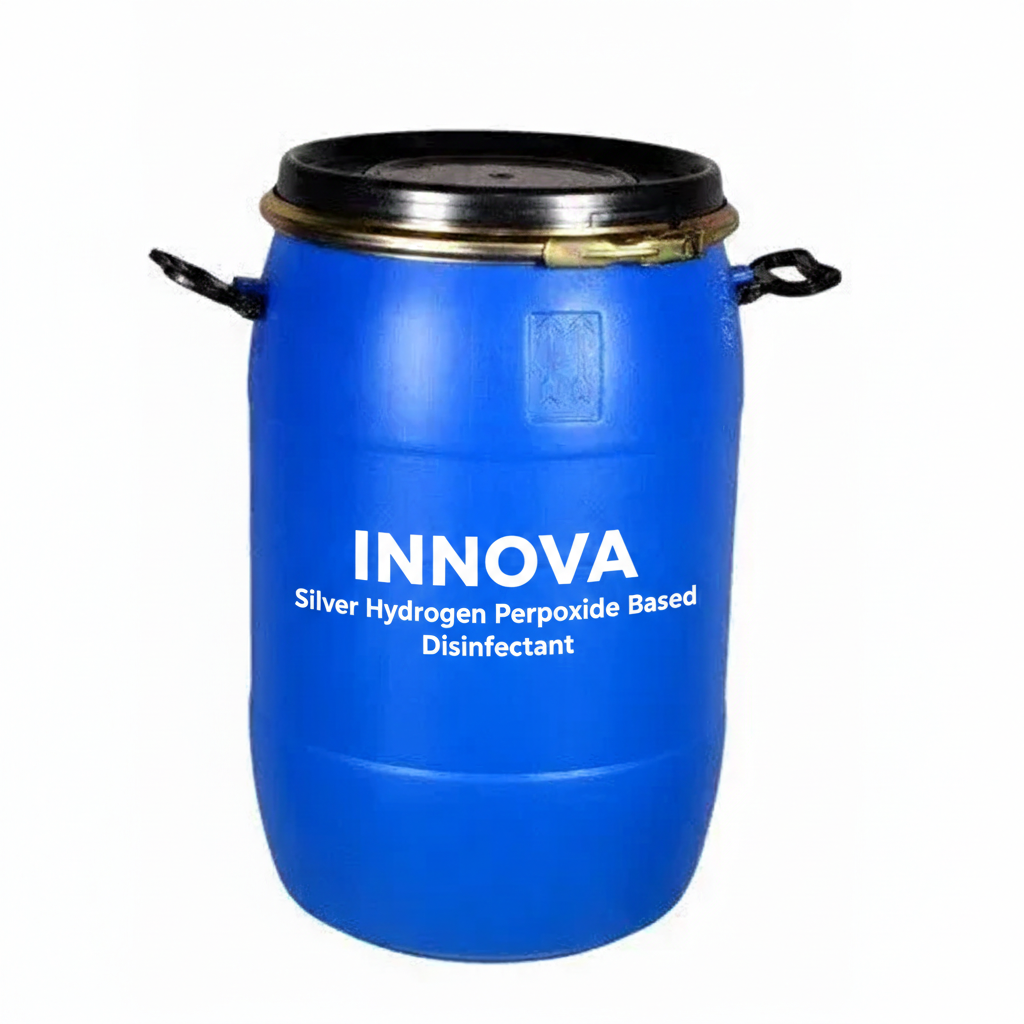
Silver Hydrogen Peroxide Based Disinfectant for Tanzania Plants (TBS & NEMC Compliant)
Tanzania's industrial water systems face microbial challenges from a set of conditions specific to the country's geography and industrial base. Mining operations in Mwanza, Geita, and Kahama run large cooling and process water systems where biofilm reduces heat transfer efficiency and equipment reliability. Cement plants in Dar es Salaam, Tanga, and Mbeya operate recirculating cooling water that supports rapid microbial growth in Tanzania's tropical coastal and inland plateau climates. Food processing facilities in Dar es Salaam, Mwanza, and Arusha draw from high-fluoride groundwater where chlorine-based disinfection reacts with organics to form compounds that affect taste. And Indian Ocean desalination plants at Dar es Salaam and Tanga require residue-free disinfection for potable and process water. Innova Corporate (India) is a trusted manufacturer and supplier of silver hydrogen peroxide disinfectant for Tanzania — a synergized blend of IP-grade hydrogen peroxide and silver nitrate, stabilised through a precise pH and temperature-controlled process. The product is compliant with TBS (Tanzania Bureau of Standards) requirements and NEMC (National Environment Management Council) discharge regulations.
The synergy between silver and hydrogen peroxide delivers two mechanisms in one product. Hydrogen peroxide provides fast, broad-spectrum oxidation against bacteria, fungi, and viruses. Silver ions act as a residual bacteriostat — an oligodynamic effect that keeps microbial regrowth suppressed between dosing cycles. Together they penetrate and destroy biofilm at concentrations far below what chlorine would require, and they break down into water and oxygen with no chlorinated byproducts, no odour, and no taint. For Tanzania food processing facilities in Dar es Salaam, Mwanza, and Arusha, this means taste-neutral disinfection that meets TBS requirements for potable water and process water. For mining and cement operations, the formulation is safe for stainless steel and carbon steel equipment and does not introduce chlorinated residuals that would complicate NEMC discharge reporting.
For Tanzania specifically, the formulation performs reliably across the country's full range of climate zones. The coastal tropical conditions in Dar es Salaam and Tanga (25°C to 35°C), the hot inland plateau in Dodoma and Mwanza (20°C to 32°C), and the cooler highland regions in Arusha and Mbeya (12°C to 25°C) are all covered by the product's full efficacy range of 5°C to 40°C. No heated dosing or seasonal adjustment is required — critical for mining and cement operations that run continuously year-round. The formula is also suitable for CIP (clean-in-place) of food and beverage equipment — including dairy, brewing, and pharmaceutical applications — for sterilising pipelines, tanks, evaporators, and aseptic packaging equipment.
Key Features & Strategic Benefits for Tanzania Industries:
- TBS & NEMC Compliant: Meets Tanzania Bureau of Standards requirements and NEMC discharge regulations.
- Broad Spectrum: Effective against bacteria, fungi, viruses, and established biofilm.
- Climate Zone Performance: Full efficacy from 5°C to 40°C — covering coastal, plateau, and highland Tanzania.
- Eco-Friendly: Completely biodegradable; breaks down into water and oxygen.
- Non-Carcinogenic: Safe alternative to formalin and chlorine-based disinfectants.
- Biofilm Destroyer: Penetrates and destroys tough biofilms in mining cooling and cement water systems.
- Non-Tainting: No residual odour or taste — critical for food processing and potable water.
- Oligo-dynamic: Silver provides residual bacteriostatic effect between dosing cycles.
- Versatile Use: Suitable for continuous dosing, fogging, spraying, and CIP applications.
- Non-Corrosive: Safe for stainless steel and carbon steel equipment used in Tanzania mining and cement operations.
Application & Dosage in Tanzania:
This disinfectant is used for microbial control in process water, fruits and vegetables, cooling towers, and air-conditioning ducts across Tanzania. The dosage typically ranges from 0.002% to 0.5% w/w, depending on the application, water quality, and microbial load. For potable water applications in Tanzania, the final treated water must meet TBS requirements for potable water quality.
Note: Please consult your Innova technical representative for specific dosage protocols based on your system requirements and Tanzania regulatory context.
Recommended Applications in Tanzania: Gold and tanzanite mining operations in Mwanza, Geita, and Kahama for process and cooling water; cement plants in Dar es Salaam, Tanga, and Mbeya for cooling water systems; food processing and beverage bottling in Dar es Salaam, Mwanza, and Arusha requiring taste-neutral disinfection; Indian Ocean seawater desalination plants at Dar es Salaam and Tanga; municipal water utilities in Dodoma and Arusha facing high-fluoride groundwater; port facility potable and process water systems at Dar es Salaam, Tanga, and Zanzibar; and any Tanzania industrial facility where microbial contamination affects product quality or NEMC discharge compliance.
Safety & Handling:
While handling at your Tanzania facility, wear splash goggles, lab coats, vapour respirators, and gloves. In case of skin contact, wash with water immediately. For eye splashes, flush with fresh water and seek medical attention. Do not inject. Refer to the Material Safety Data Sheet (MSDS) for comprehensive safety data and TBS-required handling protocols.
Storage & Stability: Store in original sealed containers in a cool, ventilated, and dry area at your Tanzania facility. Keep away from heat, open flames, and direct sunlight to maintain chemical stability. During the rainy season (March to May), keep containers off damp floors and away from condensation. For detailed application protocols and shelf life, refer to the Technical Data Sheet (TDS) and Material Safety Data Sheet (MSDS) — both compliant with Tanzania regulatory documentation requirements.
Export & Technical Support for Tanzania: We ship regularly to the Port of Dar es Salaam, Tanzania's largest port, and the Port of Tanga, with onward transport to Dodoma, Mwanza, Arusha, Mbeya, and other industrial cities across Tanzania. All shipments include complete customs documentation, MSDS, and TDS. Our technical team provides free dosing guidance based on your water source, treatment process, and regulatory requirements — including support for TBS and NEMC documentation.