- 2B / BW Shalimar Bagh, Opp. BQ Market, Near DLF Mall New Delhi - 110088, India.
- :+91-9312-871-070

Manufacturers, Exporters, Suppliers of RO Membrane Cleaner
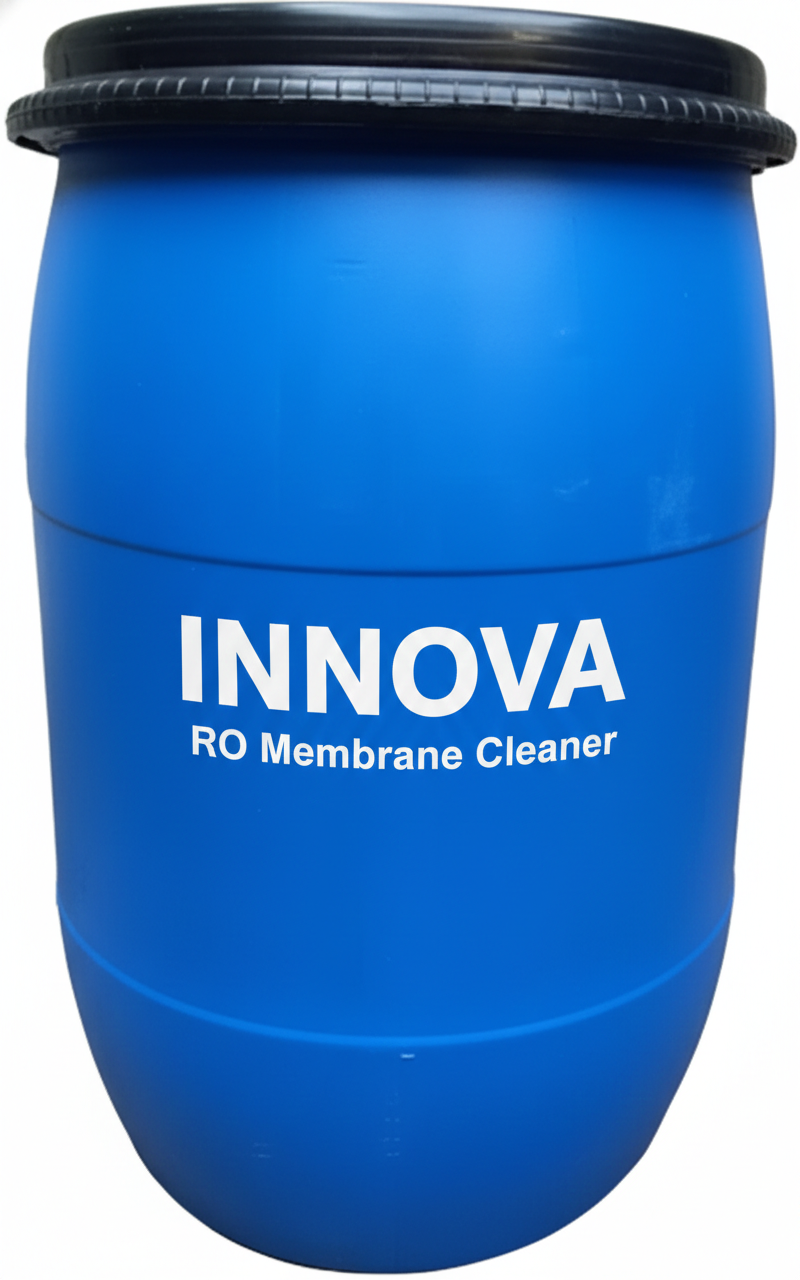
RO Membrane Cleaner Chemicals for Belgium Plants (Complete CIP Range, EU BPR Compliant)
Belgium's industrial RO plants face one of the most diverse fouling environments in Europe — and they operate under one of the strictest regulatory frameworks in the world. Surface water from the Meuse basin in Wallonia and the Scheldt basin in Flanders carries natural organic matter, carbonate hardness, and seasonal silica. Industrial reuse and process water streams at Antwerp's petrochemical cluster and Ghent's heavy industry accumulate oils, process chemicals, iron, and complex organics through multiple reuse cycles. Belgian brewing and food processing contribute their own organic loads from fermentation, packaging, and cleaning operations. No single cleaner handles all of these — which is why Innova Corporate (India) supplies a complete range of RO membrane cleaner chemicals for Belgium plants, formulated to comply with the EU Biocidal Products Regulation (BPR) and REACH requirements applicable to Belgium.
Our range covers every fouling type Belgium plants encounter: acidic cleaners for mineral scale, iron oxide, and silica; alkaline cleaners for biofilm, oils, and natural organic matter; specialised iron-fouled and silica-fouled membrane cleaners for extreme conditions; preservatives for shutdown periods; and dechlorination chemicals for pretreatment. Each product is formulated with premium-grade constituents and validated for the specific pH, temperature, and contact time requirements of polyamide, cellulose acetate, and thin-film composite (TFC) membranes used across Belgium industrial plants.
Correct CIP chemical selection directly determines your RO plant's operating cost. Wrong cleaner choice wastes chemical, extends downtime, and can damage membranes. Correct choice restores flux to near-design values in a single cycle, reduces cleaning frequency from monthly to quarterly, and extends membrane life by 2 to 3 years. For Belgium plants — where industrial electricity rates are among the highest in Europe and where EU regulatory compliance is mandatory — this shows up clearly in cost per cubic meter of permeate and in audit outcomes.
Our Specialized CIP Range for Belgium Plants:
- Low pH Membrane Cleaner
- High pH Membrane Cleaner
- Iron Fouled Membrane Cleaner
- Silica Fouled Membrane Cleaner
- RO Membrane Preservative
- RO Dechlorination Chemicals
Key Features of Our Belgium CIP Range: All formulations are low-foaming for high-velocity recirculation CIP, precisely buffered to protect membranes across the recommended pH and temperature range, and fully biodegradable for compliance with EU discharge norms and Belgium's environmental reporting requirements. They maintain full efficacy at Belgium's cool water temperatures — from 5°C to 40°C — so no heated CIP systems or seasonal adjustment is required. They provide excellent system clean-up for Belgium industrial water treatment plants, pharmaceutical manufacturing facilities, chemical plants in the Antwerp petrochemical cluster, Belgian brewing industry, food processing units under AFSCA oversight, and municipal water utilities. Regular use prevents irreversible membrane damage and reduces overall operating costs by lowering CIP frequency and extending membrane replacement cycles.
Recommended Applications in Belgium: Pharmaceutical manufacturing in Antwerp, Brussels, and Liège requiring EU GMP documentation; Belgian brewing industry across Flanders and Wallonia requiring taste-neutral CIP chemistry; food processing facilities under AFSCA oversight; chemical plants in the Antwerp petrochemical cluster; steel and heavy industry in Ghent, Liège, and Charleroi; cooling tower and process water systems across Belgium; and municipal water treatment plants in Wallonia and Flanders drawing from Meuse and Scheldt sources.
Choosing the Right Cleaner for Your Belgium Plant: The correct CIP program depends on your specific feed water analysis and membrane fouling history. Most Belgium plants need a two-step protocol — alkaline first for biofilm, organics, and NOM, acidic second for mineral scale, iron, and silica. Plants with industrial reuse streams at Antwerp's petrochemical cluster or Ghent's heavy industry may need the dedicated iron-fouled or silica-fouled cleaner. Brewing and food processing plants need taste-neutral formulations suitable for AFSCA compliance. And plants with long shutdown periods need preservative as a separate stage.
For customised CIP (Clean-In-Place) protocols and to select the right cleaner for your specific water analysis, contact our technical service engineers. We provide free protocol guidance for Belgium plants — including alkaline-acid sequence, dilution ratios, contact time, temperature limits, and post-cleaning flush procedure — tailored to your membrane model, fouling type, and EU regulatory requirements including EU BPR, REACH, AFSCA, and EU GMP documentation.
Storage & Handling: Store all products in original sealed containers in a cool, dry, well-ventilated area at your Belgium facility, away from direct sunlight, heat sources, and incompatible materials. Use appropriate PPE during handling. Refer to the Material Safety Data Sheet (MSDS) and Technical Data Sheet (TDS) for each product — both compliant with EU regulatory documentation requirements.
Export & Technical Support for Belgium: We ship regularly to the Port of Antwerp-Bruges, Europe's second-largest port, with onward transport to Brussels, Ghent, Liège, Bruges, Charleroi, and other industrial cities across Belgium. All shipments include complete customs documentation, MSDS, and TDS. Our technical team helps you select the right cleaner combination for your plant — a service we provide free of cost.