- 2B / BW Shalimar Bagh, Opp. BQ Market, Near DLF Mall New Delhi - 110088, India.
- :+91-9312-871-070

Manufacturers, Exporters, Suppliers of RO Dechlorination Chemicals
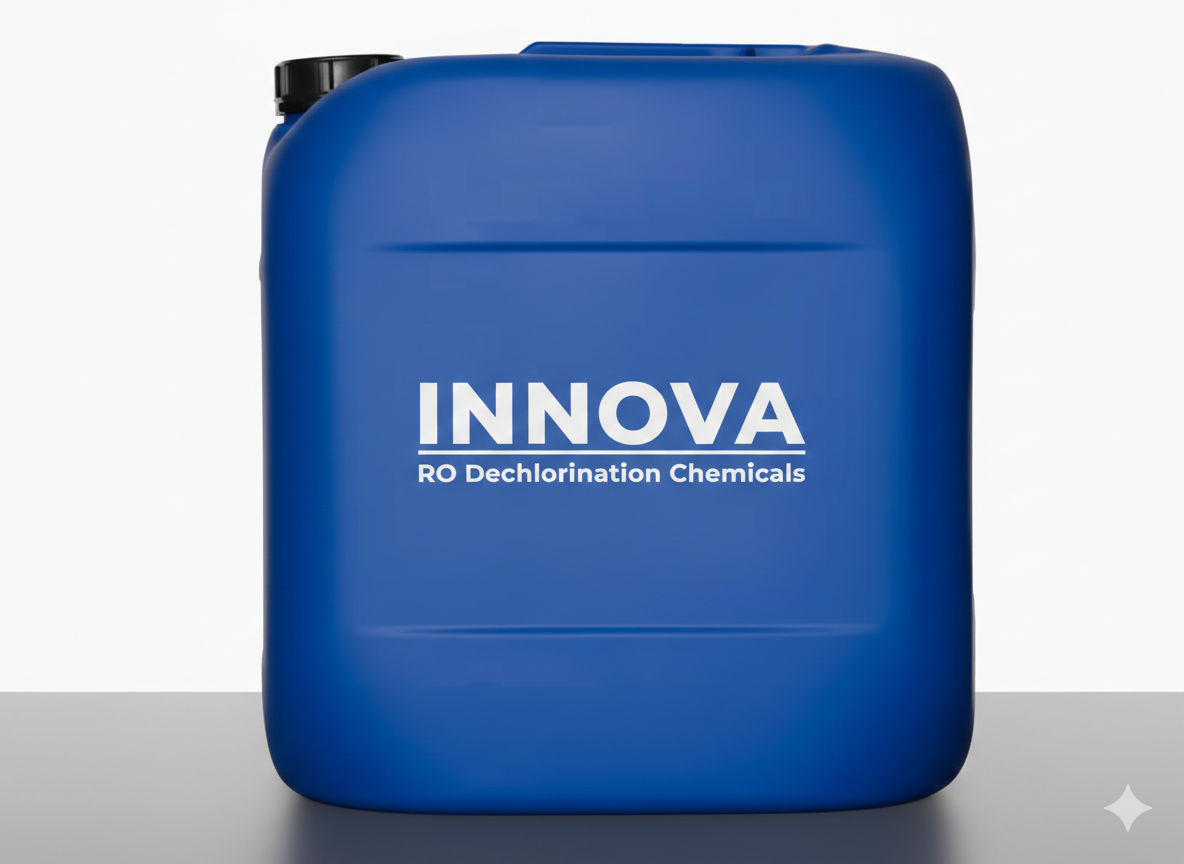
RO Dechlorination Chemicals in Jaipur (Oxidizing Agent Neutralizer)
Jaipur's municipal supply carries a chlorine residual that behaves differently from what most plant operators are used to. Under Rajasthan's high ambient temperatures, chlorine decay rates shift through the day — meaning feed water entering the RO system in early morning may carry a very different chlorine load than it does at 2 PM. For Sanganer and Bagru's dyeing units, Sitapura's food processing plants, VKI's pharma units, and gems & jewellery workshops across the belt, this variability creates a real problem: TFC membranes are sensitive to even brief chlorine exposure, and once oxidation starts, there's no reversing it. Innova Corporate (India)'s RO Dechlorination Chemical in Jaipur is engineered to handle this variable chlorine load — neutralizing residual chlorine before it reaches the membrane, cycle after cycle.
Our formulation is a high-purity liquid dechlorinator that acts on contact, breaking down free chlorine in the feed stream into harmless chloride. For Jaipur's dyeing units — where chlorine residue in process water can affect fabric shade consistency — and for the region's food, dairy and pharma plants where potable-grade compliance matters, this is more than membrane protection. It's a direct contribution to product quality. The liquid format also makes dosing simpler for the SME-heavy Jaipur market, where operators prefer to avoid the handling challenges of powdered sodium metabisulfite.
Key Features & Strategic Benefits for Jaipur Industries:
- Rapid Neutralization: Stabilized formula ensures near-instant action in neutralizing free chlorine in the feed water.
- Critical Membrane Protection: Guards Polyamide and TFC membranes against oxidative degradation and chemical "burning" in Jaipur's treatment facilities.
- Liquid Precision: Unlike conventional powders, our liquid formula is easy to handle, store, and dose with high accuracy at your Jaipur site.
- Enhanced Stability: Significantly more stable and effective than traditional sodium bisulfite solutions.
- System Longevity: Prevents premature membrane replacement costs by shielding against chlorine attack.
Application & Dosage Guidelines for Jaipur:
The dosage depends on the residual chlorine levels and contact time. Typically, the dosage ranges from 3 ppm to 15 ppm for Jaipur water conditions.
- Injection Point: Should be dosed as close to the RO system as possible (e.g., before cartridge filters).
- High Chlorine Strategy: If free chlorine is high, dose de-chlorinator prior to antiscalant injection, as chlorine can neutralize the effectiveness of antiscalants.
- Safe Mixing: Avoid mixing neat (concentrated) de-chlorinator and antiscalant directly; ensure dosing points are properly spaced in your Jaipur plant setup.
Handling & Safety Measures:
Always wear proper safety gear, including splash goggles, lab coats, gloves, and vapor respirators. In case of skin contact, wash immediately with water. Store in original containers in a cool, dry place at your Jaipur facility, away from direct sunlight and heat sources.
*Note: As a company policy, Innova Corporate recommends consulting our service engineers in Jaipur for precise dosage requirements based on your specific water chemistry.