- 2B / BW Shalimar Bagh, Opp. BQ Market, Near DLF Mall New Delhi - 110088, India.
- :+91-9312-871-070

Manufacturers, Exporters, Suppliers of RO Antiscalant Chemicals
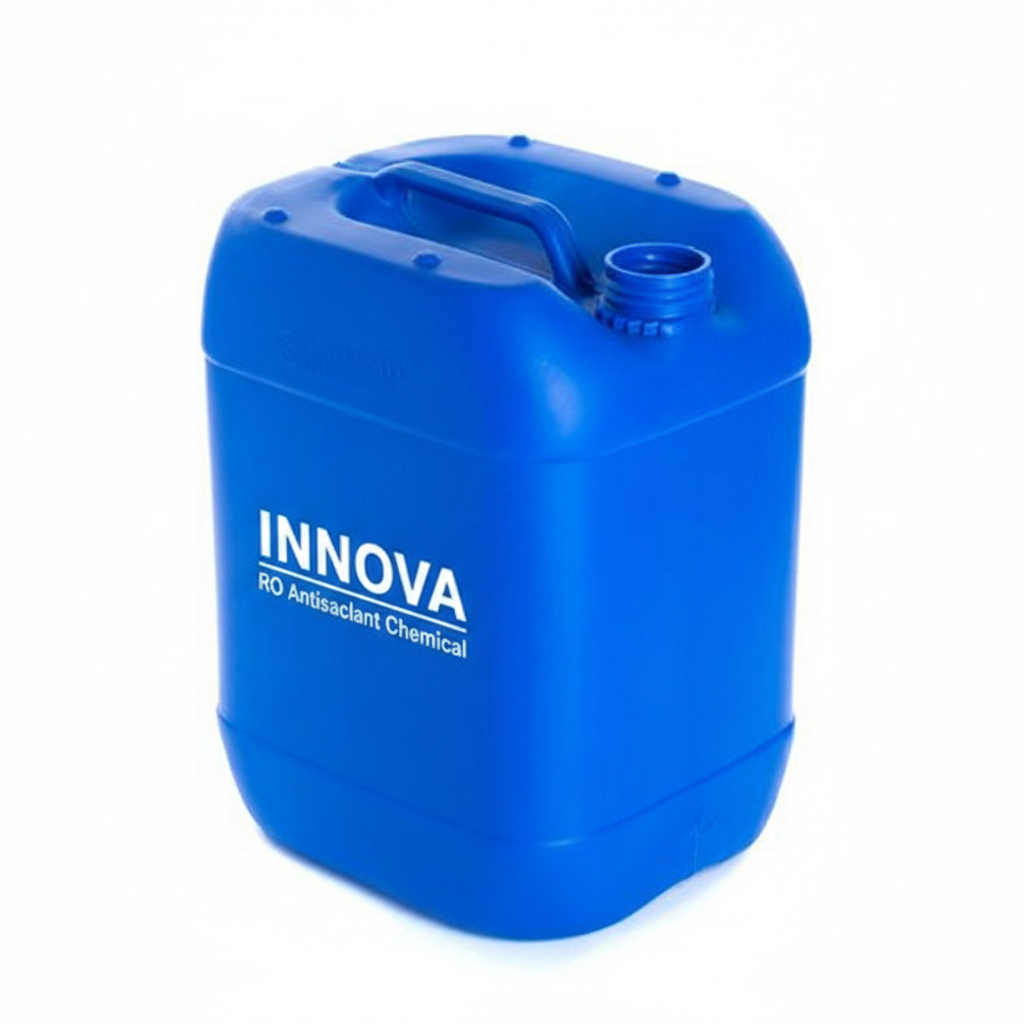
Industrial Grade RO Antiscalant & Antifoulant Chemicals in New Zealand
New Zealand's water is shaped by its geology. The volcanic plateau of the central North Island and the weathered greywacke and schist of the South Island both contribute dissolved minerals that behave differently from the hardness-dominated water found in most other countries. Silica is the most demanding of these. Unlike calcium carbonate that forms a crystalline scale removable with acid, silica polymerises into an amorphous glass-like deposit that resists standard cleaning chemicals and can permanently damage membrane elements if allowed to accumulate. Choosing the right antiscalant chemistry is therefore not a formality in New Zealand — it is the single most important decision in RO pretreatment design.
Innova Corporate (India) manufactures and supplies RO antiscalant chemicals for New Zealand with specialised silica dispersants at the core of the formulation. These dispersants interrupt the polymerisation process and keep silica in a soluble or finely dispersed state through the concentrate stream, even at high recovery rates where concentration factors rise three to five times above feedwater levels. The same formulations include threshold inhibitors for carbonate and sulfate scales, so that a single product can handle the mixed scaling risks typical of New Zealand's surface and groundwater sources.
Geothermal influence adds another dimension. Water drawn from aquifers near the Taupo Volcanic Zone and surrounding fields carries elevated boron, lithium, fluoride and arsenic alongside silica. Boron is particularly challenging because it passes through standard RO membranes unless the feed pH is raised, and raising pH increases carbonate scaling risk. Our antiscalant blends account for this interaction and maintain membrane performance where simpler formulations would fail. Whether for Reverse Osmosis (RO), Nanofiltration (NF), or Ultrafiltration (UF), the formulations deliver consistent results across brackish water treatment and high-recovery industrial systems.
Pastoral agriculture adds a third layer of complexity. Many New Zealand surface water sources carry elevated organic matter from animal waste, fertiliser runoff and decomposing plant material. This organic load co-deposits with mineral scale and creates a layered fouling problem that pure antiscalant cannot fully solve. Our formulations include organic dispersants that keep the organic fraction in suspension, and we recommend pairing antiscalant with biocide treatment for the microbial component — an approach that has become standard in dairy and food processing operations across both islands.
Key Features & Strategic Advantages for New Zealand Plants:
- Silica Polymerisation Control: Specialised dispersants interrupt silica polymerisation and keep it in solution through the concentrate stream — the primary scaling challenge in New Zealand water sources.
- Geothermal Mineral Tolerance: Formulated to handle boron, lithium, fluoride and arsenic alongside silica in water influenced by volcanic geology.
- Pastoral Organic Dispersion: Organic dispersants keep agricultural runoff and natural organic matter in suspension, preventing layered co-deposition with mineral scale.
- Superior Scale Control: Effectively manages Calcium Carbonate up to LSI +3.0, Calcium Sulfate, Barium Sulfate and Strontium Sulfate across the full saturation range.
- Softener Alternative: Delivers excellent results as a low-maintenance replacement for traditional softener filters — eliminating salt consumption, regeneration water and resin maintenance.
- Potable Water Certified: Safe for use in systems producing drinking water when dosed at recommended levels, with documentation aligned to New Zealand regulatory requirements.
- Wide Compatibility: Fully compatible with all leading RO, NF and UF membranes and downstream coagulants.
- Metallic Oxide Tolerance: High tolerance to aluminium and iron oxides, preventing metallic fouling from coagulant residuals and naturally occurring metals.
- Operating Flexibility: Effective over a broad pH range and can be fed neat or diluted up to 10% with RO permeate.
- Particulate Dispersion: Powerful dispersant action keeps silt, clay and organic foulants from adhering to the membrane surface.
Choosing the Right Formulation for New Zealand Water:
- Volcanic-Affected Sources (Central North Island): High-silica formulation with geothermal mineral tolerance. Common in the Taupo, Rotorua and Waikato regions where surface water and shallow groundwater carry elevated dissolved silica and boron.
- Hard Water Sources (Canterbury, Otago): Standard carbonate-control formulation with high LSI tolerance. Common in South Island regions where groundwater is naturally hard.
- Pastoral Surface Water (Nationwide): Formulation with enhanced organic dispersion to handle agricultural runoff and natural organic matter co-deposition.
- Iron-Bearing Groundwater (Select Regions): Formulation with iron and manganese tolerance for aquifers where these metals are present alongside hardness.
- Coastal and Brackish Sources: Formulation with high sulfate tolerance for systems drawing from estuarine or brackish water affected by seawater intrusion.
- High-Recovery Industrial Systems: Concentrated formulation that maintains effectiveness as ion concentrations rise sharply through the RO train.
Strategic Benefits Delivered to New Zealand Plants:
At Innova Corporate, we offer various specialised types of RO antiscalants tailored to the specific water chemistries found across New Zealand. Our technical team can assist you in selecting the precise formulation — whether your priority is silica control, carbonate protection, geothermal mineral tolerance or organic dispersion — to ensure your system operates at peak recovery rates with minimal downtime.
Frequently Asked Questions — RO Antiscalant Chemicals in New Zealand
1. Why is silica the primary scaling challenge in New Zealand RO systems?
Many New Zealand water sources — both surface and groundwater — carry elevated dissolved silica because of the country's volcanic geology and weathered rock formations. Unlike calcium carbonate scale that responds to acid cleaning, silica polymerises into an amorphous glass-like deposit that resists standard cleaning chemicals. Once formed on the membrane, silica scale is very difficult to remove without damaging the element. Our antiscalant formulations include specialised silica dispersants that interrupt the polymerisation process and keep silica in solution through the concentrate stream, even at high recovery rates where concentration factors rise significantly.
2. How does geothermal activity affect RO feedwater in New Zealand?
New Zealand's Taupo Volcanic Zone and surrounding geothermal fields contribute minerals to surface and groundwater that are uncommon in other countries. Boron, lithium, arsenic, fluoride and elevated silica are all associated with geothermal influence. These minerals behave differently from standard hardness ions during RO treatment. Boron is particularly problematic because it passes through standard RO membranes unless pH is raised, and the elevated pH increases carbonate scaling risk. We formulate antiscalant blends that account for this interaction, so systems near geothermal zones can maintain membrane performance without compromise.
3. Can your antiscalant handle pastoral runoff and agricultural organic matter?
Yes. New Zealand's pastoral agriculture means many surface water sources carry elevated organic matter from animal waste, fertiliser runoff and decomposing plant material. This organic load co-deposits with mineral scale and creates a layered fouling problem that pure antiscalant alone cannot solve. Our formulations include organic dispersants that keep the organic fraction in suspension, and we recommend pairing antiscalant with biocide treatment for the microbial component. This combined approach is standard practice in dairy and food processing facilities across New Zealand.
4. What documentation do you provide for New Zealand regulatory compliance?
Every shipment to New Zealand includes Material Safety Data Sheet (MSDS), Technical Data Sheet (TDS), Certificate of Analysis (COA) and dosing guidelines. For potable water applications, we can provide documentation aligned with Taumata Arowai (the water services regulator) requirements and MPI (Ministry for Primary Industries) guidelines for food processing use. For HSNO (Hazardous Substances and New Organisms Act) compliance, we supply the appropriate classifications and safety data.
5. How does the dairy industry in New Zealand benefit from RO antiscalant?
New Zealand's dairy industry operates some of the largest RO systems in the country for whey concentration, milk processing and boiler feed water. These systems run at high recovery and handle feedwater with variable composition depending on season and source. Silica scale from volcanic-affected water sources, organic load from milk processing streams, and the need for CIP-compatible chemistry all place specific demands on antiscalant selection. Our formulations are designed for these conditions, with dispersion components that handle both mineral and organic foulants without interfering with downstream processes.
6. Is your antiscalant suitable for wine industry water treatment in Marlborough and Hawke's Bay?
Yes. New Zealand's wine industry depends on consistent, clean water for fermentation, barrel washing and bottling operations. Silica and carbonate scale can affect heat exchangers and RO systems used for water polishing. Our antiscalants are compatible with wine processing operations and do not introduce flavour-affecting compounds. For potable and food-contact applications, we provide documentation for MPI compliance, and the products are formulated to pass through membranes without affecting permeate quality.
7. How do I calculate the antiscalant dose for New Zealand feedwater with multiple foulants?
Dose calculation for New Zealand systems requires modelling the concentrate stream, not the feedwater, because concentration factors of three to five times are typical. We need your complete water analysis including calcium, magnesium, carbonate, sulfate, silica, boron, iron and organic content, along with system recovery, temperature and membrane type. From this we calculate the required dose to keep every potential scale species below its saturation point. Typical doses range from 2 to 6 ppm for standard conditions, rising to 8 to 10 ppm for high-silica or mixed fouling sources.
8. Does your antiscalant work in both North and South Island water conditions?
Yes, though the optimal formulation may differ. North Island sources affected by volcanic geology often carry elevated silica and geothermal minerals. South Island sources, particularly in Canterbury and Otago, tend toward harder water with higher carbonate and sulfate content, and some regions have elevated iron and manganese. We recommend different variants based on regional water chemistry — and for operations that draw from multiple sources, we can formulate a blended product that handles the range.
9. What is the shelf life and storage requirement for antiscalant in New Zealand's climate?
Our liquid antiscalants have a shelf life of 24 months when stored in sealed original containers at temperatures between 5°C and 30°C. New Zealand's temperate climate is well suited to this range, and no special cold-weather precautions are needed except for South Island high-country sites where overnight temperatures can drop below freezing. In those cases, protect from freezing during transport and storage. If the product freezes, thaw gradually at room temperature and stir before use — performance is unaffected.
10. How do you ship antiscalant chemicals from India to New Zealand?
We ship from Indian ports to Auckland, Tauranga, Wellington, Lyttelton (Christchurch), Port Chalmers (Dunedin) and Napier. All shipments include commercial invoice, packing list, certificate of origin, MSDS and any certificates required by New Zealand Customs and the Environmental Protection Authority (EPA). We work with freight forwarders experienced in New Zealand import procedures and can support clients through the MPI biosecurity clearance process for chemical imports.