- 2B / BW Shalimar Bagh, Opp. BQ Market, Near DLF Mall New Delhi - 110088, India.
- :+91-9312-871-070

Manufacturers, Exporters, Suppliers of RO Disinfectant Chemicals
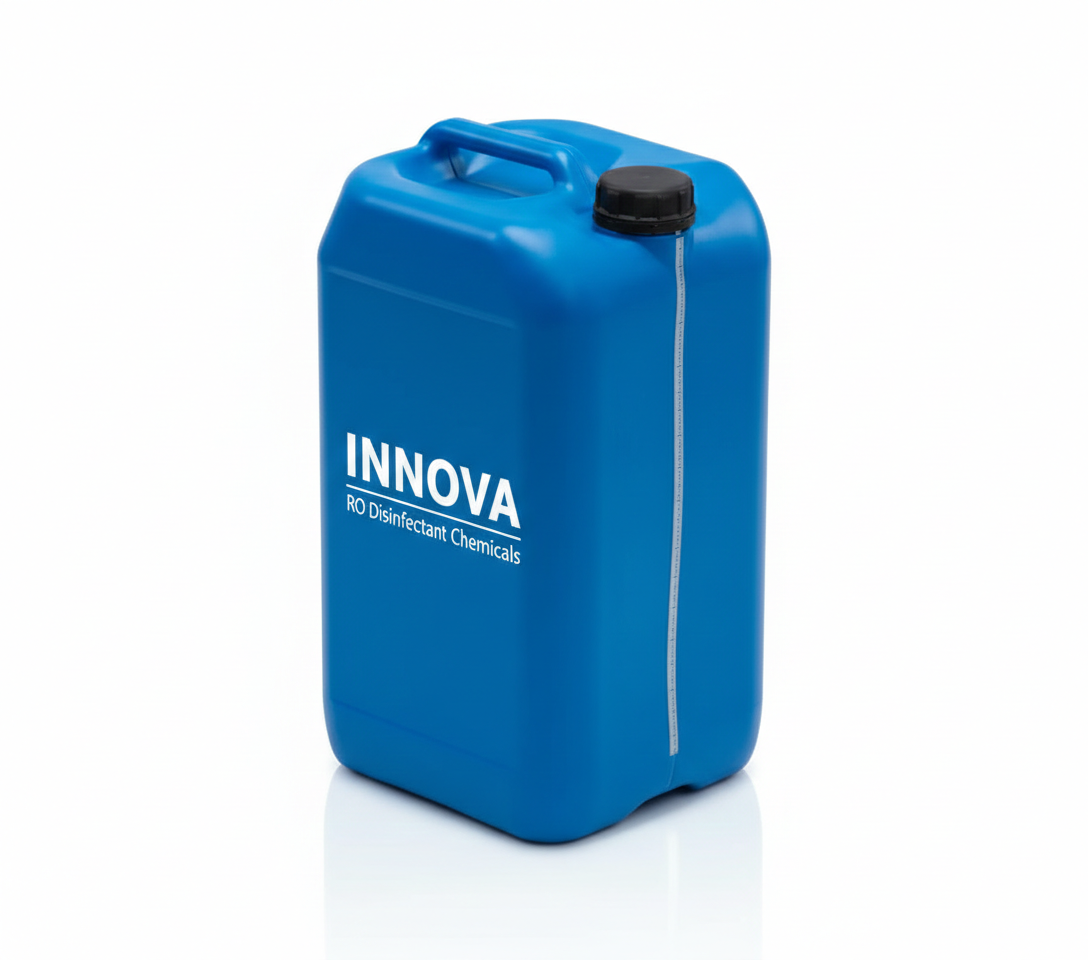
RO Disinfectant Chemicals for Thailand Plants (Non-Oxidizing Microbiocide, TISI & PCD Compliant)
Thailand's industrial RO plants face microbial challenges from a set of conditions specific to the country's geography and industrial base. Seafood processing facilities in Songkhla and Samut Sakhon develop rapid biofilm from combined oil and protein loads in fish and shrimp processing. Petrochemical operations at Map Ta Phut and Rayong run large cooling water systems where oil-associated biofilm reduces heat transfer efficiency. Rubber processing in Songkhla and Trang generates latex and ammonia-based organic fouling. And Gulf of Thailand seawater desalination at Rayong and Chonburi develops warm seawater biofilm that regenerates rapidly in tropical conditions. Innova Corporate (India) supplies this non-oxidizing RO disinfectant for Thailand plants specifically to control those microbial loads. The product is compliant with TISI (Thai Industrial Standards Institute) requirements and PCD (Pollution Control Department) discharge regulations.
Our RO disinfectant for Thailand is a safe and powerful solution for the disinfection of Reverse Osmosis systems, including those used for potable water. It effectively targets bacteria, fungi, and algae common in Thailand's coastal, river, and industrial water sources, ensuring that your membrane system remains free from biological sliming and maintains peak performance. The non-oxidizing formula is critical for Thailand's membrane systems — unlike chlorine, it does not oxidise or degrade polyamide or TFC membranes, so it can be dosed continuously without shortening membrane life. This matters for Songkhla seafood processing plants where membrane reliability directly affects production, and for Map Ta Phut petrochemical operations where continuous process water supply is critical.
For Thailand specifically, the product is used across four application profiles. Seafood processing plants in Songkhla, Samut Sakhon, and Phuket need continuous biocide for the combined oil+protein biofilm that develops in fish and shrimp processing. Petrochemical operations at Map Ta Phut and Rayong need biofilm removal from cooling and process water. Rubber processing in Songkhla and Trang needs latex and ammonia-based organic fouling control — a fouling pattern standard biocides handle poorly. And Gulf of Thailand desalination plants at Rayong and Chonburi need warm seawater biofilm control. The formula maintains full efficacy across Thailand's three climate zones — Bangkok's tropical monsoon (28–35°C), the northeast's wet-dry tropical (20–35°C), and the coastal Andaman and Gulf regions (25–33°C) — without any heated dosing requirement.
Key Features & Strategic Benefits for Thailand Industries:
- TISI & PCD Compliant: Formulated to meet Thai Industrial Standards Institute requirements and Pollution Control Department discharge regulations — documentation in Thai and English available for facility audits.
- Broad-Spectrum Efficacy: Highly effective against bacteria, fungi, algae, and established biofilm — critical for Songkhla seafood processing oil+protein biofilm and Map Ta Phut petrochemical oil-associated biofilm.
- Potable Water Safe: Certified safe for use in RO systems producing drinking water for Thailand residents and tourism facilities when used as per guidelines — meets TISI potable water parameters.
- Non-Oxidizing Formula: Unlike chlorine, it does not oxidise or degrade polyamide or TFC membranes — no irreversible salt rejection loss, no accelerated membrane replacement.
- Eco-Friendly & Biodegradable: Environmentally responsible formulation that breaks down safely after use — meets PCD environmental standards for Thailand discharge.
- Tropical Monsoon Optimised: Formulated for Thailand's 28–35°C year-round temperatures where biofilm regenerates in 5 to 7 days — nearly twice as fast as in cooler climates.
- Rubber Latex Compatible: Effectively controls the latex and ammonia-based organic biofilm from Songkhla and Trang rubber processing that standard biocides leave behind.
- Total System Compatibility: Fully compatible with all RO membrane components, housings, high-pressure pumps, gaskets, and CIP skid components used across Thailand industrial plants.
Application & Dosage for Thailand Plants:
Dosage depends on the severity of biological fouling and the type of water source. We recommend two primary methods for Thailand facilities:
- Shock Dosing (Immediate Disinfection): Use a concentration of 5–10% v/v for rapid system sterilisation during shutdowns — ideal for Songkhla seafood processing peak-season maintenance and Map Ta Phut petrochemical turnarounds.
- Continuous Dosing (Preventative): Maintain a concentration of 2.5 ppm in the feed water for round-the-clock microbial control — standard practice for Thailand seafood and petrochemical cooling water systems.
Recommended Membrane Cleaning Protocol for Thailand:
- Disinfect the system with Innova RO Disinfectant.
- Flush thoroughly with permeate water.
- Circulate a High pH Membrane Cleaner solution for 30 minutes, then soak for 1–2 hours.
- Final flush with permeate water before returning the Thailand plant to normal service.
*Note: In multi-pass systems, clean each pass individually for the best results. Replace cleaning solutions if they become excessively turbid — common with Songkhla seafood processing oil+protein loading and Map Ta Phut petrochemical oil fouling.*
Recommended Applications in Thailand: Seafood processing plants in Songkhla, Samut Sakhon, and Phuket for oil+protein biofilm control; petrochemical operations at Map Ta Phut and Rayong for oil-associated biofilm; rubber processing in Songkhla and Trang for latex and ammonia residue; electronics manufacturing in Rayong and Ayutthaya for ultrapure process water; Gulf of Thailand seawater desalination at Rayong and Chonburi; food processing and beverage bottling in Bangkok and Chiang Mai; and municipal water utilities across Thailand.
Safety & Handling: Proper PPE (splash goggles, lab coats, gloves, and vapour respirators) must be worn. Store in original containers in a cool, dry place at your Thailand site, away from direct heat or sunlight. During monsoon season, keep containers off damp floors and away from condensation. Use appropriate PPE during handling. Refer to the Material Safety Data Sheet (MSDS) and Technical Data Sheet (TDS) for complete safety and application details — both available in Thai and English, compliant with TISI regulatory documentation requirements.
Export & Technical Support for Thailand: We ship to Laem Chabang, Bangkok (Klong Toey), Map Ta Phut, and Songkhla ports, with onward transport to Rayong, Ayutthaya, Chonburi, Chiang Mai, Hat Yai, and other industrial cities across Thailand. All shipments include complete customs documentation, MSDS, and TDS in Thai and English. Our technical team provides free dosing guidance based on your feed water analysis, microbial load, and regulatory requirements — including support for TISI and PCD documentation.