- 2B / BW Shalimar Bagh, Opp. BQ Market, Near DLF Mall New Delhi - 110088, India.
- :+91-9312-871-070

Manufacturers, Exporters, Suppliers of Cleaner For Silica Fouled Membrane
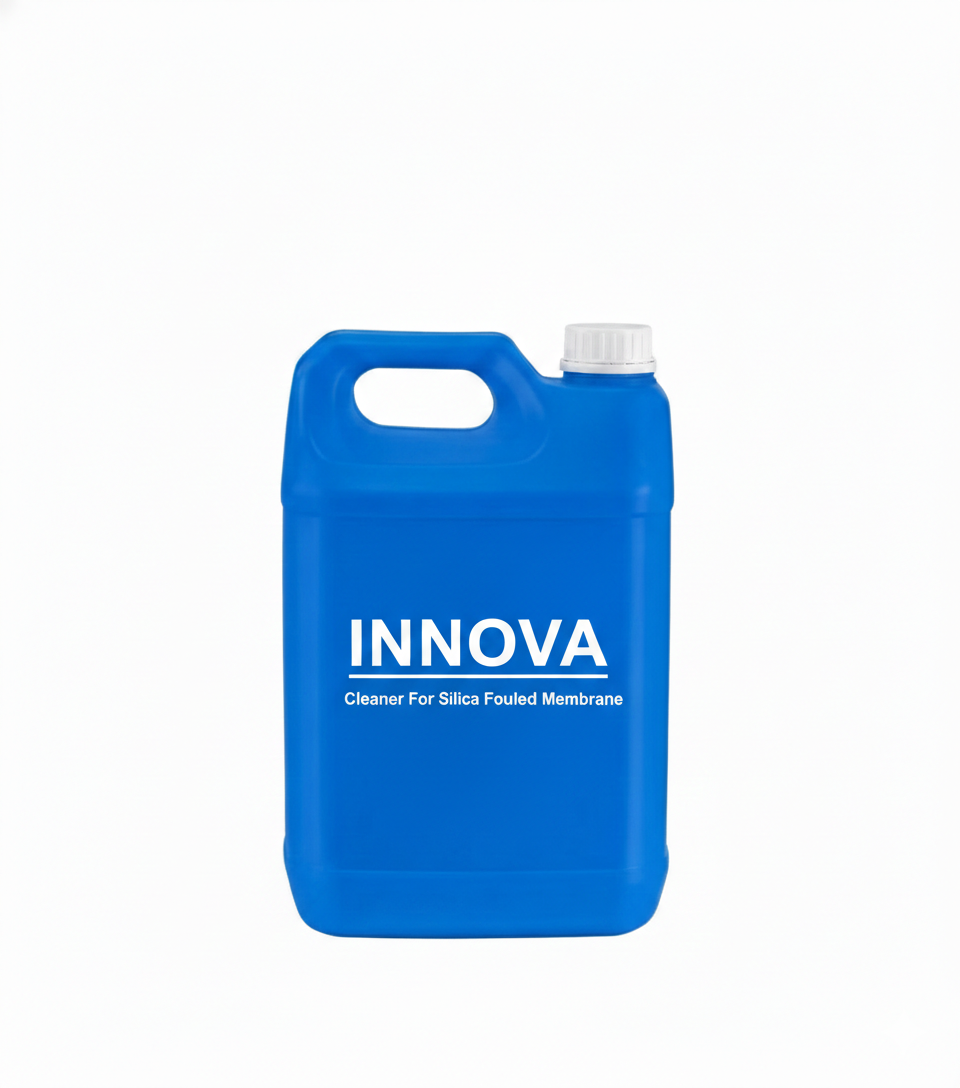
Silica Fouled Membrane Cleaner in Bhutan for Glacial Melt, Cement & Geothermal RO (CIP Silica Remover)
Innova Corporate (India) supplies Silica Fouled Membrane Cleaner in Bhutan for four distinct silica sources — Thimphu and Chukha hydropower cooling water from Himalayan glacial melt with 40–80 ppm dissolved silica, Pasakha cement effluent with 50–80 ppm silica and carbonate, Gelephu geothermal water with 60–100 ppm silica at high temperature, and Phuentsholing food processing with 30–50 ppm silica and organic load. Silica is one of the hardest foulants to remove from RO membranes — when dissolved silica polymerizes, it forms a glass-like deposit that standard acid and alkaline CIP chemicals cannot dissolve. Our silica-specific CIP cleaner is engineered to break down polymerized silica and silicate scale without damaging polyamide membranes in Bhutan's hydropower, cement, geothermal and food processing plants.
By using our silica cleaner, Bhutanese industrial facilities can extend the lifespan of their membranes and avoid the high cost of premature replacement. It is a vital maintenance product for Bhutan's emerging industrial sector, where water quality precision is paramount. Our cleaner ensures that Bhutan's RO systems maintain their required performance even with difficult silica loads from glacial melt and geothermal sources.
Bhutan Silica Sources — Why Standard Cleaners Fail:
| Bhutan Location | Silica Source | Silica Level | Temperature |
|---|---|---|---|
| Thimphu, Chukha | Glacial melt water | 40–80 ppm | Cold (5–15°C) |
| Pasakha | Cement effluent | 50–80 ppm | Ambient |
| Gelephu | Geothermal water | 60–100 ppm | Warm (35–50°C) |
| Phuentsholing | Food processing effluent | 30–50 ppm | Ambient |
Why Silica Needs Different Treatment Than Other Scales in Bhutan:
| Parameter | Calcium / Sulfate Scale | Silica Scale |
|---|---|---|
| Nature | Crystalline, removable by acid | Amorphous, glass-like, very hard |
| Low pH Cleaner | Dissolves effectively | No effect |
| High pH Cleaner | Limited effect | Partial effect at warm temperature |
| Silica Cleaner | Works but not necessary | Specifically formulated for silica removal |
Industries We Serve Across Bhutan:
Hydropower Cooling Water (Thimphu, Chukha): Hydropower plants face glacial melt silica fouling in cooling water RO. Silica cleaner restores flux and differential pressure during CIP.
Cement Effluent (Pasakha): Cement plants use silica cleaner for effluent RO with carbonate, sulfate and silica scaling at high recovery rates.
Geothermal Water (Gelephu): Geothermal sites use silica cleaner for water RO with 60–100 ppm dissolved silica at high temperature.
Food Processing (Phuentsholing): Food processing plants use silica cleaner for process water RO with moderate silica and organic fouling.
Municipal Water (Thimphu, Phuentsholing): Municipal RO plants use silica cleaner for periodic CIP to remove glacial melt silica from community water systems.
Hotel & Tourism (Thimphu, Paro): Hotels use silica cleaner for potable water RO with moderate silica from glacial melt sources.
Cleaning Protocol for Silica Fouling in Bhutan RO Plants:
- Pre-CIP Inspection: Record differential pressure, permeate flow and salt rejection. Confirm silica fouling by checking feed, concentrate and permeate silica levels.
- Solution Preparation: Dilute with RO permeate water to prepare a 2–5% v/v working solution. Warm the solution to 35–40°C for best silica removal — critical for cold glacial melt water.
- Circulation: Circulate the cleaning solution through the membranes for 30–60 minutes at low pressure (2–4 bar).
- Soak: Include a 2–4 hour soaking period for heavy silica fouling. For very hard silicate in Gelephu geothermal water, extend soak to overnight.
- Flushing: Flush thoroughly with RO permeate water until pH is balanced at both feed and reject ends.
- Post-CIP Check: Measure differential pressure and permeate flow to confirm cleaning effectiveness. Repeat if necessary.
Common Silica Problems in Bhutan Hydropower, Cement & Geothermal RO Systems:
Glacial Melt Silica Fouling: Thimphu and Chukha hydropower cooling water RO faces 40–80 ppm glacial melt silica. Standard acid cleaning has no effect — silica-specific cleaner is required.
Pasakha Cement Effluent Silica: Cement effluent in Pasakha contains 50–80 ppm silica along with carbonate and sulfate. Silica cleaner handles this mixed fouling.
Gelephu Geothermal Silica: Geothermal water in Gelephu contains 60–100 ppm dissolved silica at high temperature. Silica cleaner with warm solution and extended soak removes this hard scale.
Phuentsholing Food Processing Silica: Food processing effluent in Phuentsholing contains moderate silica and organic fouling. Silica cleaner with high pH option handles both.
Cold Water CIP Challenge: Bhutan's cold glacial melt water slows CIP chemical reaction. Our formulation is optimised for cold-water performance with warm solution recommendation.
CIP Difficulty: Once silica has polymerized, standard acid and alkaline CIP chemicals cannot fully remove it. Prevention with silica antiscalant plus periodic silica cleaner CIP is the most effective strategy.
Technical Specifications:
| Appearance | Clear to pale yellow liquid |
| pH (as is) | 10.0 – 12.0 (alkaline) |
| Specific Gravity | 1.05 – 1.15 |
| Recommended CIP Dosage | 2 – 5% v/v in CIP solution |
| CIP Temperature | 35 – 40°C (warm solution for cold glacial water) |
| Soak Time | 2 – 4 hours (extend for heavy silica fouling) |
| Certification | NEC compliant |
| Shelf Life | 12 months in original sealed container |
Frequently Asked Questions (Bhutan):
Q: What is silica fouled membrane cleaner used for in Bhutan?
A: It is used for CIP of Thimphu and Chukha hydropower cooling water RO, Pasakha cement effluent RO, Gelephu geothermal water RO and Phuentsholing food processing RO. It removes hard silica and silicate scale that standard acid and alkaline cleaners cannot dissolve.
Q: Why is silica scaling a problem in Bhutan's glacial melt water?
A: Bhutan's Himalayan glacial melt water carries 40–80 ppm dissolved silica. When concentrated during RO operation, this silica polymerizes into a glass-like deposit on membranes that is highly resistant to standard acid and alkaline CIP chemicals.
Q: Which Bhutanese industries need silica membrane cleaner the most?
A: Hydropower plants in Thimphu and Chukha with glacial melt cooling water, cement plants in Pasakha with high-silica effluent, geothermal sites in Gelephu with 60–100 ppm silica, and food processing in Phuentsholing with moderate silica.
Q: How is silica membrane cleaner different from regular low pH or high pH cleaner?
A: Low pH cleaners dissolve carbonate and iron oxide scale, high pH cleaners remove organic fouling. Silica membrane cleaner is specifically formulated to break down polymerized silica and silicate deposits that neither low pH nor high pH cleaners can fully remove.
Q: What is the correct CIP dosage of silica membrane cleaner for Bhutan plants?
A: Typical CIP dosage is 2–5% v/v in RO permeate water, with warm solution temperature (35–40°C) for best silica removal. Contact time is 30–60 minutes circulation and 2–4 hours soak.
Q: Do you supply silica membrane cleaner across Bhutan?
A: Yes, we supply silica membrane cleaner to hydropower, cement, geothermal and food processing RO plants across Bhutan, including Thimphu, Chukha, Pasakha, Gelephu, Phuentsholing, Paro and Punakha.
Storage & Stability: Store in original, hermetically sealed containers in a cool, dry location at your Bhutan facility. Keep away from direct sunlight, heat sources and open flames. As an alkaline product, wear chemical-resistant gloves, goggles and apron during handling. For detailed shelf-life information and application guidelines, please consult the Technical Data Sheet (TDS).
Related Products: Explore our Complete RO Antiscalant Range for Bhutan, High Silica Antiscalant, and Silver Hydrogen Peroxide Disinfectant for a complete RO chemical programme across Bhutan.