- 2B / BW Shalimar Bagh, Opp. BQ Market, Near DLF Mall New Delhi - 110088, India.
- :+91-9312-871-070

Manufacturers, Exporters, Suppliers of RO Flocculants Chemicals
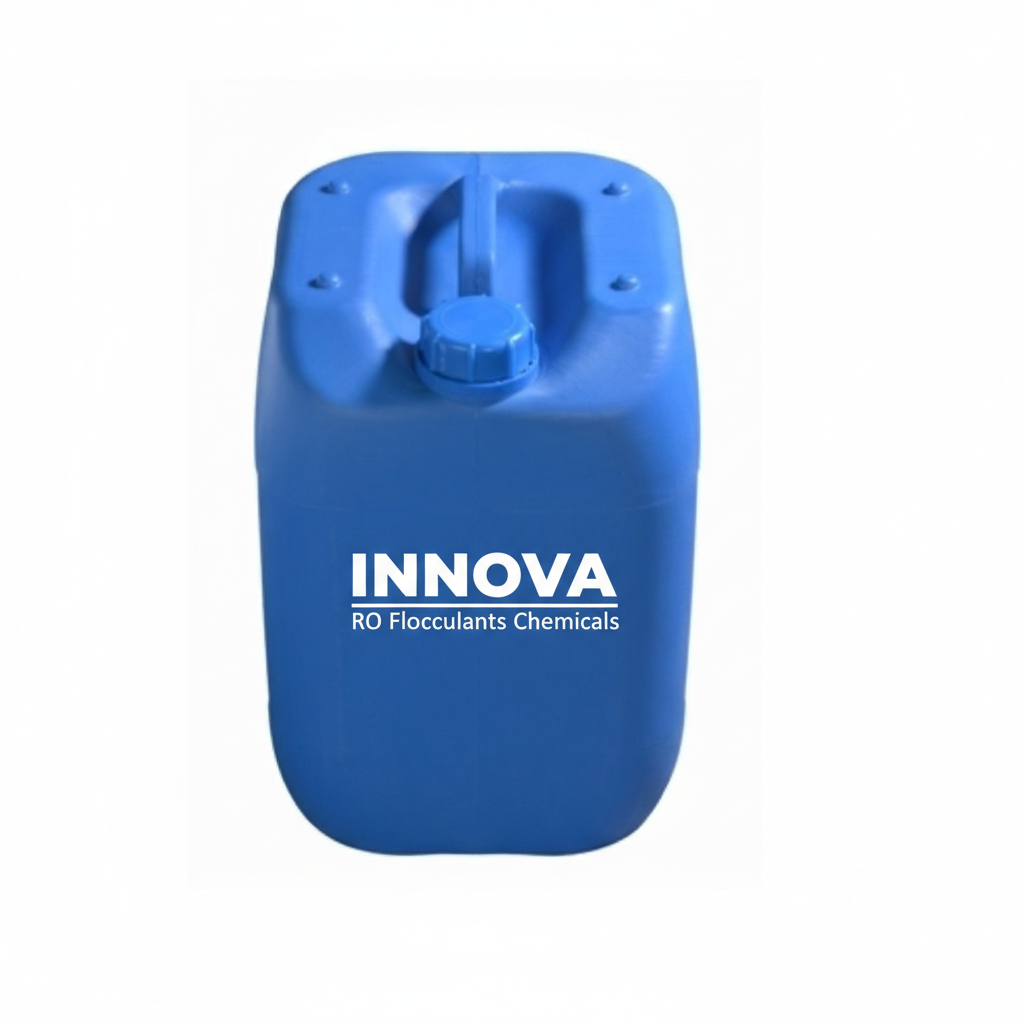
RO Flocculants Chemicals for Bhutan Plants (Himalayan Glacial Silt & Monsoon Turbidity Control)
Bhutan's industrial RO plants face turbidity challenges from a specific set of water sources tied to the country's Himalayan geography. Glacial meltwater from Thimphu, Paro, and Wangdue carries fine silt and rock flour — particles below 10 microns — that pass through standard pretreatment filters and deposit on membrane surfaces. During monsoon season from June to September, turbidity spikes dramatically as rainfall washes additional sediment into rivers and reservoirs. Hydropower auxiliary cooling water at Chukha, Tala, and Punatsangchhu picks up sediment from reservoir and canal systems. And cement plants at Penden and Dungsam deal with quarry runoff and kiln dust that carry fine particulate matter. Innova Corporate (India) supplies this RO flocculant for Bhutan plants specifically to address those conditions. The product is compliant with BSB (Bhutan Standards Bureau) requirements and NEC (National Environment Commission) discharge regulations.
Our specialised flocculant is an advanced liquid polymer developed to support the INNOVA series of pretreatment chemicals. It is highly effective in Bhutan's specific water conditions — from the fine rock flour in glacial meltwater to the heavier sediment in monsoon runoff to the inorganic kiln dust from cement operations. The polymer works by bridging fine particles into larger flocs that settle effectively in the clarifier or are removed by multi-grade and sand filters. This dramatically reduces Silt Density Index (SDI) — the primary indicator of membrane fouling potential — bringing feed water into the range specified by RO membrane manufacturers for reliable operation. For Bhutan's low-TDS glacial meltwater specifically, the formula is tuned to bridge the very fine, well-dispersed silt particles that standard flocculants handle poorly.
For Bhutan specifically, the product is used across three application profiles. Hydropower auxiliary cooling water systems at Chukha and Tala need continuous silt removal for heat transfer efficiency. Municipal water and food processing plants in Thimphu and Paro need seasonal dosing adjustment — higher during monsoon (June to September) when glacial silt and rainfall runoff peak, lower during dry winter months. And cement plants at Penden and Dungsam need high-capacity clarification for quarry runoff and kiln dust that carry fine inorganic particulate matter. The formula works effectively at Bhutan's cold Himalayan temperatures — from 0°C in high-altitude winter conditions to 20°C in lowland summer — without any heated dosing requirement.
Key Features & Benefits for Bhutan Industries:
- 1. Glacial Silt Removal: Highly effective against the sub-10 micron rock flour particles in Bhutan's Himalayan meltwater — the fine silt that standard pretreatment filters cannot remove.
- 2. Monsoon Turbidity Control: Handles the dramatic turbidity spikes during June to September monsoon season when rainfall washes additional sediment into Bhutan's rivers and reservoirs.
- 3. Cement Kiln Dust Removal: Effective on quarry runoff and kiln dust from Penden and Dungsam cement operations — fine inorganic particulate that challenges standard pretreatment.
- 4. Membrane Safety: Fully compatible with all types of RO, NF, and UF membranes used in Bhutan hydropower, cement, and food processing plants.
- 5. Ease of Use: Concentrated liquid product that is safe and simple to handle compared to traditional powders — no mixing or dust control required at remote hydropower sites.
- 6. Filtration Boost: Significantly enhances the performance and efficiency of multi-grade and sand filters — extending filter run times and reducing backwash frequency.
- 7. SDI Control: Dramatically reduces Silt Density Index — bringing high-turbidity glacial and monsoon water into the range specified by RO membrane manufacturers for reliable operation.
- 8. Climate Zone Stability: Full efficacy at Bhutan's cold Himalayan temperatures from 0°C to 20°C — no heated dosing required even in high-altitude winter conditions.
- 9. BSB & NEC Compliant: Formulated to meet Bhutan Standards Bureau requirements and National Environment Commission discharge regulations — documentation support available for facility audits.
Recommended Applications in Bhutan: Hydropower plants at Chukha, Tala, and Punatsangchhu for auxiliary cooling water silt removal; cement plants including Penden Cement and Dungsam Cement for quarry runoff and kiln dust; ferroalloy plants including Bhutan Ferro Alloys for process water clarity; food processing and beverage bottling in Thimphu and Phuentsholing; municipal water utilities in Thimphu and Paro facing glacial meltwater silt; and any Bhutan facility with high-turbidity river, reservoir, or glacial water.
Dosage & Application: Correct dosage depends primarily on feed water turbidity, suspended solids concentration, and target SDI. Typical dosage ranges from 1 to 5 ppm, with higher dosing during monsoon season or hydropower reservoir sediment peaks. The product is dosed continuously into the pretreatment stage — typically ahead of the clarifier or multi-grade filter — using a metering pump. Our technical team provides free dosage calibration based on your water analysis and turbidity trends — including SDI monitoring guidance — tailored to your specific Bhutan site conditions.
Expert Support in Bhutan: Proper flocculation is the first line of defense for protecting downstream membranes. Contact our technical team for precise dosing guidelines and comprehensive water analysis for your Bhutan-based plant — including glacial silt characterisation, monsoon turbidity planning, and BSB/NEC compliance documentation support.
Storage & Handling: Store in original sealed containers in a cool, well-ventilated area at your Bhutan facility, away from direct sunlight, heat sources, and incompatible materials. During monsoon season (June to September), keep containers off damp floors and away from condensation. Use appropriate PPE during handling. Refer to the Material Safety Data Sheet (MSDS) and Technical Data Sheet (TDS) for complete safety and application details — both compliant with Bhutan regulatory documentation requirements.
Export & Technical Support for Bhutan: We ship to Phuentsholing and Thimphu through the Kolkata/Haldia Port route via the India-Bhutan land border, with onward transport to Paro, Pasakha, Gelephu, Samdrup Jongkhar, and Wangdue. All shipments include complete customs documentation, MSDS, and TDS. Our technical team provides free dosage calibration tailored to your plant's water chemistry, industry, and Bhutan regulatory requirements — including compliance support for BSB and NEC documentation.