- 2B / BW Shalimar Bagh, Opp. BQ Market, Near DLF Mall New Delhi - 110088, India.
- :+91-9312-871-070

Manufacturers, Exporters, Suppliers of Peracetic Acid Based RO Disinfectant
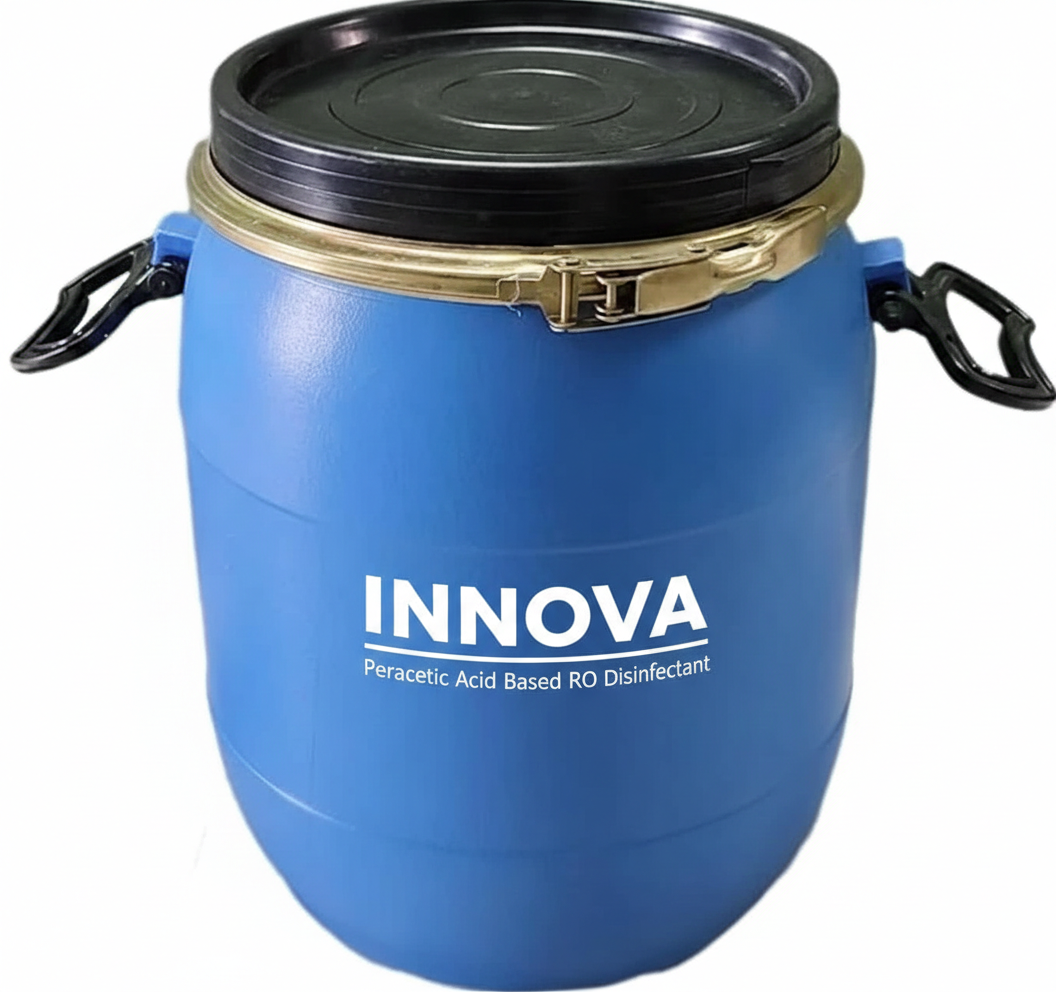
Peracetic Acid Based RO Disinfectant in Israel (Eco-Friendly Sterilant)
Israel is a country that has built its water future on desalination and reuse. More than half of domestic water comes from seawater desalination, and nearly 90 percent of wastewater is recycled for agriculture — the highest rate in the world. This intensive water infrastructure creates unique demands on membrane hygiene. When a single SWRO plant supplies drinking water to hundreds of thousands of people, and when recycled water is used on food crops, the disinfection step is not a maintenance formality — it is a public health requirement enforced by Israeli regulators. Our peracetic acid (PAA) based RO disinfectant is formulated for exactly this context: high-reliability microbial control in a country that treats water security as a national priority.
The product we supply is built around a chemistry that Israeli operators increasingly prefer over traditional chlorine. PAA decomposes into acetic acid and oxygen — both naturally present in the environment — leaving no chlorinated by-products in the concentrate stream. This matters because Israeli desalination plants discharge brine into the Mediterranean, and the Ministry of Environmental Protection scrutinises the chemical composition of that discharge. Chlorine-based disinfection produces trihalomethanes and other halogenated compounds that complicate discharge compliance. PAA avoids this problem entirely, while still delivering the fast kill kinetics and broad-spectrum efficacy that water safety programs require.
The disinfectant is compatible with the full range of Israeli water infrastructure — Mediterranean SWRO plants serving the coastal population centres, Red Sea systems in the south, brackish RO plants that treat groundwater from the coastal and mountain aquifers, and municipal reuse facilities where recycled water is prepared for agricultural irrigation. It is also suited for the industrial water systems that support Israel's semiconductor, pharmaceutical and food processing sectors, where high-purity water is essential and any chemical residue is unacceptable. The formulation works at the operating temperatures Israeli plants experience year-round — from winter Mediterranean feedwater to warm Red Sea sources.
Key Features & Strategic Benefits in Israel:
- Broad-Spectrum Microbiocide: Fast-acting against bacteria, fungi, algae, viruses, biofilm and Legionella in the operating conditions of Israeli water plants.
- Discharge-Compatible Chemistry: Decomposes into acetic acid and oxygen with no chlorinated by-products, simplifying Ministry of Environmental Protection compliance for brine discharge.
- Chlorine-Free Sterilization: Delivers powerful oxidation without the membrane damage, corrosion or disinfection by-product concerns associated with free chlorine.
- Potable Water Approved: Suitable for food, beverage and drinking water RO applications in Israel when used per the authorised pattern, with documentation aligned with Ministry of Health standards.
- Water Reuse Compatible: Supports Israel's national wastewater recycling program by delivering hygienically safe water for agricultural irrigation without residual chemical risk.
- Material Compatibility: Safe for use with all high-quality RO membrane components and housings at the concentrations and contact times used in CIP.
- Cold Sterilization: Effective at ambient temperatures across Israel's seasonal range, reducing the need for heating and supporting efficient operation.
Where PAA Disinfectant Fits in Israel's Water Infrastructure:
- National Desalination Capacity: Periodic sanitation of SWRO trains at plants that supply a significant portion of the country's drinking water, where microbial control is a public health requirement.
- Municipal Water Reuse: Disinfection of RO permeate destined for agricultural irrigation under Israel's national wastewater recycling program, where hygienic quality and chemical residue limits are strictly regulated.
- Brackish Groundwater Treatment: Sanitation of RO systems drawing from the coastal and mountain aquifers, including plants that supply water to inland communities.
- Food and Beverage Production: Hygiene-critical water treatment where chlorinated by-products would affect product quality or violate food safety standards.
- Pharmaceutical and Semiconductor Manufacturing: High-purity water systems that require disinfectants leaving no residue affecting downstream processes.
- Cooling Circuits and Building Water Systems: Legionella prevention programs for hospitals, hotels and industrial facilities with complex water distribution.
Strategic Benefits Delivered to Israeli Operators:
Recommended Dosage & Application in Israel:
Shock Dose: For immediate system disinfection, use a concentration of 5–10% v/v for plants with heavy biofilm accumulation, or 0.1–0.5% v/v (1,000–5,000 ppm) for routine CIP sanitation.
Continuous Dose: For round-the-clock microbial control, maintain a maximum of 2.5 ppm on feed water, with dose adjusted for pH and temperature based on your system.
Sanitization Procedure for Israeli Plants: First sanitize the system with permeate water. Circulate the Peracetic Acid solution, followed by a flush with a High pH membrane cleaner for 30 minutes. Allow a soak time of 1–2 hours for deep penetration. Finally, flush the system thoroughly with permeate water until residual PAA is below detection before returning the plant to normal service. For potable water applications, verify residual PAA is below Israeli Ministry of Health limits before distribution.
Storage & Safety: Peracetic acid is a strong oxidizer. Store in original vented containers in a cool, well-ventilated area in Israel away from heat and direct sunlight. In Israel's climate, high summer temperatures can accelerate PAA decomposition, so cool storage is strongly recommended — insulated or air-conditioned facilities in the Negev and Arava regions. Do not store near alkaline materials, other oxidizers, or organic substances in concentrated form. Use chemical-resistant gloves, splash goggles, face shield and appropriate protective clothing during handling. Please consult the Material Safety Data Sheet (MSDS) and Technical Data Sheet (TDS) for specific handling and safety protocols. Documentation aligned with Israeli workplace safety requirements and Ministry of Health standards is available on request.
Frequently Asked Questions — Peracetic Acid RO Disinfectant in Israel
1. Why is peracetic acid a better fit than chlorine for Israel's water infrastructure?
Israel's water infrastructure operates at a scale where disinfection by-products become a national concern. The country relies on desalination for more than half of domestic water, and it discharges brine into the Mediterranean under strict environmental oversight. Chlorine-based disinfection produces trihalomethanes and other halogenated compounds that complicate discharge compliance. PAA breaks down into acetic acid and oxygen — both naturally present in the environment — eliminating that compliance burden. It also avoids the membrane damage that chlorine causes, which is significant for a country that operates some of the world's largest SWRO facilities. When you multiply these advantages across dozens of plants, PAA offers a systemic improvement over chlorine-based approaches.
2. How does PAA support Israel's national wastewater recycling program?
Israel recycles nearly 90 percent of its wastewater for agricultural irrigation — the highest rate in the world. This recycled water must meet strict hygienic standards before it is applied to food crops, and it must not contain chemical residues that could affect soil, plants or groundwater. PAA disinfects effectively while breaking down into harmless compounds, which is why it is well suited to reuse applications. It provides the microbial kill required by regulation without introducing the persistent disinfection by-products that chlorinated treatment would create. For reuse plants using RO as a treatment step, PAA is often the preferred disinfectant for both membrane sanitation and final permeate conditioning.
3. Is PAA suitable for the Mediterranean SWRO plants that supply Israeli cities?
Yes. PAA is compatible with the polyamide membranes used in Israeli SWRO plants and is effective across the temperature and pH range those plants operate at. Unlike chlorine, which requires careful dechlorination before the membrane stage, PAA can be applied during CIP without additional pretreatment. This simplifies the operational sequence and reduces chemical inventory. For plants supplying drinking water to major population centres, the documentation we provide aligns with Israeli Ministry of Health standards, supporting regulatory reporting and inspection requirements.
4. Can PAA be used in Red Sea desalination systems around Eilat?
Yes. Red Sea feedwater has higher salinity and warmer temperatures year-round than the Mediterranean, which increases biological activity and biofilm pressure. PAA is effective in these conditions and is suited to the operating characteristics of Red Sea SWRO systems. For Eilat and other southern plants, the focus is often on managing higher bacterial loads during warm periods. PAA's fast kill kinetics and biofilm penetration make it well suited to this context. The product remains stable at the temperatures typical of Red Sea operations and can be applied across the full seasonal range.
5. How does PAA handle the brackish groundwater sources that supply inland Israeli communities?
Brackish groundwater from the coastal and mountain aquifers often carries iron, manganese and elevated mineral content in addition to microbial load. PAA is compatible with antiscalant and iron sequestration chemistry used in these systems, so it can be applied alongside the other chemicals in the treatment train. For inland communities that depend on brackish RO for drinking water, the documentation we provide supports the reporting requirements of the Israel Water Authority and Ministry of Health. The formulation is designed to deliver consistent disinfection across the variable water composition these sources produce.
6. What documentation accompanies PAA shipments to Israel?
Every shipment to Israel includes Material Safety Data Sheet (MSDS), Technical Data Sheet (TDS), Certificate of Analysis (COA) and dosing guidelines. For potable water applications, we provide documentation aligned with Israeli Ministry of Health drinking water standards. For discharge compliance, we supply information suitable for Ministry of Environmental Protection reporting. For water reuse applications, we provide chemical residue and breakdown documentation relevant to agricultural irrigation. Documentation is available in English, with Hebrew summaries possible on request through our local partners.
7. Can PAA be used in food and beverage processing RO systems in Israel?
Yes. PAA is widely used in food and beverage production worldwide because it delivers effective disinfection without leaving chlorinated residues that could affect product taste, quality or safety compliance. Israeli food processing plants use PAA for CIP sanitation of RO systems and other water contact surfaces. The chemistry breaks down into acetic acid and oxygen, which are compatible with food processing environments. Documentation supporting hygiene compliance and residue verification is provided with each shipment.
8. How does PAA compare to non-oxidizing biocides for Israeli RO systems?
PAA and non-oxidizing biocides work through different mechanisms and are often used together in a rotation program. PAA provides fast, broad-spectrum kill including against biofilm, and is well suited to periodic shock sanitation. Non-oxidizing biocides provide extended residual protection and are often used for continuous low-dose control. Many Israeli plants use PAA for CIP and a non-oxidizing biocide for feed-side protection. This combined approach reduces the risk of microbial resistance and provides full-spectrum coverage across the treatment train.
9. What are the specific safety considerations for handling PAA in Israel's climate?
PAA is an oxidizer and requires careful handling in any climate. In Israel, the additional consideration is heat — summer temperatures in the Negev and Arava can accelerate PAA decomposition, which affects both product stability and vapour pressure. We recommend storing PAA in air-conditioned or insulated facilities in these regions, and using appropriate ventilation during handling. Personal protective equipment — chemical-resistant gloves, splash goggles, face shield and lab coat — should always be used. Full safety documentation compliant with Israeli workplace safety requirements is provided with each shipment.
10. How is PAA shipped to Israeli ports and what import procedures apply?
We ship from Indian ports to Haifa, Ashdod and Eilat. PAA is classified as a dangerous good (UN 3109 organic peroxide type F, or similar depending on formulation) and is packed in UN-approved containers with proper classification, labelling and dangerous goods documentation. All shipments include commercial invoice, packing list, certificate of origin and MSDS. We work with freight forwarders experienced in Israeli dangerous goods import procedures and can support clients through customs clearance and any Standards Institution of Israel requirements that apply.