- 2B / BW Shalimar Bagh, Opp. BQ Market, Near DLF Mall New Delhi - 110088, India.
- :+91-9312-871-070

Manufacturers, Exporters, Suppliers of RO Antiscalant High pH
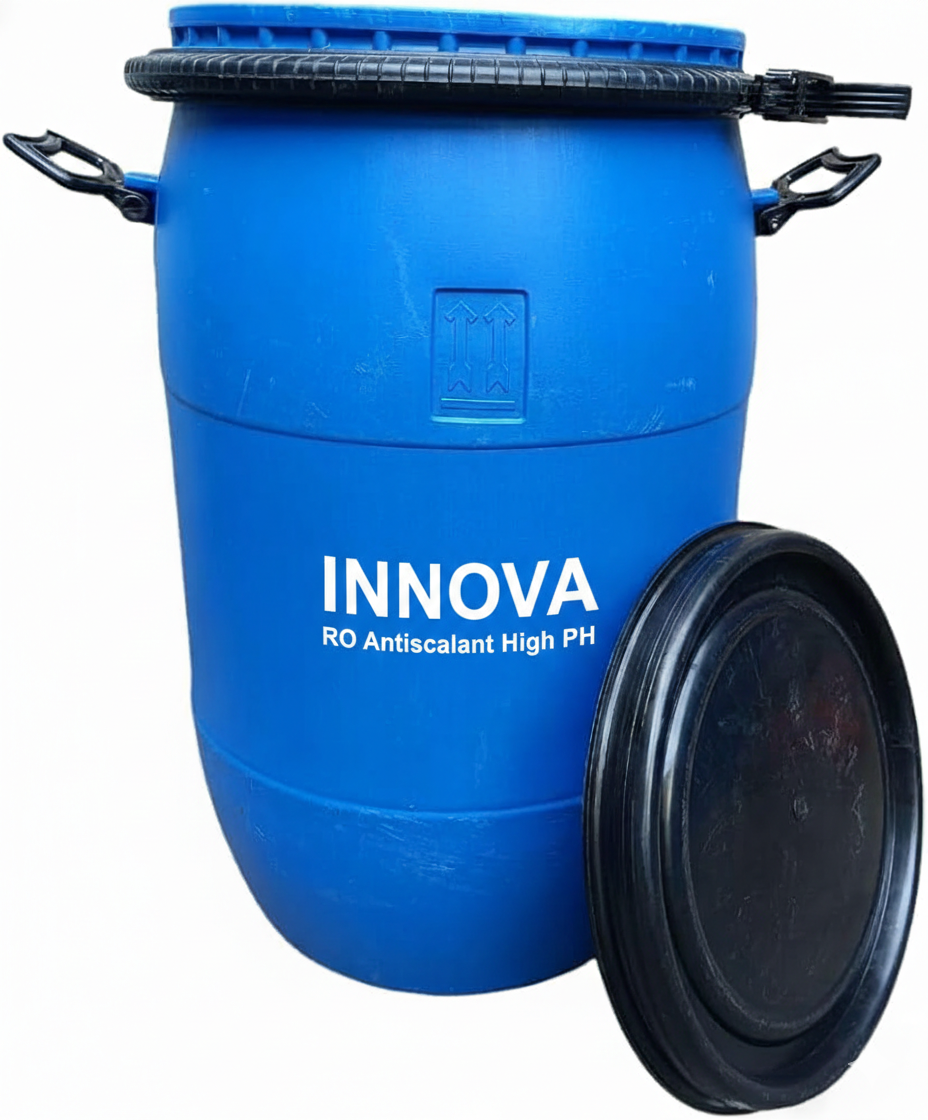
RO Antiscalant High pH in Israel (Super-Threshold Formula)
Innova Corporate (India) is a leading manufacturer and exporter of high-grade RO antiscalant High pH in Israel. We offer the finest quality membrane treatment solutions at competitive prices for local industries. Our chemical formulations are engineered using pure raw materials, meeting global industrial quality standards to ensure maximum protection for RO systems in Israel. The High pH variant is specifically designed for plants that operate at elevated pH — either for boron rejection in SWRO desalination or for iron and silica control in brackish groundwater treatment — where standard neutral-pH antiscalants lose effectiveness because their chemistry is not designed for the alkaline operating window.
Our specialised antiscalant/antifoulant liquid is designed for high-capacity membrane systems operating in Israel. It features a precise molecular weight range and a clear, impurity-free composition. The advanced super-threshold formula effectively controls scaling of carbonate and sulfate salts (calcium, magnesium, barium and strontium), while also preventing iron fouling and colloidal deposits common in Israeli water sources — including brackish coastal aquifer water, mountain aquifer water with elevated iron, and Mediterranean and Red Sea SWRO feedwater. The dual-function chemistry acts as both a powerful scale inhibitor and an alkalinity builder, which is particularly valuable for Israeli plants managing permeate pH for potable water standards.
The formula's super-threshold capability extends carbonate and sulfate inhibition well beyond standard saturation limits. For Israeli SWRO plants operating at pH 9.5 to 10.0 for boron rejection, this extended threshold window is essential — the elevated pH dramatically increases carbonate saturation, and only a chemistry designed for this condition can maintain effective scale control without triggering deposition. For brackish RO plants in the coastal and mountain aquifers, the same super-threshold mechanism delivers reliable performance at the elevated pH used for iron and silica control, where the standard antiscalant formulations would fail.
Key Features & Strategic Benefits in Israel:
- Advanced Scale Inhibition: Effectively controls calcium carbonate, sulfates (barium, strontium, magnesium) and calcium fluoride across the full saturation range at elevated pH.
- Dual Action — Scale Inhibitor + Alkalinity Builder: Acts as both a powerful scale inhibitor and an alkalinity builder for Israeli RO systems, simplifying chemical inventory and reducing dosing points.
- Super-Threshold Carbonate Control: Maintains effective carbonate inhibition at the elevated pH required for boron rejection in Mediterranean and Red Sea SWRO systems.
- Superior Iron Sequestration: Provides excellent control over iron fouling, a common issue in Israeli groundwater from coastal and mountain aquifers.
- Silica Co-Inhibition: At higher doses (10–15 ppm), the formula fully inhibits silica up to 166 ppm — relevant for Israeli brackish sources with elevated silica content.
- Eco-Friendly: Fully organic and biodegradable formulation, minimising environmental impact and aligning with Israeli discharge standards.
- Cost-Efficiency: Low chemical dosage requirement leads to higher recovery rates and reduced cleaning frequency for local plants.
- Wide Compatibility: Compatible with all major membrane brands and INNOVA series coagulants and flocculants used in Israeli pretreatment systems.
Israeli Applications & Operating Windows:
- Mediterranean SWRO (Ashkelon, Hadera, Sorek): High pH operation at 9.5 to 10.0 for boron rejection. Super-threshold carbonate control essential.
- Red Sea SWRO (Eilat): Higher salinity and year-round warm water. Extended sulfate and carbonate threshold capability.
- Coastal Aquifer Brackish RO: Elevated iron and manganese with moderate hardness. Super-threshold chemistry for iron co-fouling control.
- Mountain Aquifer Brackish RO: Variable composition with seasonal iron and organic fluctuations. Broad-spectrum scale and metal control.
- Agricultural Irrigation Water: Brackish well water with elevated hardness, silica and iron. Balanced inhibition for extended run times between CIP.
- Industrial Process Water: Semiconductor, pharmaceutical and food processing applications requiring consistent high-purity water.
- Recycling and Reuse Systems: Progressive concentration of scale-forming species at elevated pH. Extended threshold protection.
Strategic Benefits Delivered to Israeli Plants:
Dosage & Application Guidelines for Israel:
Our High pH Antiscalant should be dosed directly into the RO feed water tank or line (post-pretreatment). Dosage typically ranges from 1 ppm to 15 ppm, depending on the following parameters in your Israel facility:
- Standard Conditions: 1–5 ppm for moderate hardness and TDS. Suitable for Mediterranean and Red Sea SWRO at standard operating pH.
- High Iron (0.5–1.0 ppm): Increase dosage by 10–15 ppm to stabilise calcium and iron effectively, especially for Israel borewell water from coastal and mountain aquifers.
- Silica Management: At 10–15 ppm, the formula can fully inhibit silica up to 166 ppm, relevant for Israeli brackish sources with elevated silica.
- Boron Rejection Operation (pH 9.5–10.0): Dose at 4–8 ppm for SWRO plants operating at elevated pH, with the super-threshold chemistry maintaining carbonate control throughout the concentration range.
Storage & Safety: Store in original, tightly sealed containers in a cool, dry place at your Israel site. Keep away from direct heat and sunlight. Israel's climate is generally suitable for storage in shaded warehouses, though summer heat in the Negev and Arava can push temperatures above 40°C — in those regions, store in insulated or air-conditioned facilities. High pH formulations should be protected from CO₂ absorption, which can gradually reduce effectiveness, so keep containers closed when not in use. Shelf life is 18 to 24 months under recommended conditions. For precise dosing calculations based on your water analysis, please refer to the Technical Data Sheet (TDS) or contact our experts specialising in Israel water treatment.
Frequently Asked Questions — High pH RO Antiscalant in Israel
1. Why does Israel need a high pH antiscalant rather than standard neutral-pH formulations?
Israel's water treatment landscape requires alkaline antiscalant chemistry for two distinct reasons. First, SWRO plants on the Mediterranean and Red Sea coasts operate at pH 9.5 to 10.0 to reject boron through charged borate ion formation. At this pH, carbonate saturation rises dramatically, and standard antiscalants designed for neutral pH lose effectiveness. Second, some brackish RO plants on the coastal and mountain aquifers operate at elevated pH to control iron and silica, for which alkaline chemistry is better suited. Our high pH formulation is designed for these specific operating windows, delivering scale control at the pH range Israeli plants actually use.
2. What is super-threshold chemistry and why does it matter in Israel?
Super-threshold chemistry means the antiscalant maintains effective scale inhibition at saturation indices well above the standard threshold limits. Most conventional antiscalants lose effectiveness above LSI +2.0 or +2.5. Super-threshold formulations extend this window to +3.0 or higher. This matters in Israel because boron rejection operation at pH 9.5–10.0 pushes carbonate saturation into the range that standard formulations cannot handle. Super-threshold chemistry keeps carbonate below saturation even at the extreme pH conditions required for boron rejection, so plants can meet boron limits without triggering carbonate scaling.
3. How does the dual scale + alkalinity action benefit Israeli plants?
Israeli plants face a practical challenge: they need to control scale on the feed side while maintaining permeate pH for potable water standards. Our high pH antiscalant combines both functions in one product. It inhibits carbonate and sulfate scaling in the RO concentrate while contributing to the alkalinity that helps stabilise permeate pH. This dual action simplifies chemical inventory, reduces dosing points, and eliminates the need for a separate pH correction chemical in many applications. For Israeli desalination plants, it means one chemical handles both scale control and permeate conditioning.
4. How do you handle the elevated iron in Israeli coastal and mountain aquifers?
Israeli coastal and mountain aquifers frequently contain dissolved iron, particularly in anaerobic zones and in areas influenced by historical agricultural use. When this iron reaches the RO system and oxidises, it forms ferric hydroxide deposits that foul membranes. Our high pH formulation includes iron sequestrants that keep dissolved iron in solution through the RO train, preventing oxidation and deposition. For borewell water with iron concentrations between 0.5 and 1.0 ppm, we recommend dosing at the upper end of the range (10–15 ppm) to ensure complete stabilisation.
5. Can the high pH antiscalant handle silica in Israeli feedwater?
Yes. At doses of 10–15 ppm, our high pH formulation fully inhibits silica up to 166 ppm in the concentrate stream. Israeli brackish sources — particularly from the coastal and mountain aquifers — can carry elevated silica that contributes to scaling alongside carbonate and iron. At high pH, silica solubility increases, which actually helps, and our formulation is designed to exploit this by maintaining silica in soluble form across the pH range. For high-recovery systems where silica concentrates sharply, we may recommend a dedicated high-silica antiscalant for more specialised control.
6. What is the correct dose for Israeli SWRO operating at pH 9.8 for boron rejection?
For SWRO plants operating at pH 9.5 to 10.0 for boron rejection, we recommend a dose range of 4 to 8 ppm. The super-threshold chemistry maintains carbonate control across the full concentration range even at these elevated pH conditions. Dose is calculated based on the concentrate stream chemistry, not the feedwater, because ions concentrate three to five times through the RO train. We provide free dose calculation for Israeli clients based on complete water analysis and system design parameters. For very high recovery systems, doses may reach the upper end of the range.
7. Is the high pH antiscalant compatible with INNOVA coagulants and flocculants?
Yes. Our high pH antiscalant is specifically formulated for compatibility with INNOVA series coagulants and flocculants used in Israeli pretreatment systems. There is no chemical interference between these product families — they work together to deliver complete feedwater conditioning. If your plant uses coagulants from a different manufacturer, we can verify compatibility on request. In general, the antiscalant is compatible with most standard coagulant chemistries including polyaluminium chloride, ferric chloride and aluminium sulfate.
8. Does the high pH antiscalant affect permeate quality in Israeli potable water systems?
No. The antiscalant remains on the feed side of the membrane and exits with the concentrate. Permeate quality is unaffected at recommended doses. For potable water applications, our documentation aligns with Israeli Ministry of Health drinking water standards and the Israel Water Authority regulatory framework. We provide residual analysis documentation and maximum permissible concentration data for regulatory reporting. The alkalinity-building function can be a beneficial side effect for potable water, as it helps stabilise permeate pH within the optimal range.
9. How should the high pH antiscalant be stored in Israel's climate?
Store in original sealed containers between 5°C and 35°C, away from direct sunlight. Israel's climate is generally suitable for storage in shaded warehouses, though summer heat in the Negev and Arava regions can push temperatures above 40°C. In those regions, store in insulated or air-conditioned facilities. High pH formulations should be protected from CO₂ absorption, which can gradually reduce effectiveness — keep containers closed when not in use. Shelf life is 18 to 24 months under recommended conditions.
10. How do you ship high pH antiscalant to Israel?
We ship from Indian ports to Haifa, Ashdod and Eilat, covering Israel's three main commercial ports. All shipments include commercial invoice, packing list, certificate of origin, MSDS and any certificates required by Israeli Customs and the Standards Institution of Israel. High pH formulations are alkaline materials classified as corrosive depending on concentration, and are packed in UN-approved containers with proper classification, labelling and dangerous goods documentation where required. We work with freight forwarders experienced in Israeli import procedures and can support clients through customs clearance and standards compliance.