- 2B / BW Shalimar Bagh, Opp. BQ Market, Near DLF Mall New Delhi - 110088, India.
- :+91-9312-871-070

Manufacturers, Exporters, Suppliers of High Silica RO Antiscalant
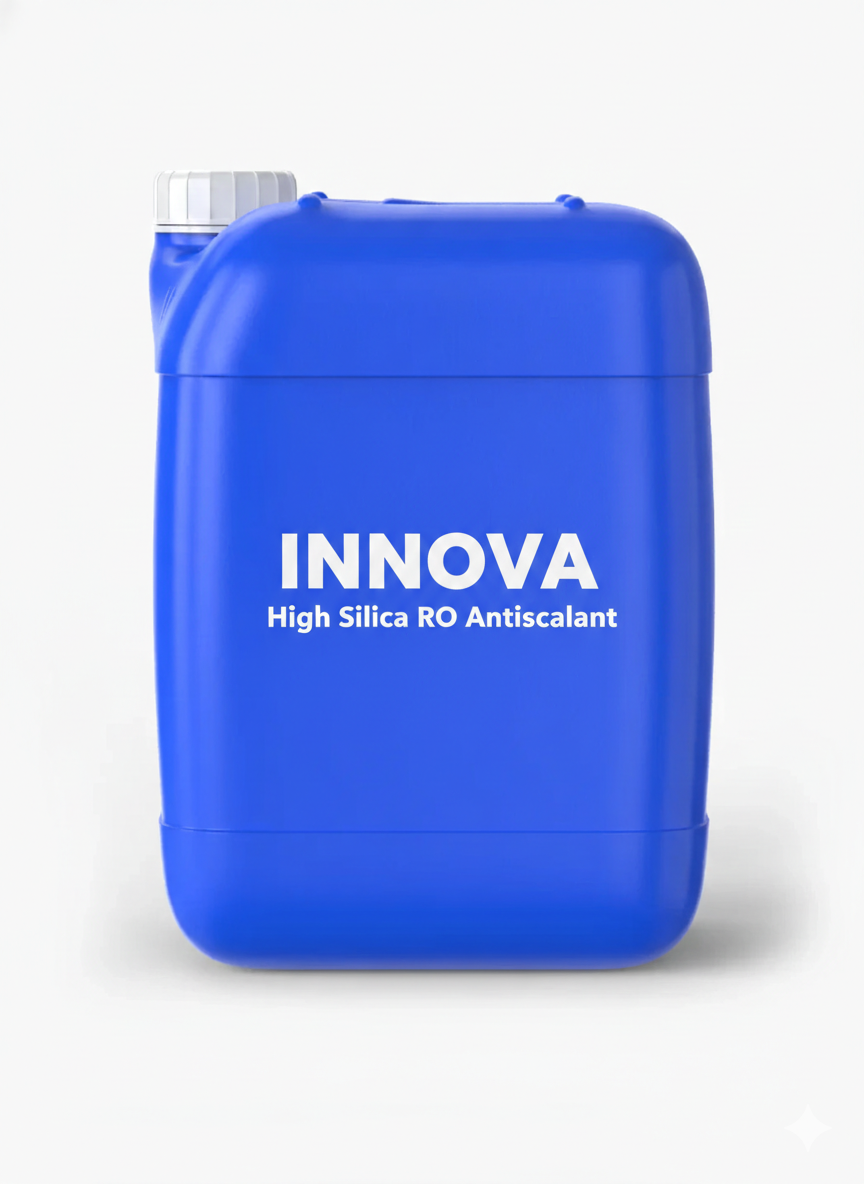
High Silica RO Antiscalant in Kerala (Extreme Scale Control)
Kerala's laterite terrain gives the state its distinctive red soil and its distinctive water chemistry, and the two are directly connected. The thick laterite cap that covers much of the midland and coastal belt is rich in iron and aluminium oxides, and it sits over crystalline bedrock that carries significant dissolved silica. As rainwater percolates through this profile — and Kerala receives a great deal of rainwater — it picks up silica along with iron, hardness and other dissolved minerals. The result is that borewell water across districts like Ernakulam, Thrissur, Alappuzha and Kollam routinely shows silica levels that would be considered high anywhere else in India. Innova Corporate (India) formulates its High Silica RO Antiscalant in Kerala specifically for this water, allowing plants to push recovery rates higher without risking irreversible silica scaling.
Silica is the most difficult scale to handle in RO treatment because it does not behave like other minerals. Carbonate and sulfate scales are crystalline and can be dissolved by appropriate cleaning chemicals. Silica, once it polymerises, forms an amorphous, glass-hard deposit that bonds to the membrane surface and resists almost every conventional cleaning chemistry. In Kerala, the situation is further complicated by monsoon recharge: after the heavy rains of June through August, aquifer chemistry shifts as fresh water mixes with older, more concentrated groundwater, and silica levels can fluctuate through the year in ways that make fixed dosing risky. Our formulation holds silica in a soluble, non-polymerised state across a wide concentration range, so plant performance stays stable regardless of what the aquifer is doing.
High silica water also forces an uncomfortable choice on plant operators: run at conservative recovery and generate more reject, or run at high recovery and risk scaling. For Kerala plants operating under ZLD requirements or facing strict discharge norms — increasingly common across the state's food processing, seafood and textile sectors — the second option is often the only viable one. That is where a properly matched high silica antiscalant becomes the difference between meeting compliance targets and shutting down for emergency cleaning. By keeping silica in solution even at the concentration factors that high-recovery operation creates, our formulation lets Kerala plants achieve their recovery targets without surrendering membrane life.
Key Features & Strategic Benefits in Kerala:
- Extreme Silica Inhibition: Effectively controls silica scales up to 325ppm in the concentrate stream.
- Iron Sequestration: Advanced formula prevents iron fouling, a common issue in Kerala water.
- High Recovery Rates: Allows systems to operate at higher recovery levels without compromising membrane integrity.
- Broad Spectrum Efficiency: Works across a wide range of pH, TDS, and high SDI (Silt Density Index) water in Kerala.
- Cost Optimization: Low dosage requirements (2ppm to 20ppm) result in significant operational savings.
- Environmental Safety: Completely organic, biodegradable, and compatible with all membrane types.
- Monsoon Recharge Stability: Maintains silica inhibition even as aquifer chemistry shifts between monsoon and dry season across Kerala.
- Coastal Aquifer Compatibility: Performs reliably in saline-intruded feed water where chloride and TDS levels are elevated alongside silica.
Application & Dosage: For plants in Kerala, the product should be dosed directly into the RO feed water tank or line after pretreatment. The dosage typically ranges from 2ppm to 20ppm, depending on the specific water chemistry including Calcium Hardness, Alkalinity, and Silica content. For water with high iron (0.5 to 1.0ppm), a dosage of 5-7ppm is recommended to ensure full stabilization.
Where Kerala Plants Rely on This Antiscalant:
- Seafood Processing: High-recovery operation for Kochi and Alappuzha export plants using laterite-fed borewell water with elevated silica.
- Dairy & Beverage: Stable membrane performance for CIP and process water in Thrissur and Ernakulam units drawing on high-silica groundwater.
- Spice & Food Processing: Reliable silica control for RO plants serving Kerala's food belt, where ZLD compliance demands maximum recovery.
- Textile & Coir Processing: Consistent permeate quality for dyeing and processing operations in Kollam and Alappuzha.
- Pharmaceutical Manufacturing: High-purity permeate for purified water loops where membrane integrity is critical to product compliance.
- Municipal & Community RO: Extended membrane life for drinking water plants dealing with Kerala's silica-rich groundwater sources.
Storage & Stability: Store in original, tightly sealed containers in a cool and dry environment at your Kerala facility. Protect from direct sunlight and heat sources to maintain chemical potency. Recommended storage temperature is between 5°C to 40°C. For detailed application guidelines and safety protocols, please refer to the Technical Data Sheet (TDS) and Material Safety Data Sheet (MSDS). The product has a shelf life of 12 months from the date of manufacturing when stored under recommended conditions.