- 2B / BW Shalimar Bagh, Opp. BQ Market, Near DLF Mall New Delhi - 110088, India.
- :+91-9312-871-070

Manufacturers, Exporters, Suppliers of Peracetic Acid Based RO Disinfectant
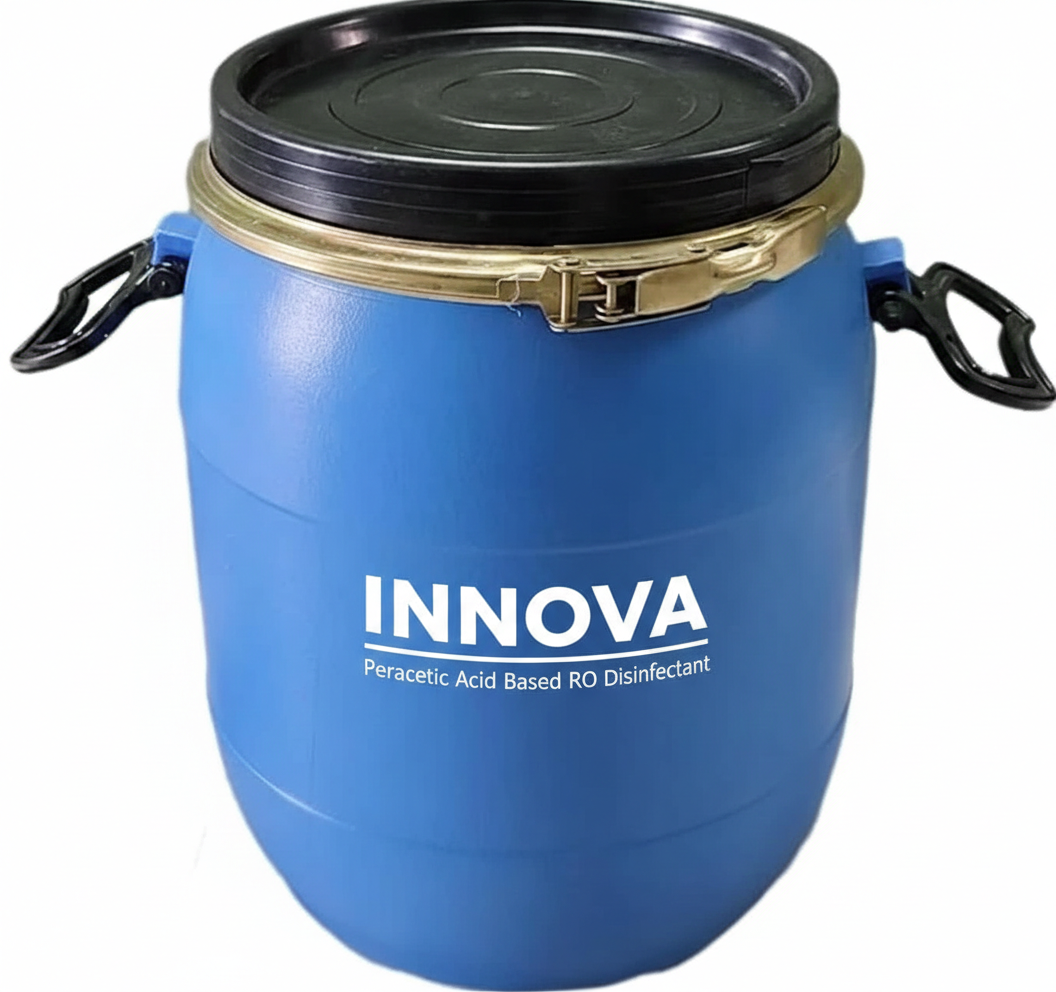
Peracetic Acid Based RO Disinfectant in Kerala (Eco-Friendly Sterilant)
Microbial control in Kerala is a different problem from anywhere else in India, and it demands a different answer. The state's tropical climate — warm year-round, humid through most of the year, and drenched during two monsoon seasons — creates microbial growth conditions that persist even when other parts of the country are dry and cool. A dairy plant in Thrissur, a seafood processor in Kochi, or a beverage unit in Alappuzha all face the same reality: bacteria, yeast, mould and biofilm-forming organisms multiply faster here than in inland regions, and any gap in disinfection shows up within days. Innova Corporate (India) supplies Peracetic Acid Based RO Disinfectant in Kerala specifically for this challenge — a chlorine-free, residue-free chemistry that works at ambient temperature and leaves no toxic by-products behind.
The choice of peracetic acid over chlorine is not a preference in Kerala — it is often a necessity. Chlorine and other halogen-based disinfectants form organohalogen by-products such as trihalomethanes when they react with the organic matter naturally present in Kerala's surface water and wastewater streams. For food, dairy and beverage plants operating under FSSAI and export-market standards, these by-products create compliance problems and can affect product taste and shelf life. Peracetic acid breaks down into acetic acid, water and oxygen — none of which pose any regulatory or quality concern. For Kerala's growing number of export-oriented seafood and spice processing plants, this residue-free profile is a direct commercial advantage, not just an environmental preference.
There is a third reason peracetic acid outperforms in Kerala specifically: its effectiveness against biofilm. Warm, humid conditions accelerate biofilm formation on membrane surfaces, and biofilms are notoriously resistant to ordinary chemical disinfection because the extracellular matrix shields the microbial colony inside. Peracetic acid penetrates this matrix more effectively than most alternatives, oxidising the extracellular polysaccharides and killing the embedded cells in a single pass. For plants in Kochi, Ernakulam, Thrissur and Alappuzha that have struggled with recurring biofouling despite regular disinfection, switching to peracetic acid often resolves the problem that chlorine-based products could not.
Key Features & Strategic Benefits in Kerala:
- Broad-Spectrum Microbiocide: Rapidly eliminates pathogens, Biofilms, and organic slime.
- Eco-Friendly & Biodegradable: Decomposes naturally without leaving harmful environmental footprints in Kerala.
- Chlorine-Free Sterilization: Provides powerful oxidation without the corrosive risks associated with free chlorine.
- Potable Water Approved: Ideal for food, beverage, and drinking water RO applications in Kerala.
- Material Compatibility: Safe for use with all high-quality RO membrane components and housings.
- Cold Sterilization: Highly effective even at ambient temperatures, reducing the need for thermal disinfection.
- Monsoon-Stable Performance: Retains full biocidal activity across Kerala's temperature and humidity swings, from dry-season heat to monsoon dampness.
- Export-Compliance Friendly: No organohalogen by-products, making it suitable for FSSAI, EU and US food-contact and export standards.
Recommended Dosage & Application in Kerala:
Shock Dose: For immediate system disinfection, use a concentration of 5-10% v/v.
Continuous Dose: For round-the-clock microbial control, maintain a maximum of 2.5ppm on feed water.
Sanitization Procedure: For plants in Kerala, first sanitize the system with permeate water. Circulate the Peracetic Acid solution, followed by a flush with a High pH membrane cleaner for 30 minutes. Allow a soak time of 1-2 hours for deep penetration. Finally, flush the system thoroughly with permeate water before returning the plant to normal service.
Where Kerala Industries Rely on This Disinfectant:
- Seafood Processing: Residue-free sanitization for RO water feeding fish, shrimp and value-added seafood lines in Kochi and Alappuzha export units.
- Dairy Plants: Chlorine-free disinfection for milk processing, CIP and packaging water in Thrissur and Ernakulam dairy operations.
- Spice & Food Processing: Microbial control for RO permeate used in spice washing, ready-to-eat food and packaged product lines across Kerala.
- Beverage & Bottling: Potable-grade sanitization for bottled water, soft drinks and beverage plants requiring zero-residue disinfection.
- Pharmaceutical Manufacturing: High-purity sterilant for purified water loops and WFI systems where bioburden limits are strict.
- Hospitality & Institutional Water: Safe sanitization of drinking water RO systems for hotels, hospitals and resorts across Kerala's tourism belt.
Storage & Safety: Peracetic acid is a strong oxidizer. Store in original vented containers in a cool, well-ventilated area in Kerala away from heat and direct sunlight. Recommended storage temperature is between 5°C to 30°C. Handle with appropriate PPE including splash goggles, chemical-resistant gloves and protective clothing. Avoid contact with incompatible materials such as strong alkalis and reducing agents. Please consult the Material Safety Data Sheet (MSDS) and Technical Data Sheet (TDS) for specific handling and safety protocols. The product has a shelf life of 12 months from the date of manufacturing when stored under recommended conditions.