- 2B / BW Shalimar Bagh, Opp. BQ Market, Near DLF Mall New Delhi - 110088, India.
- :+91-9312-871-070

Manufacturers, Exporters, Suppliers of RO Antiscalant For High Iron Water
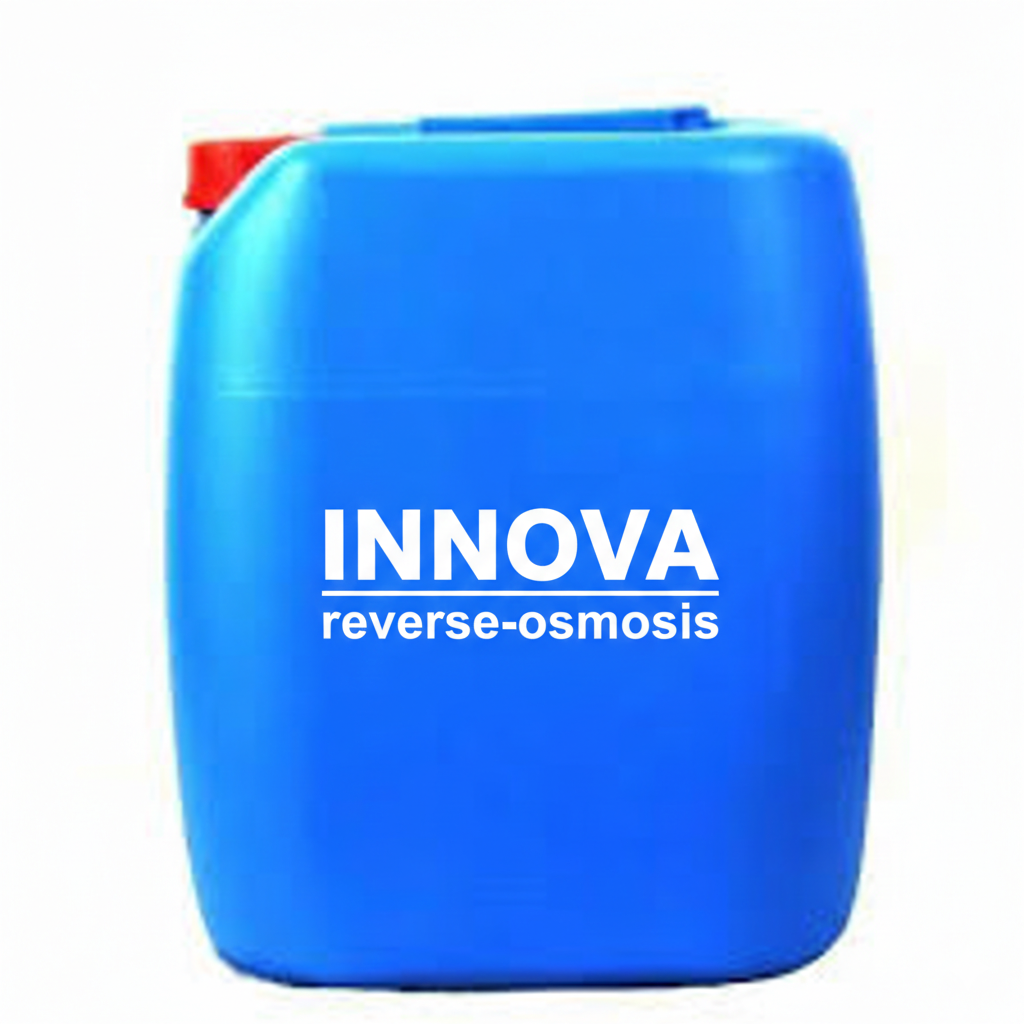
RO Antiscalant for High Iron & Metallic Fouling in Kerala
Iron is not a trace contaminant in Kerala — it is a defining feature of the state's groundwater chemistry, and it shapes how every RO plant in the region has to be designed. The thick laterite cap that covers much of the midland belt from Kasaragod down to Trivandrum is rich in iron oxides and hydroxides, and as rainwater percolates through this layer, it dissolves ferrous iron and carries it into shallow and deep aquifers. Borewells across northern and central districts — Kozhikode, Kannur, Malappuram, Palakkad — routinely report dissolved iron levels between 0.5 and 2.0 ppm, with some locations higher. In the dry months, when water tables drop and the remaining groundwater becomes more concentrated, these values climb further. For industrial plants running on borewell feed, this is a fouling problem that no standard antiscalant is designed to handle. Innova Corporate (India) formulates its Reverse Osmosis Antiscalant for High Iron Water in Kerala specifically for this chemistry.
What makes iron so damaging on RO membranes is the way it transitions between states. Ferrous iron (Fe²⁺) is soluble in oxygen-free groundwater and passes through pretreatment easily. But once that water contacts air, or meets any oxidising agent such as chlorine, the iron converts to ferric form (Fe³⁺), which is insoluble and precipitates as a red-brown hydroxide gel. On the membrane surface, this gel creates a sticky layer that traps other foulants — hardness crystals, colloidal silica, organic matter — and slowly chokes the flow path. A plant that was managing scale perfectly suddenly finds itself with rising differential pressure and falling permeate flow, and the cleaning chemicals that worked before stop working because the underlying problem is not scale at all. Our high-iron antiscalant works by sequestering ferrous iron in a soluble complex, keeping it from oxidising and precipitating even as it concentrates in the reject stream.
There is a practical dimension to this that matters a lot for Kerala plant operators. The conventional way to deal with high iron is to install dedicated iron removal filtration — aeration, sedimentation, greensand filters or similar — ahead of the RO train. That approach works, but it adds capital cost, footprint, and maintenance burden, and it still leaves a residual iron load in the feed. Our high-iron antiscalant offers an alternative: dose the chemical, keep iron soluble through the membrane system, and let it exit with the concentrate. For small and mid-sized plants in Kerala's northern districts where space and capex are constrained, this makes borewell water viable as RO feed without the full iron removal train. It is not a replacement for proper pretreatment in every case, but for the range of iron levels typical of Kerala borewells, it converts a difficult water source into a workable one at a fraction of the cost.
Key Features & Strategic Benefits in Kerala:
- Iron Sequestration: Effectively binds dissolved iron to prevent red-brown staining common in Kerala water.
- Metallic Oxide Control: Inhibits scaling from manganese, aluminum, and other heavy metals.
- Flux Optimization: Maintains consistent permeate flow by preventing the formation of dense metallic scales.
- Cost-Effective Maintenance: Reduces the frequency of expensive acid cleanings for Kerala industrial units.
- High Stability: Effective over a wide pH range and remains stable even in highly saturated conditions.
- Universal Use: Compatible with all major brands of Thin-Film Composite (TFC) and Polyamide membranes.
- Pre-treatment Reduction: Can reduce or eliminate the need for dedicated iron removal filtration for typical Kerala borewell water chemistry.
- Monsoon Recharge Tolerance: Maintains full performance across Kerala's seasonal water table shifts, from monsoon recharge to dry-season concentration.
Dosage & Application: The standard dosage for our High Iron Antiscalant in Kerala ranges from 2-10ppm. In severe fouling conditions common in certain sectors of Kerala, the dosage may be increased up to 15ppm. For the most accurate dosing recommendations based on your local water analysis, please consult your Innova technical representative.
Where Kerala Industries Rely on This Antiscalant:
- Borewell-Fed Industrial Plants: Reliable iron control for RO systems in Kozhikode, Kannur, Malappuram and Palakkad drawing on laterite groundwater.
- Seafood Processing: Iron-free permeate for shrimp, fish and value-added seafood lines in Kochi and Alappuzha export units.
- Dairy & Beverage: Consistent water quality for CIP and process applications in Thrissur and Ernakulam where iron staining affects product appearance.
- Textile & Coir Processing: Reliable iron control for dyeing and processing operations in Kollam and Alappuzha.
- Pharmaceutical Manufacturing: Trace-level iron control for purified water systems where metallic contamination is a compliance concern.
- Drinking Water RO Plants: Iron-free potable water for hotels, hospitals and community systems across Kerala's northern and central districts.
Storage & Stability: Store in original, tightly sealed containers in a cool and dry environment at your Kerala facility. Ensure the product is kept away from direct heat, open flames, and sunlight. Recommended storage temperature is between 5°C to 40°C. For detailed handling protocols, shelf life, and safety data, please refer to our Technical Data Sheet (TDS) and Material Safety Data Sheet (MSDS). The product has a shelf life of 12 months from the date of manufacturing when stored under recommended conditions.