- 2B / BW Shalimar Bagh, Opp. BQ Market, Near DLF Mall New Delhi - 110088, India.
- :+91-9312-871-070

Manufacturers, Exporters, Suppliers of Peracetic Acid Based RO Disinfectant
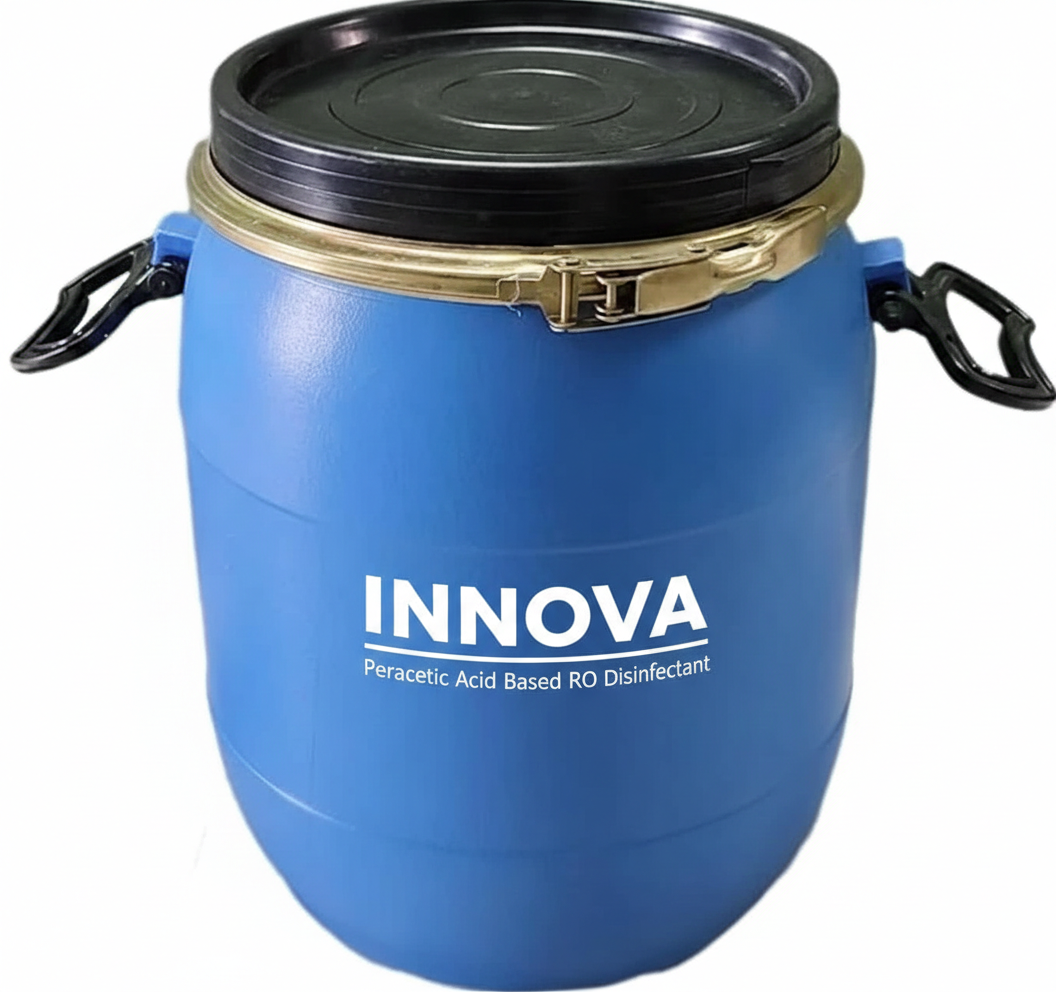
Peracetic Acid Based RO Disinfectant for Mombasa Plants (KEBS Compliant, Chlorine-Free Sterilant)
Mombasa's tropical coastal climate creates a microbial challenge that RO plants in cooler regions simply don't face. Feed water temperatures stay between 26 and 30°C for most of the year, and this is the ideal range for rapid bacterial growth. Whether the source is Indian Ocean seawater at a Nyali hotel SWRO plant, coastal brackish water at a Changamwe food processing facility, or municipal feed from Mombasa Water, biofilm can form inside RO pretreatment and on membrane surfaces within 7 to 10 days if untreated. Innova Corporate (India) supplies this Peracetic Acid (PAA) based RO disinfectant for Mombasa plants specifically to control that microbial load without the membrane damage caused by chlorine-based alternatives — and it meets the KEBS (Kenya Bureau of Standards) requirements applicable to potable water treatment in Kenya.
Peracetic acid is a powerful oxidising biocide, but unlike chlorine or hypochlorite, it decomposes into acetic acid (vinegar) and oxygen — both harmless to polyamide and thin-film composite (TFC) membranes at controlled dosage. This makes it the preferred choice for Mombasa hotel SWRO systems in Nyali, Diani, and Malindi, where guest experience depends on taste-neutral water; for food processing facilities in Changamwe and the industrial area, where KEBS compliance is mandatory; and for Port of Mombasa industrial water systems, where reliability and regulatory compliance matter equally.
The formula is also non-rinsing — PAA breaks down completely during the standard permeate flush, leaving no chlorinated byproducts, no residual odour, and no risk of chlorophenol formation that could affect product taste. For Mombasa's hospitality sector and beverage bottlers serving the Kenyan market, this is a critical advantage over traditional sanitizers. NEMA discharge reporting is also simplified because PAA leaves no chlorinated residuals — an important consideration for coastal facilities sensitive to marine discharge regulations.
Key Features & Strategic Benefits for Mombasa Industries:
- KEBS Compliant: Meets Kenya Bureau of Standards requirements for potable water treatment — documentation support available for Mombasa facility audits and NEMA discharge reporting.
- Broad-Spectrum Microbiocide: Rapidly eliminates bacteria, viruses, moulds, spores, and established biofilm — effective in Mombasa's year-round warm coastal feed water where microbial regrowth is fast.
- Chlorine-Free Sterilization: Provides powerful oxidation without attacking polyamide or TFC membranes — no irreversible salt rejection loss, no accelerated membrane replacement.
- Eco-Friendly & Biodegradable: Decomposes into acetic acid and oxygen — no chlorinated byproducts, no environmental footprint, compliant with NEMA marine discharge norms for coastal Mombasa facilities.
- Potable Water Approved: Ideal for food, beverage, dairy, and drinking water RO applications — meets KEBS requirements for Kenya.
- Taste-Neutral Performance: No residual chlorine taste or odour in treated permeate — critical for Mombasa hotel SWRO plants in Nyali, Diani, and Malindi, and for beverage bottling operations.
- Ambient Temperature Efficiency: Highly effective at Mombasa's ambient coastal temperatures — no thermal disinfection or heated CIP required.
- Wide Material Compatibility: Safe for RO, NF, and UF membranes, plus all standard housings, gaskets, O-rings, and CIP skid components used across Mombasa plants.
Recommended Dosage & Application in Mombasa:
Shock Dose: For immediate system disinfection, use a concentration of 5–10% v/v — ideal for Mombasa plants restarting after extended shutdowns or following a biofilm event.
Continuous Dose: For round-the-clock microbial control, maintain a maximum of 2.5 ppm in the feed water — standard practice for Nyali hotel SWRO and Changamwe food processing RO lines.
Sanitization Procedure for Mombasa Plants: First rinse the system with permeate water. Circulate the Peracetic Acid solution through the membrane train, followed by a flush with a High pH membrane cleaner for 30 minutes. Allow a soak time of 1–2 hours for deep biofilm penetration. Finally, flush the system thoroughly with permeate water before returning the plant to normal service.
Recommended Applications in Mombasa: Hotel and resort SWRO systems in Nyali, Diani, Malindi, and Watamu; food processing and beverage bottling in Changamwe and the Mombasa industrial area; Port of Mombasa container terminal and shipping facility water systems; cement and heavy industry water treatment at Bamburi; municipal water utility applications across Mombasa Island; hospitals and healthcare facilities requiring KEBS-compliant potable water; and any Mombasa coastal facility where microbial contamination affects product quality or regulatory compliance.
Storage & Safety: Peracetic acid is a strong oxidiser — store in original vented containers in a cool, well-ventilated area at your Mombasa facility, away from heat, direct sunlight, and combustible materials. Use appropriate PPE (splash goggles, face shield, chemical-resistant gloves, apron) during handling. Do not mix with alkaline chemicals. Refer to the Material Safety Data Sheet (MSDS) and Technical Data Sheet (TDS) for complete handling and safety protocols.
Export & Technical Support for Mombasa: We ship regularly to the Port of Mombasa, East Africa's largest port, with onward transport to Nyali, Changamwe, Likoni, Diani, Kilifi, and other coastal locations across Kenya. All shipments include complete customs documentation, MSDS, and TDS. Our technical team provides free CIP protocol guidance for peracetic acid disinfection — including dosage calculation, contact time, temperature limits, and post-disinfection flush procedure — with support for KEBS compliance and NEMA discharge documentation.