- 2B / BW Shalimar Bagh, Opp. BQ Market, Near DLF Mall New Delhi - 110088, India.
- :+91-9312-871-070

Manufacturers, Exporters, Suppliers of High pH Membrane Cleaner
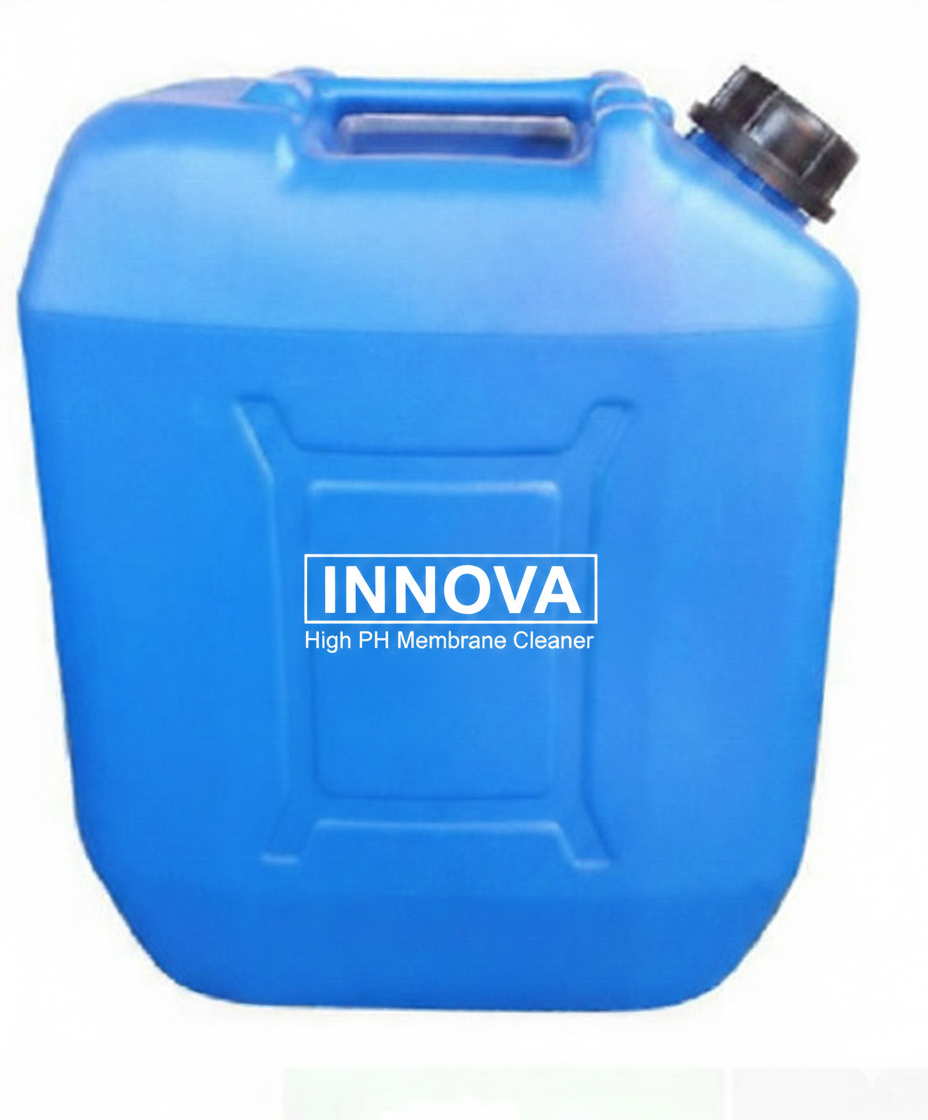
High pH RO Membrane Cleaner for Myanmar Plants (Alkaline CIP for Biofouling & Organic Deposits)
RO plants in Myanmar face a fouling problem that plants in cooler countries simply don't — monsoon-driven biofouling. Between May and October, humidity and feed water temperature in Yangon, Bago, and the delta region rise sharply, and biological growth inside RO pretreatment and membrane trains accelerates two to three times faster. Biofilm, algae, and organic slime build up on membrane surfaces within weeks, choking flow and pushing pressure drop out of spec. Innova Corporate (India) engineered this High pH RO membrane cleaner for Myanmar plants specifically to break that cycle.
The alkaline formula penetrates organic layers, disperses colloidal clay and natural organic matter (NOM), and lifts biofilm cleanly off the membrane surface during CIP. It is particularly critical for Myanmar's food processing, beverage bottling, and pharmaceutical units, where feed water carries high organic load and sanitation standards are strict — any residual biological matter in the RO train directly affects product quality and compliance.
Used as part of a two-step CIP program alongside a low pH acid cleaner, this product restores flux and salt rejection to near-design values in a single cleaning cycle. Myanmar plants that previously cleaned membranes weekly during monsoon often move to a monthly schedule after switching — cutting downtime, chemical consumption, and membrane replacement cost together.
Key Features for Myanmar Industries:
- Monsoon-Grade Biofouling Removal: Alkaline formulation specifically targets biofilm, algae, and organic slime that develop rapidly in Myanmar's humid tropical climate.
- Colloidal Dispersion: Penetrates deep into biological films and colloidal clay layers — a common issue in Bago and delta-region feed water — for complete removal in one cycle.
- Low Foaming Formula: Engineered for high-velocity recirculation CIP methods used in large Myanmar industrial RO skids without foam overflow or pump cavitation.
- High Concentration: Delivers full cleaning performance at low dilution ratios — reduces total chemical spend for Myanmar plants running continuous RO lines.
- Eco-Friendly & Biodegradable: Safe for discharge and compliant with modern wastewater norms — important for Myanmar facilities with environmental compliance requirements.
- Wide Membrane Compatibility: Safe for RO, Nanofiltration (NF), and Ultrafiltration (UF) membranes from all major manufacturers used across Myanmar.
- Sanitation-Ready: Ideal for food, beverage, and pharma plants in Myanmar where membrane hygiene directly affects product quality and regulatory compliance.
Application Guidelines for Myanmar Plants: Dilute with DM or permeate water to create a 2–5% v/v working solution. Recirculate through the membrane system for 2–4 hours with a 30–60 minute soak period — total contact time typically 3–5 hours. Continue flushing with DM water until pH stabilises at both feed and permeate ends. If the solution becomes heavily turbid during cleaning, replace with a fresh batch. For plants in Yangon and Bago dealing with heavy monsoon biofouling, a two-stage CIP (alkaline first, then acid) is recommended for best results.
Recommended Applications in Myanmar: Yangon food processing and beverage bottling units; Mandalay beverage plants on river-fed RO lines; Naypyidaw pharmaceutical and institutional water treatment; Bago agro-processing and rice milling facilities; delta-region plants in Pathein dealing with high organic load; any Myanmar industrial RO system where monsoon biofouling is a recurring issue.
Storage & Handling: Shake the container well before use. Store in a cool, dry place in original sealed packaging at your Myanmar facility, away from direct sunlight and heat sources. During the monsoon season, keep containers off damp floors and away from condensation. Use appropriate PPE (gloves, goggles, apron) during handling. Refer to the Material Safety Data Sheet (MSDS) and Technical Procedure Sheet for detailed safety protocols and step-by-step cleaning instructions.
Export & Technical Support for Myanmar: We ship regularly to Yangon, Mandalay, Naypyidaw, Bago, Mawlamyine, and other industrial cities across Myanmar with complete customs documentation. Our technical team offers free CIP protocol guidance — including alkaline-acid sequence, contact time, temperature, and flush procedure — tailored to your specific membrane model and fouling type, so Myanmar plants get the right cleaning program, not a generic recommendation.