- 2B / BW Shalimar Bagh, Opp. BQ Market, Near DLF Mall New Delhi - 110088, India.
- :+91-9312-871-070

Manufacturers, Exporters, Suppliers of Peracetic Acid Based RO Disinfectant
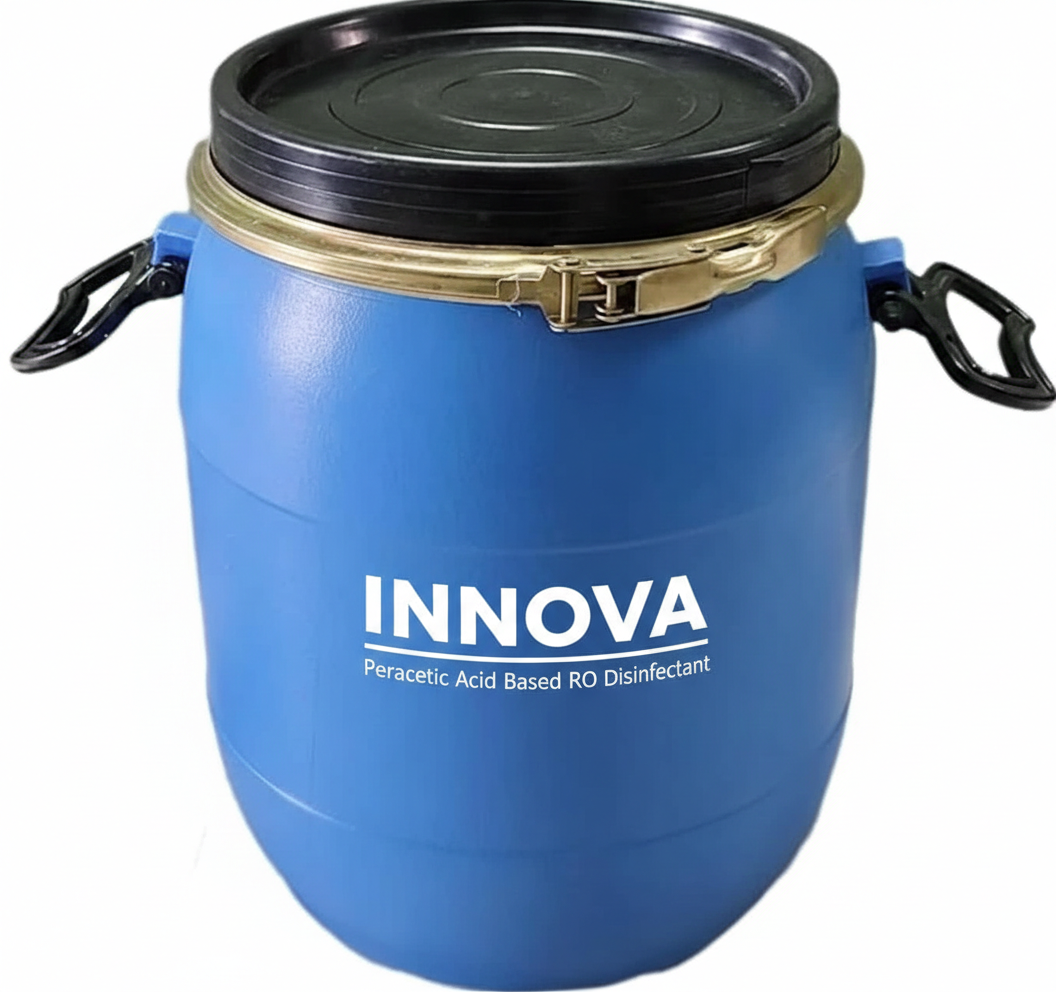
Peracetic Acid Based RO Disinfectant for Textile, Food & Beverage CIP in Myanmar (Fast-Acting Biofilm Remover)
Innova Corporate (India) supplies Peracetic Acid Based RO Disinfectant in Myanmar for CIP sanitisation of textile effluent RO in Yangon, food processing RO in Mandalay, beverage plants in Thilawa SEZ, pharmaceutical water systems in Naypyidaw, and municipal drinking water RO. Myanmar's textile, food and beverage industries face microbial contamination and biofilm formation in RO systems — especially during the monsoon season when feed water turbidity and organic load increase significantly. Peracetic acid is an oxidizing biocide that breaks down into harmless acetic acid and water — unlike chlorine, which leaves corrosive residues and forms harmful disinfection by-products (DBPs). This makes PAA the preferred disinfectant for potable water, food and beverage applications across Myanmar.
Our PAA formulation is designed for rapid disinfection of RO, NF and UF membranes used in Myanmar textile and food processing plants. It is highly effective against a broad spectrum of microorganisms — bacteria, viruses, moulds, spores and biofilm — that accumulate on membrane surfaces between production batches. Because it decomposes into harmless by-products, no toxic residue remains in the treated water, making it ideal for potable and food-grade applications. The liquid form is easy to dose, compatible with standard CIP skids and safe for all major membrane brands used in Myanmar.
Key Features & Strategic Benefits for Myanmar Textile, Food & Beverage RO:
- Broad-Spectrum Microbiocide: Rapidly eliminates pathogens, biofilm and organic slime on RO membranes in Yangon textile effluent and Mandalay food processing plants.
- Fast-Acting Biofilm Removal: Penetrates and breaks down biofilm matrix within 30–60 minutes of CIP contact time — much faster than non-oxidizing biocides.
- No Harmful Residue: Decomposes into acetic acid and water — no toxic residue, no need for extensive post-CIP flushing in Thilawa beverage plants.
- Chlorine-Free Sterilisation: Provides powerful oxidation without the corrosive risks and membrane damage associated with free chlorine.
- Potable Water Approved: Ideal for food, beverage and drinking water RO applications across Myanmar, meeting MONREC discharge guidelines.
- Monsoon-Ready: Effective against high microbial loads during Myanmar monsoon season when feed water turbidity increases.
- Material Compatibility: Safe for all high-quality RO membrane components, housings and CIP skids used in Myanmar industrial plants.
- Cold Sterilisation: Highly effective at ambient temperatures — ideal for Myanmar's tropical climate.
Industries We Serve Across Myanmar:
Textile Processing (Yangon): Textile effluent RO systems in Yangon face dye, organic and microbial fouling. PAA disinfectant removes biofilm and ensures consistent effluent quality for MONREC-compliant discharge.
Food Processing (Mandalay): Food processing plants in Mandalay use PAA disinfectant for CIP between production batches. Fast biofilm removal keeps microbial counts low.
Beverage Plants (Thilawa SEZ): Beverage bottling plants in Thilawa SEZ use PAA for CIP of RO and filling lines — no chlorine taste, no DBPs.
Pharmaceutical Water (Naypyidaw): Pharma plants in Naypyidaw use PAA for residue-free sanitisation of purified water systems between batches.
Municipal Drinking Water (Yangon, Mandalay): Municipal RO plants use PAA for periodic sanitisation, keeping potable water safe without chlorine-related by-products.
Rice Mills & Agro-Processing (Pathein, Delta Region): Rice mills and agro-processing plants in the Ayeyarwady Delta use PAA for CIP of process water RO systems.
Peracetic Acid vs Non-Oxidizing Biocide — When to Use Which in Myanmar:
| Parameter | Peracetic Acid (Oxidizing) | Non-Oxidizing Biocide |
|---|---|---|
| Action Speed | Fast (minutes) | Slow (hours) |
| Residue | None — harmless breakdown | Persistent in system |
| Best For in Myanmar | Textile effluent, food, beverage CIP | Cooling towers, process water |
| Membrane Safety | Safe at 0.1–0.5% CIP dosage | Safe at all dosages |
Recommended Dosage & Application in Myanmar:
Shock Dose (CIP Sanitisation): Use a concentration of 0.1–0.5% v/v in RO permeate water for standard CIP. For heavy biofilm in textile effluent, concentration may go up to 1% v/v after membrane compatibility check.
Continuous Dose (Process Water): For round-the-clock microbial control in non-membrane applications, maintain a maximum of 2.5 ppm in feed water. Not recommended for continuous RO membrane feed.
Sanitisation Procedure for Myanmar Plants:
- Pre-flush the system with RO permeate water to remove loose foulants.
- Circulate PAA solution at 0.1–0.5% v/v through the membranes for 30–60 minutes.
- Allow a soak time of 1–2 hours for deep biofilm penetration.
- Flush thoroughly with RO permeate water until residual PAA is below detection.
- Optional: Follow with a high pH membrane cleaner if organic fouling is also present.
- Final flush with permeate water before returning the plant to normal service.
Common Microbial Problems in Myanmar Textile, Food & Beverage RO Systems:
Biofilm in Textile Effluent RO: Yangon textile effluent contains dye, organic matter and microbial load. PAA penetrates and breaks down biofilm quickly during CIP.
Monsoon Microbial Load: Myanmar monsoon season (May–October) increases feed water turbidity and microbial load. PAA is effective even at high microbial concentrations.
Food Processing Contamination: Mandalay food processing plants face protein, fat and microbial fouling. PAA disinfects without tainting and leaves no residue.
Beverage Line Sterilisation: Thilawa SEZ beverage plants require chlorine-free sterilisation. PAA provides this without taste, odour or DBP formation.
Arsenic & Iron in Groundwater: Some Myanmar groundwater contains arsenic and iron. PAA disinfects without interfering with these contaminants — separate treatment is used for arsenic and iron removal.
Technical Specifications:
| Appearance | Clear colourless liquid |
| Active Ingredient | Peracetic acid (15% w/w typical) |
| pH (as is) | 1.0 – 3.0 |
| Specific Gravity | 1.05 – 1.15 |
| Recommended CIP Dosage | 0.1 – 0.5% v/v (up to 1% for heavy biofilm) |
| Contact Time | 30 – 60 minutes circulation, 1–2 hours soak |
| Shelf Life | 12 months in original vented container |
Frequently Asked Questions (Myanmar):
Q: What is peracetic acid RO disinfectant used for in Myanmar?
A: It is used for CIP sanitisation of textile plants in Yangon, food processing in Mandalay, beverage factories in Thilawa SEZ, and municipal water systems. It kills bacteria, fungi, algae and biofilm on membrane surfaces without leaving harmful residue.
Q: Why is peracetic acid preferred for Myanmar textile effluent RO?
A: Myanmar textile plants in Yangon generate effluent with dye, organic matter and microbial load. Peracetic acid disinfectant acts fast, penetrates biofilm and leaves no harmful residue — critical for textile effluent RO systems that discharge under MONREC guidelines.
Q: Which Myanmar industries use peracetic acid RO disinfectant the most?
A: Textile processing plants in Yangon, food processing factories in Mandalay, beverage plants in Thilawa SEZ, pharmaceutical water systems in Naypyidaw, and municipal drinking water RO plants across Myanmar.
Q: Is peracetic acid safe for polyamide and TFC RO membranes?
A: Yes, when used at recommended concentration and contact time. PAA is compatible with polyamide and TFC membranes at typical CIP concentrations of 0.1–0.5%.
Q: What dosage of peracetic acid is recommended for Myanmar RO CIP?
A: Typical CIP dosage is 0.1–0.5% v/v of PAA in RO permeate water, with a contact time of 30–60 minutes. Higher concentrations may be used for heavy biofilm after membrane compatibility check.
Q: Do you supply peracetic acid disinfectant across Myanmar industrial cities?
A: Yes, we supply PAA RO disinfectant to textile, food, beverage, pharmaceutical and municipal RO plants across Myanmar, including Yangon, Mandalay, Thilawa SEZ, Naypyidaw, Mawlamyine and Pathein.
Storage & Safety: Peracetic acid is a strong oxidizer. Store in original vented containers in a cool, well-ventilated area at your Myanmar facility, away from heat and direct sunlight. Do not store near combustible materials or strong alkalis. Wear chemical-resistant gloves, goggles and apron during handling. Consult the Material Safety Data Sheet (MSDS) and Technical Data Sheet (TDS) for detailed safety and dosage protocols.
Related Products: Explore our RO Membrane Cleaner Range for Myanmar, RO Antifoulant, and RO Dechlorination Chemicals for a complete RO chemical programme across Myanmar.