- 2B / BW Shalimar Bagh, Opp. BQ Market, Near DLF Mall New Delhi - 110088, India.
- :+91-9312-871-070

Manufacturers, Exporters, Suppliers of RO Antiscalants High Silica
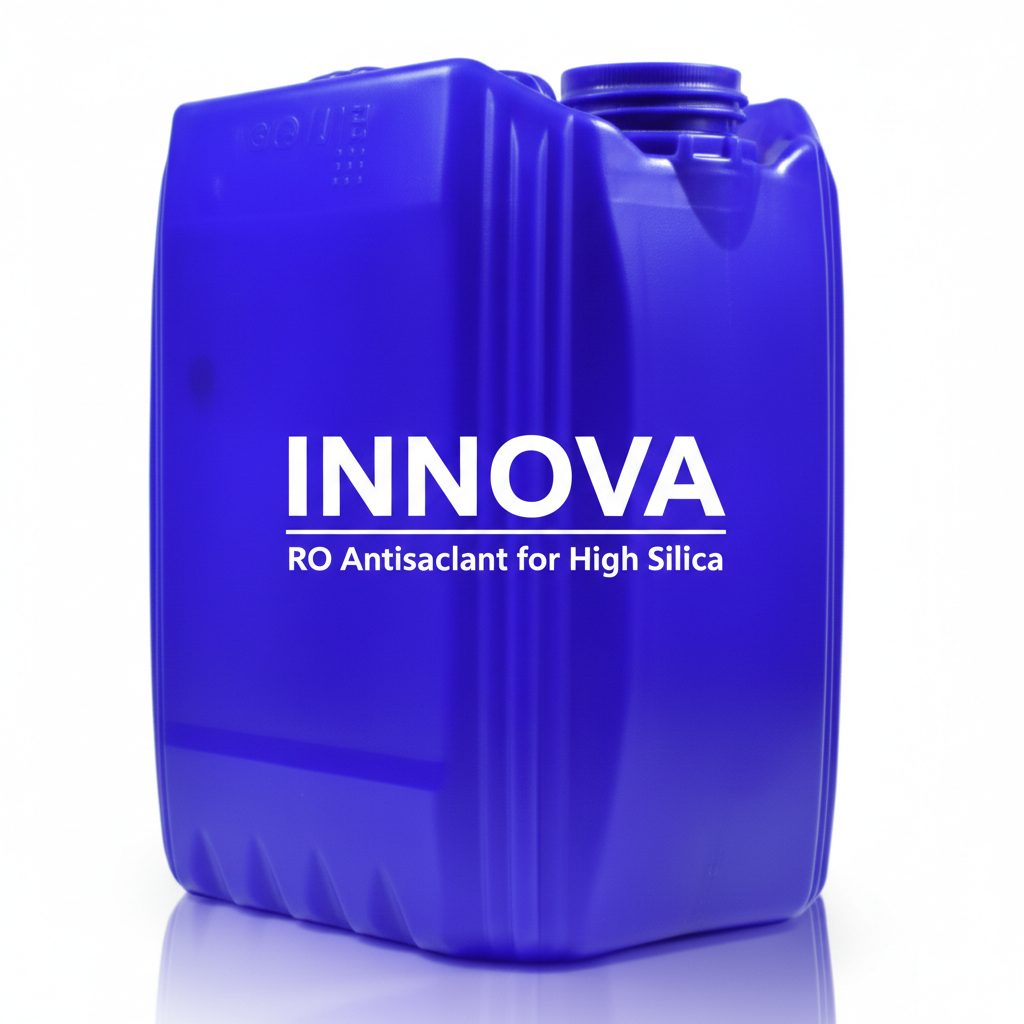
High Silica RO Antiscalant for Odisha Power, Steel & Process Industries
Silica is the fouling problem that quietly limits recovery in Odisha's heaviest industrial plants. The steel and power belt around Rourkela, Sambalpur and Jharsuguda draws from the Brahmani and IB river systems, where dissolved silica varies sharply with monsoon flow. The alumina and power cluster at Dhenkanal and Angul pulls from mixed surface and borewell sources with consistently elevated silica. Coastal units near Balasore and Paradip deal with marine sediment silica that compounds the load. In all these cases, silica does not behave like ordinary hardness scale — once it polymerises on the membrane, it forms a glass-like layer that resists standard acid cleaning. This grade is built for the operating envelope Odisha's heavy industries actually run in.
The chemistry works on two fronts at once. It holds silica in a dispersed, non-reactive form through the concentrate path, and it simultaneously sequesters dissolved iron and manganese — a persistent issue in western Odisha's Brahmani belt — so they cannot oxidise into the reddish deposits that stain membranes. The result is a membrane surface that stays clean at higher recovery, with stable differential pressure and normalised permeate flow. It performs reliably at LSI up to +2.5, reject iron up to 1.5 ppm, and reject silica up to 325 ppm (mg/l) — a range that covers most heavy-duty Odisha installations across the steel, power, alumina and process sectors.
What This Antiscalant Delivers for Odisha Plants:
- Control at High Silica Loads: Maintains silica dispersion even when concentrate-side silica approaches 325 ppm — a level where standard products fail.
- Iron & Manganese Sequestration: Handles the dissolved iron typical of western Odisha's Brahmani belt and Sambalpur borewells before it can oxidise and stain membranes.
- Supports Aggressive Recovery: Lets Odisha operators push recovery upward on constrained water without risking silicate scaling — particularly useful for water-intensive steel and power plants.
- Tolerant of Real-World Feed: Functions across wide pH, TDS and SDI ranges — suits plants with basic pretreatment as well as fully automated systems.
- Economical at Low Dosage: Effective across the 2–20 ppm band, keeping chemical cost per cubic metre of permeate low.
- Membrane-Safe and Organic: Biodegradable liquid formulation compatible with polyamide, TFC and NF membranes used across Odisha industrial RO systems.
Dosage & Application for Odisha Plants:
Inject the antiscalant continuously into the RO feed line downstream of pretreatment and upstream of the cartridge filter. For Odisha installations, the working dose usually falls between 2 ppm and 20 ppm, set by feed calcium hardness, alkalinity, iron and silica:
- Moderate hardness, low silica: 2–3 ppm covers alkalinity and hardness control for plants on cleaner Brahmani or Mahanadi supply.
- Iron-bearing borewells (0.5–1.0 ppm): Raise to 5–7 ppm to hold iron in solution — common requirement around Rourkela and Sambalpur.
- High silica feed (reject up to 325 ppm): Around 10–15 ppm is needed to keep silica fully dispersed — typical for the Dhenkanal and Angul alumina belt.
Storage & Handling: Keep drums sealed and stored in a cool, dry, shaded area at your Odisha site, away from direct sun and heat. Full dosing guidance, handling protocols and safety information are covered in the Technical Data Sheet (TDS) and Material Safety Data Sheet (MSDS).