- 2B / BW Shalimar Bagh, Opp. BQ Market, Near DLF Mall New Delhi - 110088, India.
- :+91-9312-871-070

Manufacturers, Exporters, Suppliers of Silica Antiscalant High pH
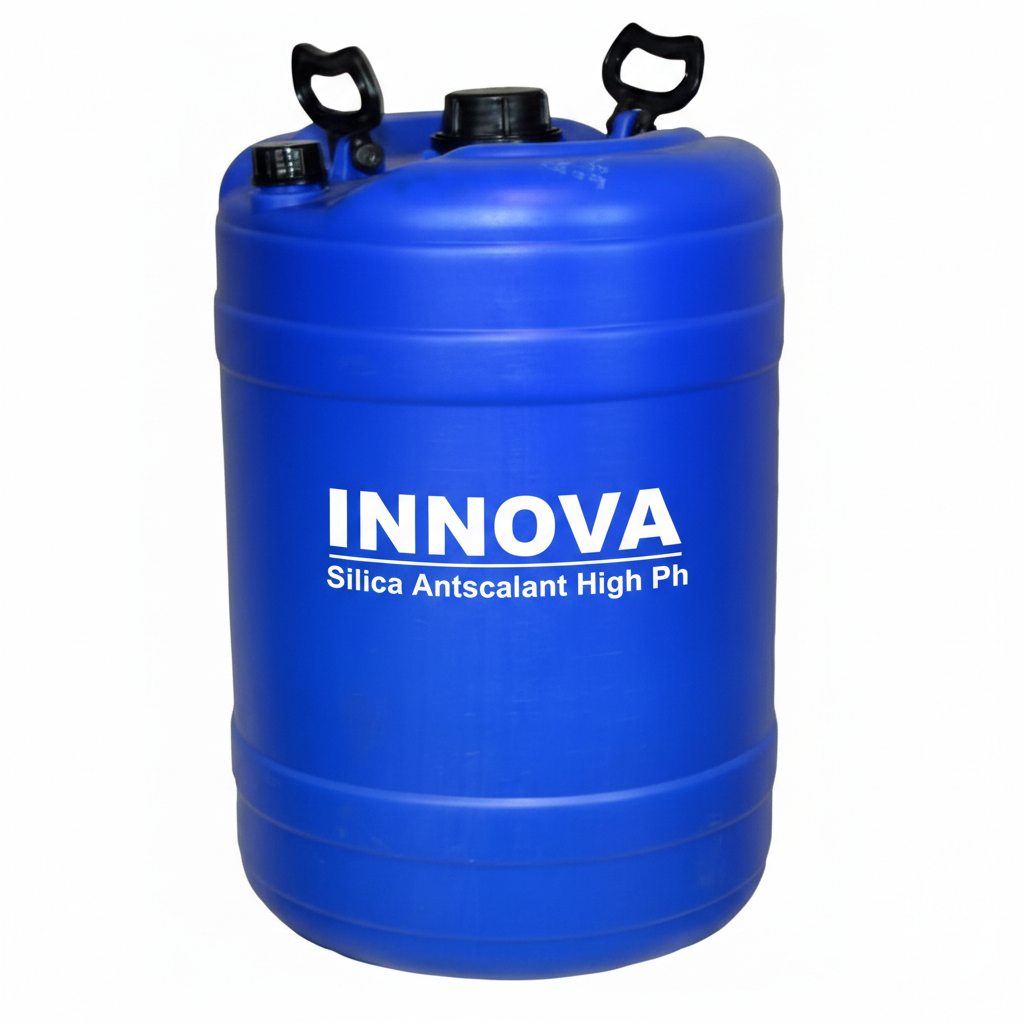
Silica Antiscalant High pH for Singapore's NEWater, Semiconductor & Industrial RO Systems
Innova Corporate (India) is a specialized manufacturer and supplier of high pH silica antiscalants in Singapore. Silica fouling is one of the most severe challenges in RO operations because it forms a hard, glass-like scale that standard acid or caustic cleaners cannot remove once it has deposited. Our advanced alkaline formulation is specifically engineered to inhibit silica precipitation for Singapore industrial units — ensuring smooth operation even in water with high reactive silica content. Whether your facility operates a high-recovery NEWater train, a desalination plant, or a process water system serving semiconductor fabs and biopharma facilities, our silica antiscalant provides the protection that general-purpose formulations cannot.
Our silica antiscalant in Singapore is a high-performance alkaline product that is fully compatible with drinking water systems. By keeping silica in suspension through the polymerization-prone concentration range, it prevents membrane plugging, reduces the frequency of chemical cleanings (CIP), and significantly extends the life of your RO membranes in Singapore. The alkaline chemistry works at elevated pH where silica solubility is naturally higher — enabling plants to operate at higher recovery rates without the risk of silica scale that would otherwise force reduced recovery or premature membrane replacement.
Key Benefits & Salient Features for Singapore:
- Superior Silica Control: Effectively manages high levels of silica in Singapore feed water — including reclaimed water from NEWater-style systems and industrial process water sources.
- High-Recovery Performance: Maintains full silica inhibition at the elevated concentration factors typical of Singapore's high-recovery water treatment operations — where standard antiscalants lose effectiveness.
- Membrane Protection: Prevents irreversible physical damage caused by sharp silica crystals that can puncture and abrade membrane surfaces once they form.
- Drinking Water Safe: Formulated with ingredients suitable for potable water applications — compliant with Singapore's drinking water quality guidelines for NEWater and municipal supply.
- Cost-Efficiency: Minimizes downtime and reduces the need for expensive silica-specific cleaning cycles — a major operational saving for plants with chronic silica load.
- High pH Chemistry Advantage: Works best in the alkaline pH range where silica solubility is naturally highest — enabling higher recovery without scaling risk.
- Polymerization Prevention: Interferes with the silica polymerization reaction before it starts, keeping silica in its dissolved monosilicic acid form.
- Ultra-Pure Water Compatible: Suitable for semiconductor and biopharma applications where water purity requirements are strictest — no interference with downstream polishing systems.
Why Silica Is Different from Other Scales — And Why Singapore Needs a Dedicated Solution
Calcium carbonate and sulphate scales can be removed by acid cleaning. Iron oxide deposits respond to specialized iron cleaners. But silica is fundamentally different — once it polymerizes on a membrane surface, it forms an amorphous glass structure held together by strong siloxane (Si-O-Si) bonds. These bonds are chemically resistant to both acid and caustic cleaning solutions. In practice, this means that by the time silica scale becomes visible in membrane performance data, it is often too late for chemical cleaning to fully recover the element. Prevention is the only practical strategy. Our high pH silica antiscalant is designed for exactly this purpose — it interferes with the polymerization reaction before silica crystals can form, keeping the silica dissolved and flowing through the concentrate stream. For Singapore plants dealing with silica in reclaimed water or industrial sources, this preventive chemistry is essential for long-term membrane reliability.
Standard vs High pH Silica Antiscalant: Singapore Performance Comparison
| Parameter | Standard Antiscalant | High pH Silica Antiscalant |
|---|---|---|
| Silica Control (Feed) | Up to 50 ppm | Up to 120 ppm |
| Silica Control (Concentrate) | Up to 100 ppm | Up to 220 ppm |
| Polymerization Prevention | Limited | Full inhibition |
| Max Recovery (NEWater-style) | 70 – 75% | 82 – 85% |
| Potable Water Safe | Usually yes | Yes |
| CIP Frequency (High Silica Feed) | Every 3–4 weeks | Every 10–14 weeks |
| Ultra-Pure Water Compatible | Limited | Yes |
Case Study: High-Recovery Water Reuse Facility Near Tuas
A high-recovery water reuse facility near Tuas — operating on a NEWater-style treatment process for industrial supply — was processing 15,000 m³/day of reclaimed water with 68 ppm silica, 340 ppm calcium hardness and 1.1 ppm dissolved iron. The plant had been running at only 72% recovery due to repeated silica scaling that standard CIP chemicals could not remove — one membrane set had to be replaced after just 20 months of operation, well short of the expected 5-year service life. After switching to Innova's high pH silica antiscalant at 8 ppm dosing, the facility safely increased recovery to 82%, extended membrane life past 3 years with no further replacements, and reduced CIP frequency from every 5 weeks to every 12 weeks. The plant now reports annual savings exceeding 40% in membrane replacement and cleaning costs. The parent company, which operates multiple water reuse facilities across Singapore, has since standardized the high pH silica formulation across its entire network, including plants serving the Jurong Island industrial zone and the Tuas biomedical park.
Application & Dosage in Singapore:
- Dosage Range: The usual dosage for silica antiscalant ranges from 2–10 ppm based on feed water silica concentration, recovery rate and operating temperature. In severe conditions or smaller installations in Singapore, this may increase up to 15 ppm. We recommend consulting an Innova representative to determine the optimal dosage based on your water analysis.
- Dosing Point: Inject continuously into the RO feed line after pretreatment and before the cartridge filter. Use a metering pump calibrated to your system flow rate.
- Storage: Store in original, tightly sealed containers in a cool, dry place in Singapore away from heat, flame and direct sunlight. Do not allow the product to freeze.
- Technical Support: Please refer to the Technical Data Sheet (TDS), product label and MSDS for comprehensive details on safety and shelf life. Free water analysis review is available for all Singapore clients.
Frequently Asked Questions — Silica Antiscalant High pH in Singapore
Q1: Why is high pH important for silica antiscalant performance?
Silica solubility in water increases significantly above pH 8. High pH silica antiscalants take
advantage of this natural chemistry by working effectively in the alkaline range, where dissolved
silica is more stable. Combined with polymerization inhibition, this gives the antiscalant a broader
operating window than neutral-pH formulations — allowing Singapore plants to run at higher silica
concentrations and recovery rates without scaling.
Q2: Can silica scale be removed if it has already formed?
Once polymerized silica has formed on a membrane surface, it is extremely difficult to remove.
Standard acid and caustic CIP chemicals are largely ineffective. Some success has been reported
with specialized silica removal cleaners, but the recovery is often incomplete, and the risk of
permanent membrane damage is high. Prevention with a silica antiscalant is by far the more
economical strategy for Singapore plants.
Q3: Is this product safe for potable water production in Singapore?
Yes. The formulation is made with ingredients suitable for potable water applications and complies
with the drinking water quality guidelines applicable in Singapore when dosed per our
recommendations. It is used by NEWater facilities, industrial water systems and food-grade
processing operations across the country.
Q4: Do you supply silica antiscalant across Singapore?
Yes. We supply across Singapore through Singapore Port, with delivery to Jurong Island, Tuas, and
other major industrial zones. Standard packaging of 25 kg, 250 kg and bulk drums is available
with regular dispatch from India. Bulk pricing and consolidated shipments are available for
multi-site operators.