- 2B / BW Shalimar Bagh, Opp. BQ Market, Near DLF Mall New Delhi - 110088, India.
- :+91-9312-871-070

Manufacturers, Exporters, Suppliers of RO Antiscalant For High Iron Water
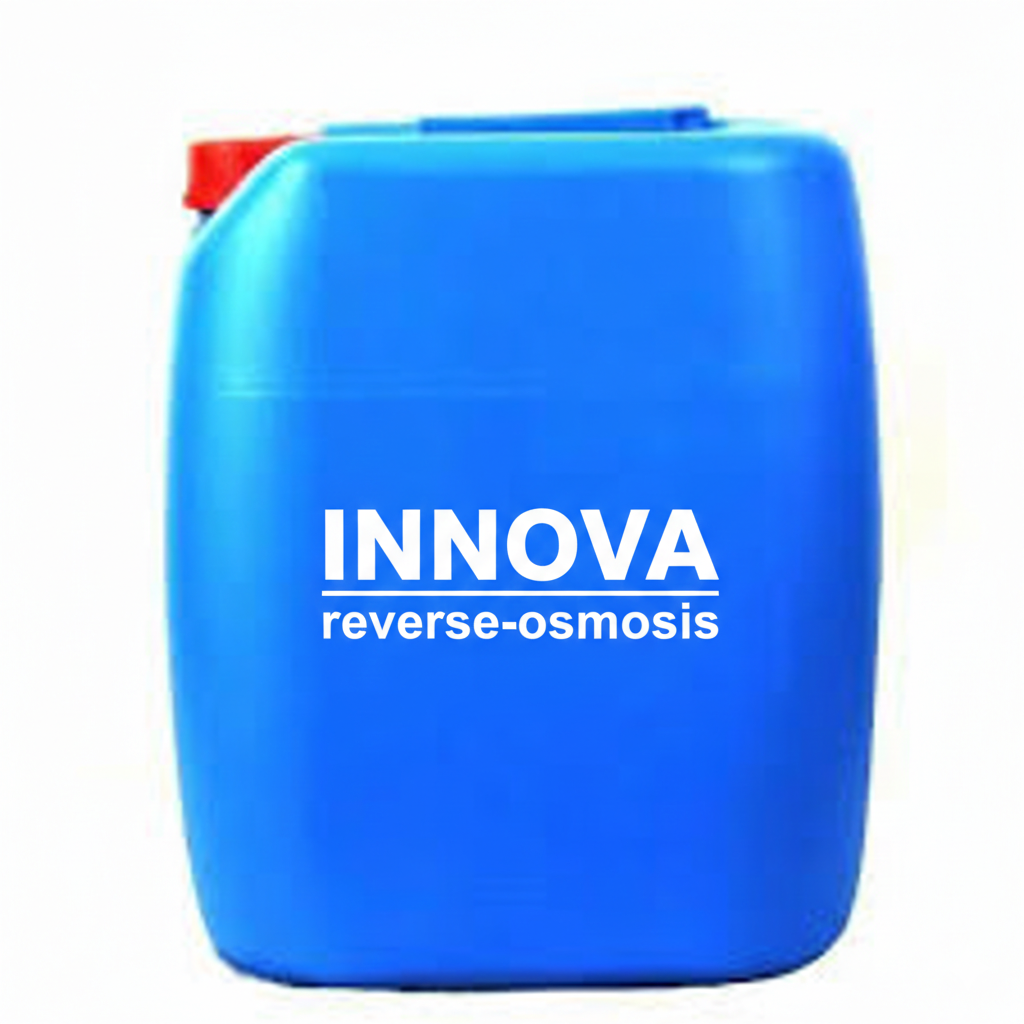
High Iron RO Antiscalant for Iron-Rich Water in Uttar Pradesh
Iron is the quiet killer of RO membranes in Uttar Pradesh. It doesn't announce itself the way hardness does — there is no dramatic pressure spike, no sudden drop in recovery. Instead, dissolved ferrous iron enters the plant in borewell water, meets oxygen somewhere in the pretreatment line, and quietly converts to ferric oxide. That red-brown deposit then settles into membrane feed channels and spacer voids, choking flow in a way that ordinary acid CIP struggles to reverse. Our High Iron RO Antiscalant is formulated for this exact problem in Uttar Pradesh water — the deep tube wells around Noida and Greater Noida, the iron-bearing aquifers under Meerut and Ghaziabad, and the mixed industrial supply feeding plants in Kanpur and Lucknow.
The chemistry works by holding iron — and other problematic metals like manganese and aluminium — in a soluble, dispersed state throughout the concentrate path. That means the iron reaches the reject stream instead of depositing on the membrane. Unlike simple threshold inhibitors, this formulation is built to stay effective even when feed iron sits between 0.5 and 1.5 ppm, and when pH drifts across a wide band. The result is stable differential pressure, steady permeate flow, and cleaning cycles that stretch from weeks to months in Uttar Pradesh plants that previously cleaned every fortnight.
What This Antiscalant Does for Uttar Pradesh RO Plants:
- Keeps Iron in Solution: Binds dissolved ferrous iron before it oxidises, preventing the red-brown staining that is common in Uttar Pradesh borewell-fed RO systems.
- Handles Manganese and Aluminium: Not just iron — also controls the other metallic oxides that appear in mixed groundwater across UP.
- Stable Permeate Flow: Prevents the dense metallic scale layer that slowly chokes membrane channels and drags recovery downward.
- Wide pH Tolerance: Stays effective across the pH shifts that occur in Uttar Pradesh plants with variable feed quality and basic pretreatment.
- Fewer Acid Cleanings: Cuts the frequency of aggressive acid CIP cycles, which means less membrane wear and lower chemical spend for UP operators.
- Safe on All Common Membranes: Compatible with TFC, polyamide and CTA elements used in Uttar Pradesh industrial RO systems.
Application & Dosage: Inject continuously into the RO feed line downstream of pretreatment — typically ahead of the cartridge filter. For most Uttar Pradesh installations, dose runs between 2 and 10 ppm, set by feed iron, manganese, pH and system recovery. Where feed iron is persistently above 1.0 ppm or the plant runs at high recovery, the dose can go up to 15 ppm. Because iron fouling is cumulative, correct continuous dosing matters more than occasional high-dose correction. We recommend a feed water analysis before fixing the final dose for your Uttar Pradesh plant.
Storage & Stability: Keep drums tightly sealed and stored in a cool, dry, shaded area at your Uttar Pradesh site, away from direct sun, heat and open flames. Shelf life, handling protocols and full safety data are covered in the Technical Data Sheet (TDS) and Material Safety Data Sheet (MSDS).