- 2B / BW Shalimar Bagh, Opp. BQ Market, Near DLF Mall New Delhi - 110088, India.
- :+91-9312-871-070

Manufacturers, Exporters, Suppliers of RO Membrane Disinfectant Biocide
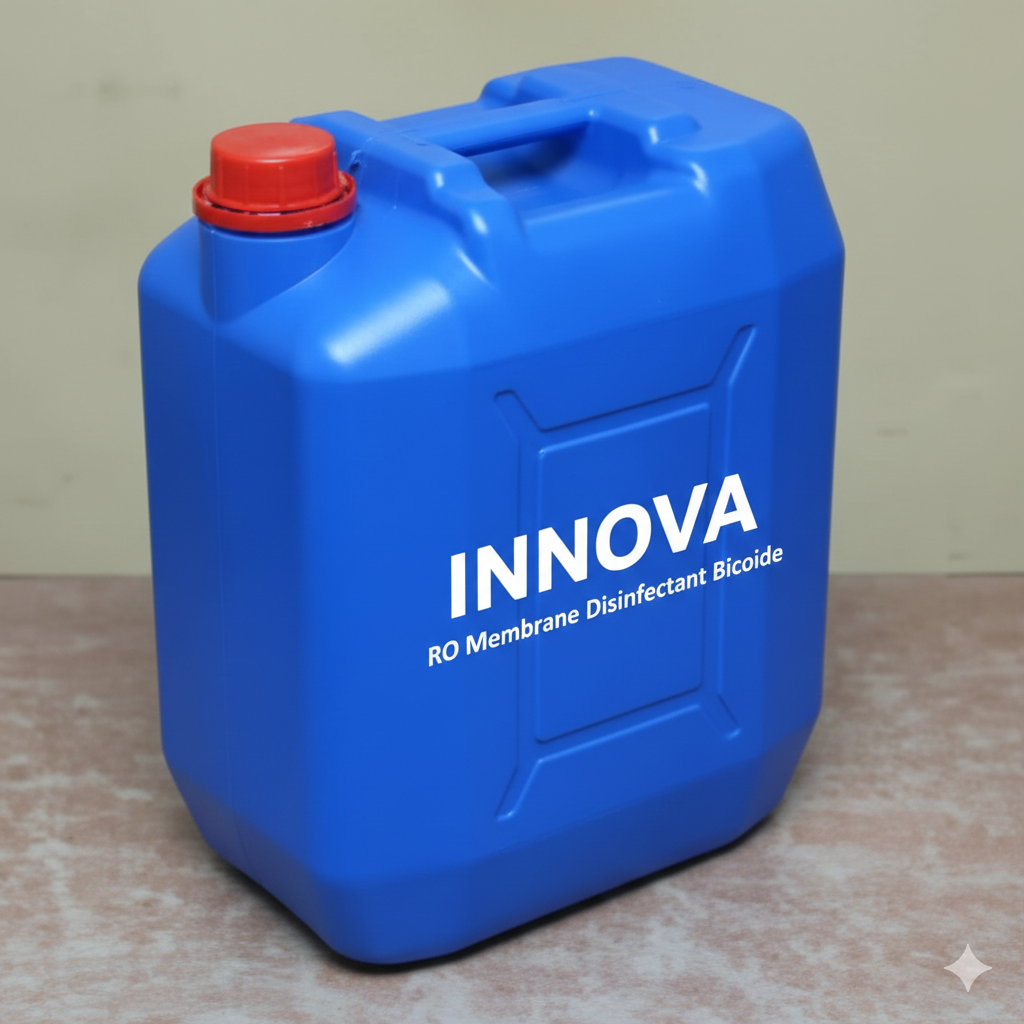
RO Membrane Disinfectant & Biocide for Uttar Pradesh RO Plants
Biofouling does not announce itself the way scaling does. There is no sudden pressure spike or dramatic recovery drop — instead, a thin microbial film slowly forms on the membrane surface, thickens into bio-slime, and quietly drags down flux, raises differential pressure and degrades permeate quality. In Uttar Pradesh, this problem is especially common in plants drawing from surface water sources along the Ganga belt, from shallow borewells in the Noida–Ghaziabad corridor, and from mixed municipal and industrial supply in Kanpur and Lucknow. Our membrane disinfectant and biocide range is formulated to attack that biofilm directly and keep Uttar Pradesh RO systems running at design flux.
The range covers the full spectrum of disinfection needs in Uttar Pradesh water treatment — non-oxidizing biocides for continuous dosing, silver hydrogen peroxide formulations for high-purity applications, and peracetic acid based disinfectants for shock treatment of heavily fouled membranes. Because these are non-oxidizing chemistries, they are safe for polyamide and TFC membranes that would otherwise be damaged by chlorine. For many Uttar Pradesh plants, this also means the traditional chlorination–dechlorination step in pretreatment can be simplified or reduced, cutting chemical handling and cost.
Disinfectant & Biocide Range for Uttar Pradesh Plants:
- Continuous-Dose Non-Oxidizing Biocide: Keeps bacteria and algae in check during normal operation without damaging membranes.
- Shock-Treatment Biocide: Knocks down established bio-slime during CIP or extended shutdown recovery.
- Silver Hydrogen Peroxide Disinfectant: For high-purity applications in pharmaceutical and food-grade Uttar Pradesh plants.
- Peracetic Acid Formulation: Fast-acting disinfectant for heavily biofouled RO systems and potable water lines.
- Membrane Antifoulant: Disperses organic and microbial debris before it anchors to the membrane surface.
- Potable Water Disinfectant: For post-treatment sanitisation in Uttar Pradesh drinking water plants.
Because these biocides are non-oxidizing, they respond against a broad spectrum of bacteria, fungi, yeast and algae without attacking the polyamide or TFC membranes that are standard in Uttar Pradesh RO installations. Where chlorine-based disinfection would require careful dechlorination upstream of the membranes, non-oxidizing biocides allow a simpler and safer pretreatment train — fewer dosing points, fewer chemicals on site, and less risk of membrane oxidation damage. For Uttar Pradesh operators, that translates into predictable performance across the plant's service life.