- 2B / BW Shalimar Bagh, Opp. BQ Market, Near DLF Mall New Delhi - 110088, India.
- :+91-9312-871-070

Manufacturers, Exporters, Suppliers of RO Antiscalant Chemicals
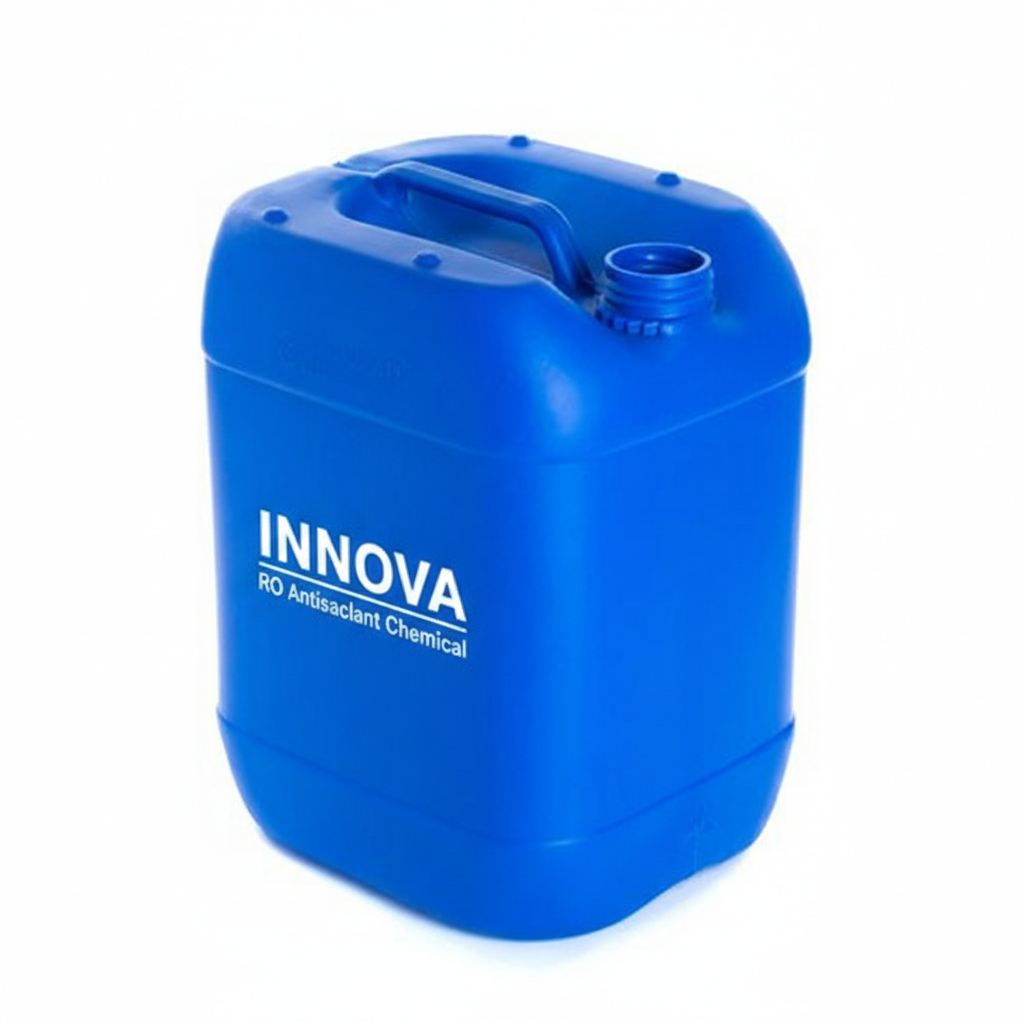
Industrial Grade RO Antiscalant & Antifoulant Chemicals in France
A plant manager in Rennes called us with a question we hear often from French operators: "Why does the same antiscalant work perfectly in our Paris facility but fail in our Brittany plant?" The answer has nothing to do with the antiscalant. It has everything to do with the water. Brittany sits on granite bedrock. Paris sits on limestone sediment. Same country. Same product category. Completely different water chemistry.
Innova Corporate (India) manufactures RO Antiscalant Chemicals for France formulated for the country's unusually diverse regional water. Our technical team has mapped France's six distinct hydrogeological zones and developed specific formulation guidance for each. Whether you run a municipal plant in Paris, a cheese facility in Normandy, a bottled water operation in the Vosges, or a marble cutting unit in Provence, the antiscalant that reaches your membrane should match your region — not just the product category.
Why France's Water Is Not One Water
France is one of the few countries in Europe with six genuinely distinct water chemistry profiles within its borders. Here's what changes from region to region:
- Brittany & Normandy (granite bedrock): Soft, slightly acidic water (pH 6.5-7.2), low hardness (3-8°f), but high iron (0.3-1.5 ppm) and manganese. Scale risk is low, but iron fouling is severe. Standard antiscalants underperform here.
- Paris Basin (sedimentary limestone): Hard water (25-40°f), high calcium carbonate, LSI often +1.5 to +2.5. The classic scaling problem. Requires high-performance carbonate inhibition.
- Alsace & Vosges (sandstone): Moderate hardness (12-18°f), but naturally elevated silica (25-45 ppm) from sandstone dissolution. Scale risk from calcium plus silica co-deposition.
- Provence & Languedoc (limestone karst): Very hard water (30-45°f), high sulfate (60-120 ppm), high temporary hardness. Sulfate scaling risk is significant, especially at high recovery.
- Alps & Pyrenees (snowmelt): Soft water in summer, moderate in winter, with high seasonal variation. Spring melt brings iron and manganese pulses.
- Aquitaine & Landes (sandy aquifers): Moderate hardness (10-20°f), but elevated iron (0.5-2 ppm) and manganese (0.1-0.3 ppm) from sandy soils. Iron fouling dominates.
A single antiscalant formulation cannot handle all six profiles optimally. That's why French plants benefit from region-matched chemistry.
Region-by-Region Antiscalant Selection for France
- Paris Basin plants: Standard high-performance carbonate antiscalant with LSI tolerance +2.5 to +3.0. Focus on calcium carbonate inhibition. Typical dose: 2-4 ppm.
- Brittany & Normandy plants: Iron-sequestering antiscalant formulation. Focus on iron and manganese control. Typical dose: 4-6 ppm.
- Alsace & Vosges plants: Dual-action antiscalant for calcium and silica. Silica tolerance up to 150 ppm. Typical dose: 4-6 ppm.
- Provence & Languedoc plants: Sulfate-tolerant antiscalant. Handles high calcium sulfate and barium sulfate. Typical dose: 4-6 ppm.
- Alps & Pyrenees plants: Seasonal formulation — carbonate-dominant in summer, iron-dominant in spring melt. Typical dose: 2-5 ppm, adjusted seasonally.
- Aquitaine & Landes plants: Iron and manganese sequestering formula. Typical dose: 4-7 ppm.
Where French Industries Face Scale
Bottled water operations at Evian, Perrier and Badoit (Vosges, Gard, Ardèche) draw from naturally mineral-rich springs with varying calcium and silica. Each plant needs antiscalant tuned to its specific source — a universal product leaves performance on the table.
Cheese and dairy processing in Normandy and Brittany uses RO for CIP water and process water. The soft granite water here carries iron that fouls membranes long before calcium scaling becomes an issue.
Sugar refining at Beghin Say and Tereos in the Nord and Champagne regions processes beet with high calcium and organic load. RO antiscalant here must handle both scaling and organic dispersion.
Marble and stone cutting in Languedoc and Provence uses RO for dust suppression and process water. The very hard karst water in these regions demands sulfate-tolerant antiscalant, especially at high recovery.
Pharmaceutical API manufacturing at Sanofi and Pierre Fabre in Lyon and Toulouse requires ultrapure RO water where scale prevention is non-negotiable. Region-matched antiscalant ensures consistent water quality for USP-grade production.
Municipal drinking water plants run by Veolia, Suez and Saur across France face the country's full diversity — from soft Brittany water to hard Provence karst. Region-specific antiscalant is essential for consistent performance across the fleet.
Universal vs Region-Specific — What French Plants Actually Need
A universal antiscalant can be used as a baseline across France, and for many plants it works acceptably. But French plants at the extremes — very soft Brittany water or very hard Provence karst — lose 15-25% of recovery potential by using a one-size-fits-all product. The economics of region-specific antiscalant usually justify the small additional complexity within 6-12 months of operation.
Our approach: start with a universal formulation, review your plant's water analysis, and switch to region-specific chemistry only if the analysis shows meaningful extremes. For most French industrial and municipal plants, this staged approach delivers the best balance of simplicity and performance.
Key Features & Strategic Advantages for France Plants:
- Superior Scale Control: Effectively manages Calcium Carbonate up to LSI +3.0, Calcium Sulfate, Barium Sulfate, and Strontium Sulfate.
- Softener Alternative: Delivers excellent results as a highly efficient and low-maintenance replacement for traditional softener filters in France industries.
- Potable Water Certified: Classified and safe for use in systems producing drinking/potable water for the France community.
- Wide Compatibility: Fully compatible with all leading RO membranes and downstream coagulants.
- Metallic Oxide Tolerance: Offers high tolerance to aluminum and iron oxides — critical for Brittany, Normandy and Aquitaine plants.
- Operating Flexibility: Effective over a broad pH range and can be fed neat (concentrated) or diluted.
- Particulate Dispersion: Acts as a powerful dispersant to keep silt and organic foulants from sticking to the membrane.
Dosage Guidelines by French Region
Dose continuously into the RO feed water downstream of dechlorination and upstream of cartridge filters. Adjust based on LSI, silica, iron and recovery rate:
- Paris Basin: 2-4 ppm for calcium carbonate scale control at LSI up to +2.5.
- Brittany & Normandy: 4-6 ppm for iron sequestration in soft granite water.
- Alsace & Vosges: 4-6 ppm for combined calcium and silica control.
- Provence & Languedoc: 4-6 ppm for sulfate and carbonate scale at high recovery.
- Alps & Pyrenees: 2-5 ppm, seasonal adjustment for spring snowmelt pulses.
- Aquitaine & Landes: 4-7 ppm for iron and manganese sequestration.
- Municipal plants (Veolia, Suez, Saur): 2-3 ppm baseline with regional adjustment.
At Innova Corporate, we offer various specialized types of R.O. Antiscalants tailored to specific water chemistries found in the France region. Our technical team can assist you in selecting the precise formulation to ensure your system operates at peak recovery rates with minimal downtime.
Storage & Stability: Store in original, tightly sealed containers in a cool, dry place at your France facility. Keep away from direct heat and sunlight. For customized dosing schedules based on your specific France water analysis, please consult our Technical Data Sheet (TDS) or reach out to our technical team.
French Water Questions Plant Managers Ask
Q1. Why does water chemistry vary so much across France?
France's geology is unusually diverse for a single country. Brittany and Normandy sit on
granite bedrock (soft, acidic water, high iron). The Paris Basin is sedimentary
limestone (hard water, high calcium carbonate). Alsace and Vosges are sandstone
(moderate hardness, natural silica). Provence and Languedoc are limestone karst (very
hard water, high sulfate). The Alps and Pyrenees produce snowmelt (soft water, seasonal
variation). Each region needs a different antiscalant formulation.
Q2. Which French industries use RO Antiscalant Chemicals most
heavily?
Bottled water plants at Evian, Perrier and Badoit in the Vosges, Gard and Ardèche,
cheese and dairy processing in Normandy and Brittany, sugar refining at Beghin Say and
Tereos in the Nord and Champagne, marble and stone cutting in Languedoc and Provence,
pharmaceutical API manufacturing at Sanofi and Pierre Fabre in Lyon and Toulouse, and
municipal drinking water plants run by Veolia, Suez and Saur across France.
Q3. How do I choose the right antiscalant for my French
region?
Match the antiscalant to your water analysis, not just the region. Paris Basin plants
need calcium carbonate scale control for hard water. Brittany plants need iron
sequestration for granite-derived water. Provence plants need sulfate scale control.
Alsace plants need silica tolerance. Our technical team reviews your water analysis and
recommends the specific formulation.
Q4. What is the recommended dosage of RO Antiscalant in
France?
Typical dosage is 2-6 ppm in RO feed water, adjusted based on LSI, silica level, iron
content, temperature and recovery rate. For French municipal plants, 2-3 ppm is
standard. For industrial high-recovery plants in Provence and Paris Basin, 4-6 ppm.
For Brittany plants with high iron, 5-7 ppm with iron-specific formulation.
Q5. Do you supply RO Antiscalant Chemicals across France?
Yes. We supply across France including Paris, Lyon, Marseille, Toulouse, Bordeaux,
Lille, Nantes, Strasbourg, Nice, Rennes, Reims, Dijon, Grenoble, Rouen, Montpellier,
and all regions from Brittany to Provence. Bulk shipments via Marseille, Le Havre and
Dunkirk ports with 18-22 day transit.
Q6. Can one antiscalant work across all French
regions?
A broad-spectrum antiscalant can work as a baseline, but performance suffers at the
extremes. A Paris Basin plant with LSI +2.5 needs different chemistry than a Brittany
plant with high iron and low hardness. We offer both universal and region-specific
formulations, and our technical team matches the right product to each French plant.