- 2B / BW Shalimar Bagh, Opp. BQ Market, Near DLF Mall New Delhi - 110088, India.
- :+91-9312-871-070

Manufacturers, Exporters, Suppliers of RO Membrane Disinfectant Biocide
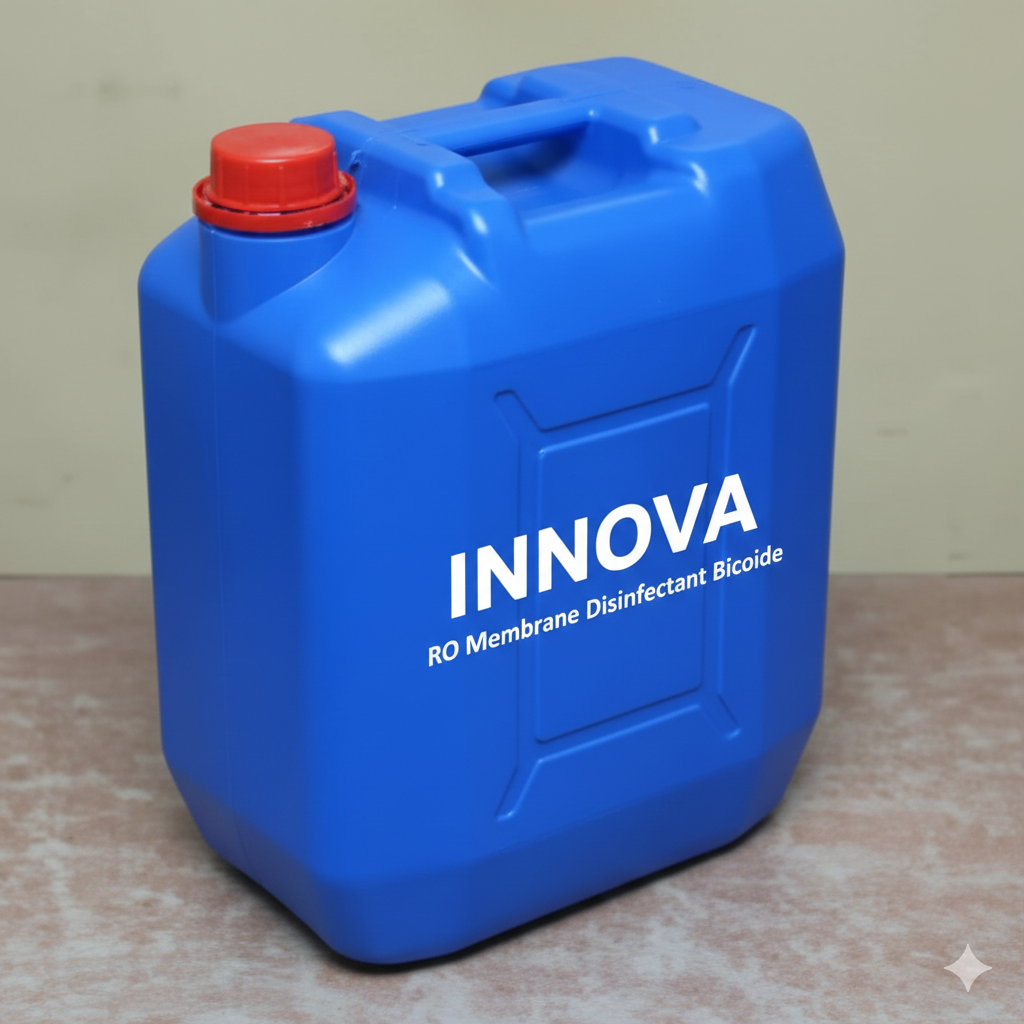
RO Membrane Disinfectant & Biocide Solutions in France
A thalassotherapy center in Biarritz called us in early 2025 with a problem that French wellness regulators take seriously: Legionella had been detected in their RO-fed hydrotherapy circuit. The source wasn't the seawater — it was the biofilm in the RO membrane housings. Chlorine-based disinfection had been running continuously, but the biofilm had built a fortress that chlorine simply could not breach. When we pulled the first-stage elements and performed a bacterial count on the biofilm scrapings, we found 10⁶ CFU/cm² in the EPS matrix — ten thousand times higher than the bulk water. Chlorine was killing the outer cells and leaving the core untouched.
This is the fundamental problem with biofilm in French RO systems. Standard disinfectants work on free-floating bacteria. Biofilm bacteria live inside a self-built fortress — an extracellular polymeric substance (EPS) matrix that blocks chemical penetration. Innova Corporate (India) manufactures RO Membrane Disinfectant Biocides for France specifically formulated to penetrate that matrix, kill the embedded cells, and prevent regrowth. Our non-oxidizing biocides are EU BPR-registered and used across France's most microbial-sensitive sectors.
The Biofilm Fortress — Why Chlorine Fails in French RO Systems
Biofilm is not just bacteria. It is bacteria plus the EPS matrix they build around themselves. This matrix serves three defensive functions:
- Chemical barrier: The EPS matrix contains polysaccharides, proteins and DNA that react with and neutralize oxidizing chemicals like chlorine before they reach the bacterial cells. Chlorine is consumed in the outer 10-20 microns of the biofilm, leaving the core untouched.
- Nutrient trap: The matrix captures organic carbon and trace minerals from the feed water, feeding the bacteria continuously. This is why French surface water plants see biofilm regrow within 5-7 days after chlorination.
- Genetic exchange: Bacteria inside biofilm exchange resistance genes at high frequency. This is how Legionella and Pseudomonas develop tolerance to standard disinfectants in French hospital and spa systems.
Non-oxidizing biocides work differently. They don't rely on oxidative consumption — they penetrate the EPS matrix and react with the cell membrane directly. This is why they remain effective where chlorine fails.
Where French Sectors Face Biofilm Attack
Thalassotherapy and thermal spa centers at Biarritz, Deauville, Vichy and Evian use RO for hydrotherapy pools, seawater circuits and drinking water. These environments are warm, nutrient-rich, and — critically — regulated for Legionella and Pseudomonas. Biofilm control is non-negotiable from both health and regulatory perspectives.
Hospital and dialysis centers in the APHP Paris network and CHU Lyon require the highest water purity standards. Dialysis patients are immunocompromised and cannot tolerate endotoxins or microbial breakthrough. Biofilm in RO distribution loops is a life-safety issue, not just a maintenance concern.
Pharmaceutical cleanroom water systems at Sanofi, Ipsen and similar manufacturers operate under EU GMP Annex 1 requirements. RO water used in sterile manufacturing must meet microbial limits continuously. Biofilm in the RO stage jeopardizes the entire purification train.
Marine research and aquaculture at IFREMER Brest and Brittany oyster farms work with seawater RO where marine bacteria and algae form aggressive biofilms. These organisms are adapted to hostile conditions and require specialized biocide chemistry.
Craft breweries and distilleries in Alsace, Brittany and throughout France use RO for brewing water and CIP rinse water. Biofilm in the RO stage can introduce off-flavors and wild yeast contamination into the final product.
Water parks and public pools including Aquaboulevard Paris and Center Parcs locations use RO for makeup water and treatment circuits. Warm, high-bather-load conditions accelerate biofilm growth; Legionella control is a continuous requirement.
The Three Biocide Technologies We Offer France
Different French applications need different biocide chemistries. We supply three:
- Non-Oxidizing Biocides (primary product): Membrane-safe, penetrate EPS matrix, effective against Legionella, Pseudomonas, sulfate-reducing bacteria and fungi. Recommended for continuous dosing in French hospital, spa and pharma applications. Compatible with polyamide and TFC membranes at any concentration.
- Silver Hydrogen Peroxide Formulations: Combines oxidative power with residual silver protection. Silver ions remain active in the distribution loop for extended periods. Ideal for French dialysis and thalassotherapy circuits where residual protection is critical.
- Peracetic Acid Formulations: Fast-acting oxidizing biocide for shock treatment. Breaks down into acetic acid and hydrogen peroxide — no chlorinated by-products. Recommended for French breweries, food processing and bottled water applications.
A key operational advantage for French plants: our non-oxidizing biocides can reduce or eliminate the chlorination-dechlorination step in feed water pretreatment. Instead of dosing chlorine upstream (which requires SMBS or liquid dechlorinator downstream), you dose biocide directly and skip both steps. Less equipment, less chemical inventory, fewer failure points.
Specialized Range for France Industries:
- Standard RO Disinfectants
- High-Efficacy Membrane Biocides
- Advanced RO Antifoulants
- Silver Hydrogen Peroxide Based
- Peracetic Acid Formulations
- Potable Drinking Water Disinfectants
Dosing & CIP Protocols for French RO Plants
Two modes of application, chosen based on your microbial load and regulatory requirements:
- Continuous dosing (100-500 ppb): Standard for French hospital, spa and pharma RO systems. Maintains residual biocide activity in the membrane and distribution loop. Prevents biofilm establishment rather than removing it after formation.
- Shock CIP (100-200 ppm, 60-120 minutes): For French plants with existing biofilm. First clean with High pH cleaner to remove organic matrix, then apply biocide at shock concentration. Recirculate and soak; flush with permeate before returning to service.
For French thalassotherapy and hospital applications, we recommend combining continuous dosing with quarterly shock CIP. This maintains residual protection while periodically resetting the biofilm baseline.
Real Biofilm Control Results in France
From French plants using our biocides over the last 18 months:
- Thalassotherapy center in Biarritz: Legionella fully cleared from RO circuit. Continuous dosing at 300 ppb maintained zero detection for 12+ months.
- APHP Paris dialysis unit: Endotoxin levels reduced below 0.03 EU/ml consistently; passed EU pharmacopeia testing without CIP frequency increase.
- Brittany oyster farm seawater RO: Biofilm formation eliminated; membrane CIP frequency reduced from monthly to quarterly.
- Alsace craft brewery: Wild yeast and Lactobacillus contamination eliminated from brewing water RO; product shelf life extended by 4 weeks.
Storage & Stability: Store in original, tightly sealed containers in a cool, dry place at your France facility. Keep away from direct heat and sunlight. For customized dosing schedules based on your specific France application and regulatory requirements, please consult our Technical Data Sheet (TDS) or reach out to our technical team.
Biofilm Questions French Plant Managers Ask
Q1. Why is biofilm harder to kill than free-floating bacteria in French RO systems?
Biofilm bacteria produce an extracellular polymeric substance (EPS) matrix that shields them from disinfectants. Chlorine and standard biocides cannot penetrate this matrix, so they kill the outer layer while leaving the core intact. The biofilm regrows within days. Non-oxidizing biocides formulated to penetrate EPS are essential for French thalassotherapy, hospital and dialysis RO systems where biofilm control is critical.
Q2. Which French sectors need RO membrane disinfectants most?
Thalassotherapy and thermal spa centers at Biarritz, Deauville, Vichy and Evian, hospital and dialysis centers in the APHP Paris network and CHU Lyon, pharmaceutical cleanroom water systems at Sanofi, Ipsen and similar manufacturers, marine research and aquaculture at IFREMER Brest and Brittany oyster farms, craft breweries and distilleries in Alsace and Brittany, and water parks like Aquaboulevard Paris and Center Parcs.
Q3. Do non-oxidizing biocides work against Legionella in French spa and hospital systems?
Yes. Non-oxidizing biocides penetrate the biofilm matrix where Legionella harbors, then react with the cell membrane directly. Unlike chlorine, they do not get consumed by the EPS layer before reaching the cells. French thalassotherapy and hospital systems using our biocides report zero Legionella detection after 12+ months of continuous dosing.
Q4. What is the recommended dosage for French RO disinfection?
Continuous dosing at 100-500 ppb maintains residual biocide activity for hospital, spa and pharma applications. Shock CIP at 100-200 ppm for 60-120 minutes removes existing biofilm. French thalassotherapy and hospital applications benefit from combining both — continuous dosing plus quarterly shock CIP.
Q5. Do you supply RO Membrane Disinfectant & Biocide across France?
Yes. We supply across France including Paris, Lyon, Marseille, Toulouse, Bordeaux, Lille, Nantes, Strasbourg, Nice, Rennes, Reims, Dijon, Grenoble, Rouen, Biarritz, Deauville, Vichy, Évian, Brest and all other regions. EU BPR documentation and French-language FDS provided with every shipment. Bulk shipments via Marseille, Le Havre and Dunkirk ports with 18-22 day transit.
Q6. Can non-oxidizing biocides eliminate the need for chlorination-dechlorination in French plants?
Yes, in many French applications. Our non-oxidizing biocides can be dosed directly without upstream chlorination, eliminating the need for downstream dechlorination chemicals (SMBS or liquid dechlorinator). This simplifies pretreatment, reduces chemical inventory, and removes a common failure point. Our technical team can review your French plant's pretreatment train to determine if this simplification is appropriate.