- 2B / BW Shalimar Bagh, Opp. BQ Market, Near DLF Mall New Delhi - 110088, India.
- :+91-9312-871-070

Manufacturers, Exporters, Suppliers of RO Membrane Cleaner
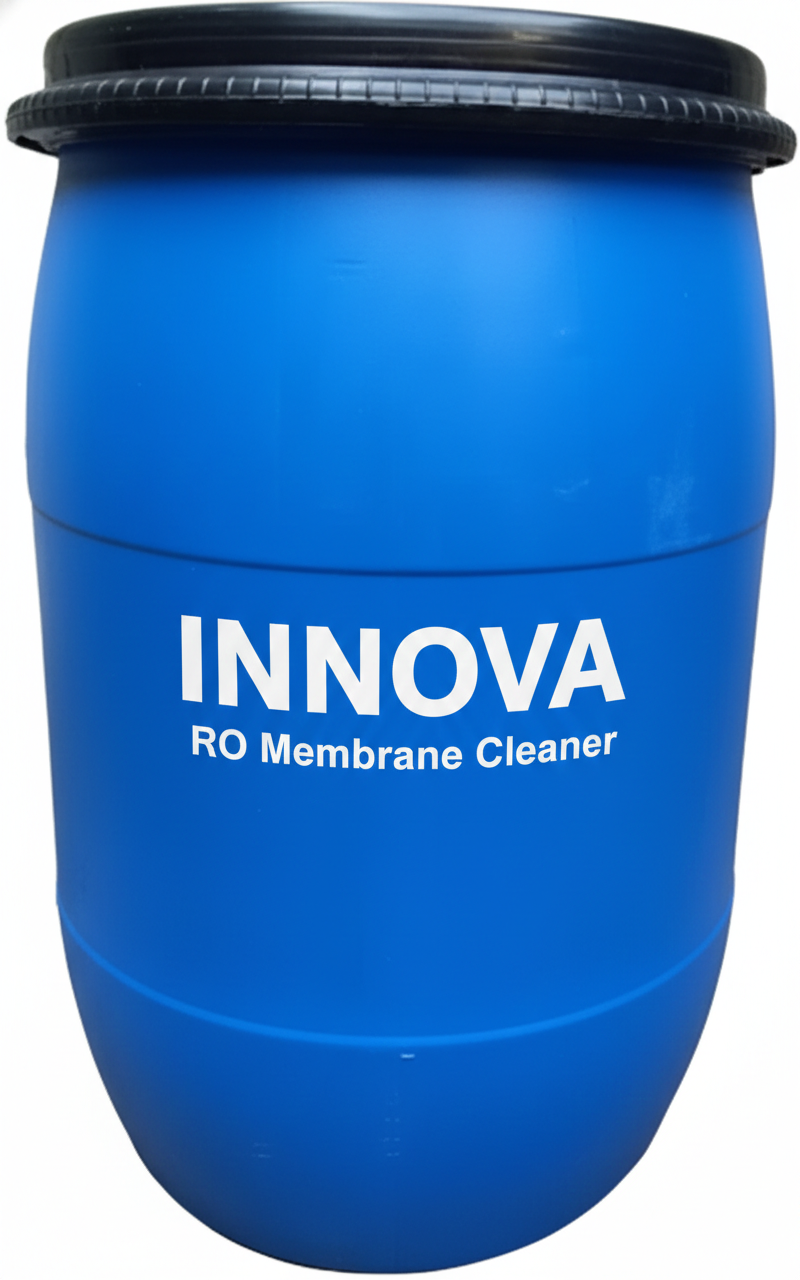
RO Membrane Cleaner Chemicals in Muscat for Food, Dairy & Textile RO Plants (Acidic & Alkaline CIP Solutions)
Innova Corporate (India) supplies RO Membrane Cleaner Chemicals in Muscat for cleaning-in-place (CIP) of food, dairy, textile, pharmaceutical and industrial RO systems. Membrane fouling in Muscat's food and dairy plants is dominated by protein, fat and oil deposits, while textile effluent RO systems face dye, organic and silica fouling. These foulants cannot be removed by a single cleaning chemical — they need a two-stage CIP programme using an acidic cleaner followed by an alkaline cleaner. Our range covers both, along with iron-specific, silica-specific and preservative formulations.
Our cleaners are formulated for low foaming, precise pH control and easy flushing, which is critical for food-grade RO systems in Al Wadi Al Kabir and pharmaceutical water plants near Knowledge Oasis Muscat. When used as part of a structured CIP schedule, they restore membrane flux and salt rejection, reduce differential pressure and extend membrane life by several years. Muscat operators use them across dairy, juice, packaged food, textile processing and industrial process water RO trains.
Our Specialized RO Membrane Cleaner Range for Muscat:
- Low pH Membrane Cleaner: Dissolves calcium carbonate, calcium sulfate, barium sulfate and iron/manganese oxide scale.
- High pH Membrane Cleaner: Removes oil, grease, protein, fat, humic acid and silica from food and dairy RO membranes.
- Iron Fouled Membrane Cleaner: Specifically chelates iron and manganese deposits common in Muscat borewell water.
- Silica Fouled Membrane Cleaner: Warm alkaline cleaning for silica and silicate scale that standard cleaners cannot remove.
- RO Membrane Preservative: Protects membranes during shutdowns and storage at Muscat plants.
- RO Dechlorination Chemicals: Removes residual chlorine before it damages polyamide membranes.
Industries We Serve in Muscat:
Food & Dairy Processing (Al Wadi Al Kabir): Dairy, juice and packaged food factories face protein, fat and oil fouling on RO membranes. Two-stage CIP using high pH followed by low pH cleaning restores performance between production batches.
Textile & Dyeing Units (Knowledge Oasis Muscat): Textile effluent RO systems face dye, organic and silica fouling. Alkaline cleaners break down these deposits and restore permeate quality for reuse.
Pharmaceutical Water Plants: Purified water RO systems in Muscat pharma units require low-foaming, residue-free cleaners and proper sanitisation between batches.
Industrial Process Water RO: Manufacturing plants across Muscat use membrane cleaners for CIP of boiler feed and process water RO trains to maintain consistent output.
Two-Stage CIP Programme for Muscat RO Plants:
| Stage | Cleaner Type | Target Foulant | Typical Dosage |
|---|---|---|---|
| Stage 1 | Low pH (Acidic) Cleaner | Calcium carbonate, sulfate, iron oxide | 1–3% v/v |
| Flush | RO permeate water | Remove residual acid | 15–30 min |
| Stage 2 | High pH (Alkaline) Cleaner | Oil, protein, fat, silica, organics | 2–5% v/v |
| Final Flush | RO permeate water | Return to service | Until neutral pH |
CIP Protocol & Dosage Guide for Muscat RO Plants:
- Pre-CIP Inspection: Record differential pressure, permeate flow and salt rejection before starting.
- Solution Preparation: Dilute cleaner with RO permeate water, not raw water, to avoid introducing new contaminants.
- Circulation: Circulate cleaning solution for 30–60 minutes at low pressure (2–4 bar).
- Soak: Soak membranes for 1–2 hours depending on fouling severity. For heavy fouling, extend to 4 hours.
- Flush: Flush thoroughly with RO permeate until pH of flush water matches feed pH.
- Post-CIP Check: Measure differential pressure and permeate flow to confirm cleaning effectiveness.
Common Fouling Problems in Muscat RO Systems:
Protein & Fat Fouling: Dominant in dairy and food RO plants. Forms a gel-like layer that alkaline cleaners dissolve effectively.
Oil & Grease Fouling: Common in textile and metalworking effluent RO. Requires high pH cleaning with extended soak.
Iron & Manganese Fouling: Common in Muscat borewell water. Needs chelating iron-specific cleaners to remove red-brown deposits.
Silica Scaling: Hard glass-like deposits that require warm alkaline cleaning with extended contact time.
Calcium Carbonate Scaling: Standard in high-recovery RO plants. Removed easily by low pH acidic cleaners.
Technical Specifications:
| Appearance | Clear liquid (acidic) / Pale yellow liquid (alkaline) |
| pH (as is) | 2.0 – 4.0 (acidic) / 10.0 – 12.0 (alkaline) |
| Foaming | Low foaming formulation |
| Recommended Dosage | 1–3% v/v (acidic) / 2–5% v/v (alkaline) |
| Solubility | Easily soluble in water |
| Shelf Life | 12 months in original sealed container |
Frequently Asked Questions (Muscat):
Q: What types of fouling do RO membrane cleaners remove?
A: Acidic cleaners remove calcium carbonate, sulfate and iron oxide scale. Alkaline cleaners remove protein, fat, oil, silica and organic matter. A two-stage CIP programme handles all types.
Q: How do I know when to clean my RO membranes in Muscat?
A: When differential pressure rises by 10–15% or permeate flow drops by 10% from baseline, CIP is needed. Food and dairy plants in Muscat may need cleaning every 1–3 months.
Q: Can I use the same cleaner for food and industrial RO systems?
A: Food and dairy RO systems require low-foaming, residue-free cleaners. Industrial RO can use standard formulations. Always confirm food-grade compliance for potable applications.
Q: What is the correct CIP sequence for Muscat RO plants?
A: Acidic cleaner first (removes inorganic scale), flush with permeate, then alkaline cleaner (removes organics and silica), and final flush until neutral pH.
Q: Are these cleaners safe for polyamide and TFC membranes?
A: Yes, when used at recommended pH, temperature and contact time. Always check the membrane manufacturer's cleaning guidelines before use.
Q: Do you supply membrane cleaners to Muscat food and textile industries?
A: Yes, we supply across Al Wadi Al Kabir, Knowledge Oasis Muscat, Al Rusayl and other industrial areas. Bulk quantities and technical support are available.
Customized CIP Protocols: For customized CIP (Clean-In-Place) protocols and to select the right cleaner for your specific water analysis, contact our technical service engineers in Muscat. We provide free dosage guidance based on your feed water analysis and membrane type.
Storage & Safety: Store in the original container in a cool, dry place at your Muscat facility, away from direct sunlight. Acidic and alkaline cleaners should be stored separately. Wear chemical-resistant gloves, goggles and apron during handling. Avoid contact with eyes and skin. Refer to the Technical Data Sheet (TDS) and MSDS for detailed safety and dosage information.
Related Products: Explore our RO Disinfectant Chemicals in Muscat, Low pH RO Antiscalant, and Silica Antiscalant High pH for a complete RO chemical programme.