- 2B / BW Shalimar Bagh, Opp. BQ Market, Near DLF Mall New Delhi - 110088, India.
- :+91-9312-871-070

Manufacturers, Exporters, Suppliers of Silica Antiscalant High pH
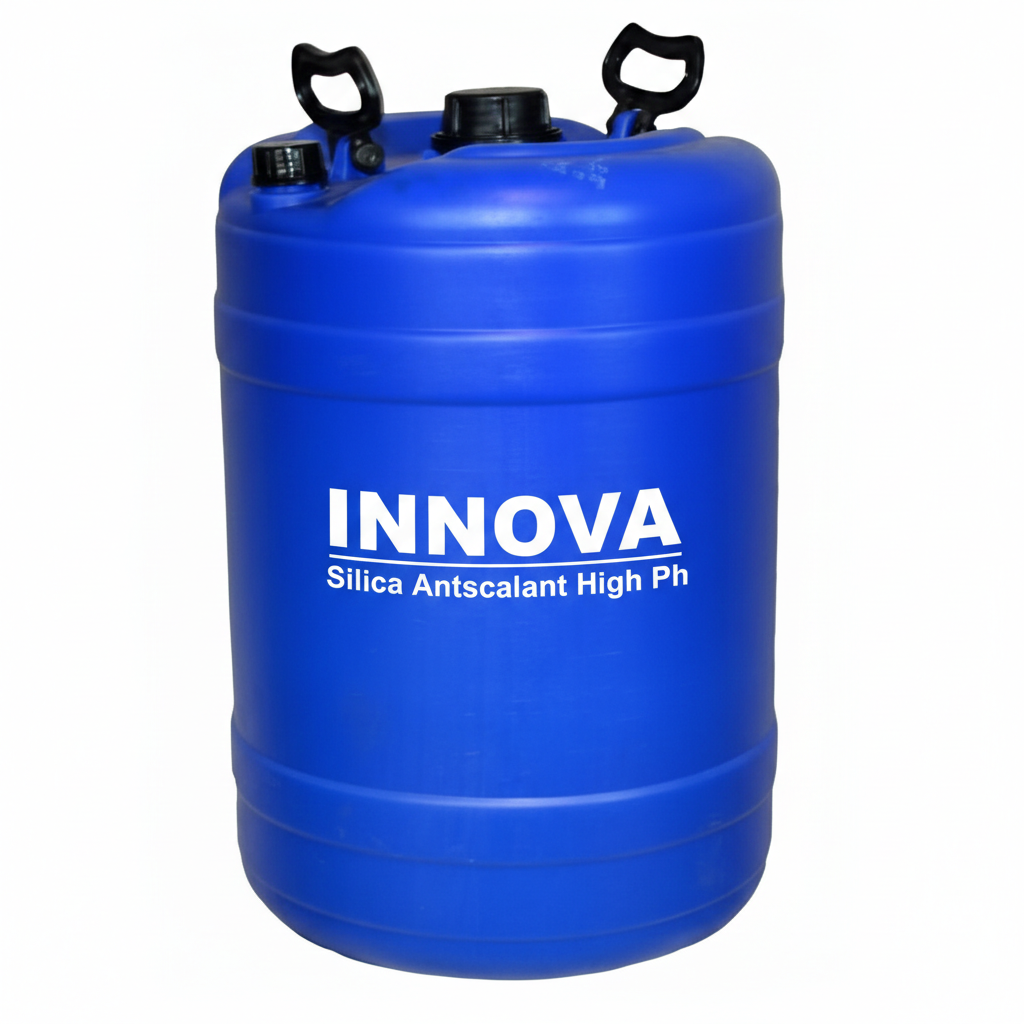
Silica Antiscalant High pH in Muscat for Borewell, Municipal & Agricultural RO Systems (Reactive Silica Inhibitor)
Innova Corporate (India) supplies High pH Silica Antiscalant in Muscat for RO plants dealing with reactive silica in borewell, municipal and agricultural water sources. Silica is one of the hardest foulants to remove once it polymerizes on membrane surfaces — it forms a glass-like layer that acidic and alkaline CIP chemicals struggle to dissolve. Municipal RO plants in Al Khoud, agricultural irrigation systems near Bausher, and community drinking water RO units across Muscat face high dissolved silica levels that concentrate during operation and deposit as silicate scale. This alkaline silica antiscalant is engineered to keep silica in solution and block polymerization before it damages membranes.
Unlike standard antiscalants that target calcium and sulfate scales, this product is specifically formulated for reactive silica control in high-TDS and high-hardness feed water. It works by interfering with silica polymerization and maintaining an alkaline pH range that reduces deposition on polyamide and TFC membranes. Municipal and agricultural operators in Muscat use it as a continuous feed-water treatment to extend CIP intervals, protect membrane life and maintain consistent permeate quality in drinking water and irrigation applications.
Key Benefits & Performance Features for Muscat Borewell & Municipal RO:
- Reactive Silica Polymerization Block: Prevents dissolved silica from polymerizing into hard silicate scale on RO membranes, a common issue in Muscat borewell and municipal water sources.
- Potable Water Compatible: Formulated with ingredients suitable for drinking water RO systems serving Muscat communities, in line with local potable water treatment practices.
- High Recovery Support: Allows higher recovery rates in Muscat municipal and agricultural RO plants by controlling silica concentration factors at the last stage.
- Extends CIP Intervals: Reduces the frequency of silica-specific cleaning cycles, lowering downtime and chemical cost for Muscat operators.
- Compatible with Standard Antiscalants: Can be used alongside calcium and sulfate antiscalants in a combined dosing programme for high-TDS Muscat feed water.
Industries We Serve in Muscat:
Municipal Drinking Water RO (Al Khoud, Bausher): Community RO plants supplying drinking water in Muscat rely on silica antiscalant to control reactive silica that concentrates in the last stage of high-recovery systems.
Agricultural Irrigation RO: Farms near Bausher and Al Khoud using RO-treated borewell water for irrigation need silica control to prevent membrane plugging during peak demand periods.
Community Water Stations: Small and medium RO stations serving residential areas across Muscat use high pH silica antiscalant for consistent water quality and fewer shutdowns.
Industrial Boiler Feed Pre-treatment: Industrial RO systems in Muscat supplying boiler feedwater use silica antiscalant to prevent silicate carryover into boilers.
Why Silica Needs Different Treatment Than Other Scales:
| Parameter | Calcium / Sulfate Scale | Silica Scale |
|---|---|---|
| Nature | Crystalline, removable by acid | Amorphous, glass-like, very hard |
| CIP Removal | Low pH cleaner dissolves effectively | Difficult; often requires warm high pH + extended soak |
| Best Strategy | Prevent + remove during CIP | Prevent polymerization before it starts |
| Muscat Relevance | Hard water areas | Borewell and municipal water with high dissolved silica |
Application & Dosage Guide for Muscat RO Plants:
- Standard Dosage: 2–10 ppm in feed water, based on dissolved silica concentration and recovery rate.
- High Silica Conditions: For Muscat borewell water with very high reactive silica, dosage may be increased up to 15 ppm after water analysis.
- Dilution: Always dilute with RO permeate water before dosing to ensure uniform distribution.
- Monitoring: Track silica levels in feed, concentrate and permeate streams to confirm control. Adjust dosage based on concentration factor.
- Compatibility: Can be dosed alongside calcium and sulfate antiscalants, but not mixed directly.
Common Silica Problems in Muscat Borewell & Municipal RO Systems:
Reactive Silica Polymerization: Dissolved silica in Muscat borewell water polymerizes during concentration and forms a hard gel-like layer on membranes that is very difficult to remove.
Silicate Scaling at Last Stage: High-recovery municipal RO plants in Muscat see silicate deposits mainly in the last stage where concentration factors are highest.
Permeate Flow Decline: Silica fouling causes gradual but persistent loss of permeate flow and rising differential pressure across the membrane array.
CIP Difficulty: Once silica has polymerized, standard acid and alkaline CIP chemicals cannot fully remove it. Prevention with high pH silica antiscalant is the most effective strategy.
Technical Specifications:
| Appearance | Clear to pale yellow liquid |
| pH (as is) | 10.0 – 12.0 (alkaline) |
| Specific Gravity | 1.08 – 1.18 |
| Recommended Dosage | 2 – 10 ppm (up to 15 ppm in severe conditions) |
| Solubility | Easily soluble in water |
| Shelf Life | 12 months in original sealed container |
Frequently Asked Questions (Muscat):
Q: What is reactive silica and why is it a problem in Muscat RO systems?
A: Reactive silica is dissolved silica that polymerizes into hard silicate scale when concentrated in RO systems. Muscat's borewell and municipal water sources often contain high dissolved silica, making it a common fouling issue in high-recovery RO plants.
Q: Can high pH silica antiscalant remove existing silicate scale?
A: It is primarily a preventive treatment. For already-formed silicate scale, a warm high pH CIP with extended soak time is required. Prevention with continuous silica antiscalant dosing is far more effective than removal.
Q: Is silica antiscalant safe for drinking water RO systems in Muscat?
A: Yes, when used at recommended dosage and following local potable water treatment guidelines. Our product is formulated for compatibility with drinking water applications.
Q: What dosage should I use for Muscat borewell water?
A: Start with 2–6 ppm for moderate silica levels, and increase up to 10–15 ppm for high reactive silica conditions. Exact dosage depends on feed water analysis, pH and recovery rate.
Q: Can I combine silica antiscalant with other RO chemicals?
A: Yes, it can be dosed alongside calcium and sulfate antiscalants and non-oxidizing biocides. However, do not mix them directly — use separate dosing points.
Q: Do you supply silica antiscalant to Muscat municipal and agricultural RO plants?
A: Yes, we supply across Al Khoud, Bausher and other areas of Muscat, with bulk quantities and technical dosage support available.
Storage & Safety: Store in the original container in a cool, dry place at your Muscat facility, away from heat, flame and direct sunlight. As an alkaline product, wear chemical-resistant gloves, goggles and apron during handling. Avoid contact with eyes and skin. In case of contact, flush with plenty of water and seek medical attention if irritation persists. Refer to the Technical Data Sheet (TDS) and MSDS for full safety, shelf life and handling information.
Related Products: Explore our RO Disinfectant Chemicals in Muscat, Low pH RO Antiscalant, and RO Scale Inhibitor for a complete membrane care programme.