- 2B / BW Shalimar Bagh, Opp. BQ Market, Near DLF Mall New Delhi - 110088, India.
- :+91-9312-871-070

Manufacturers, Exporters, Suppliers of Membrane Antiscalant
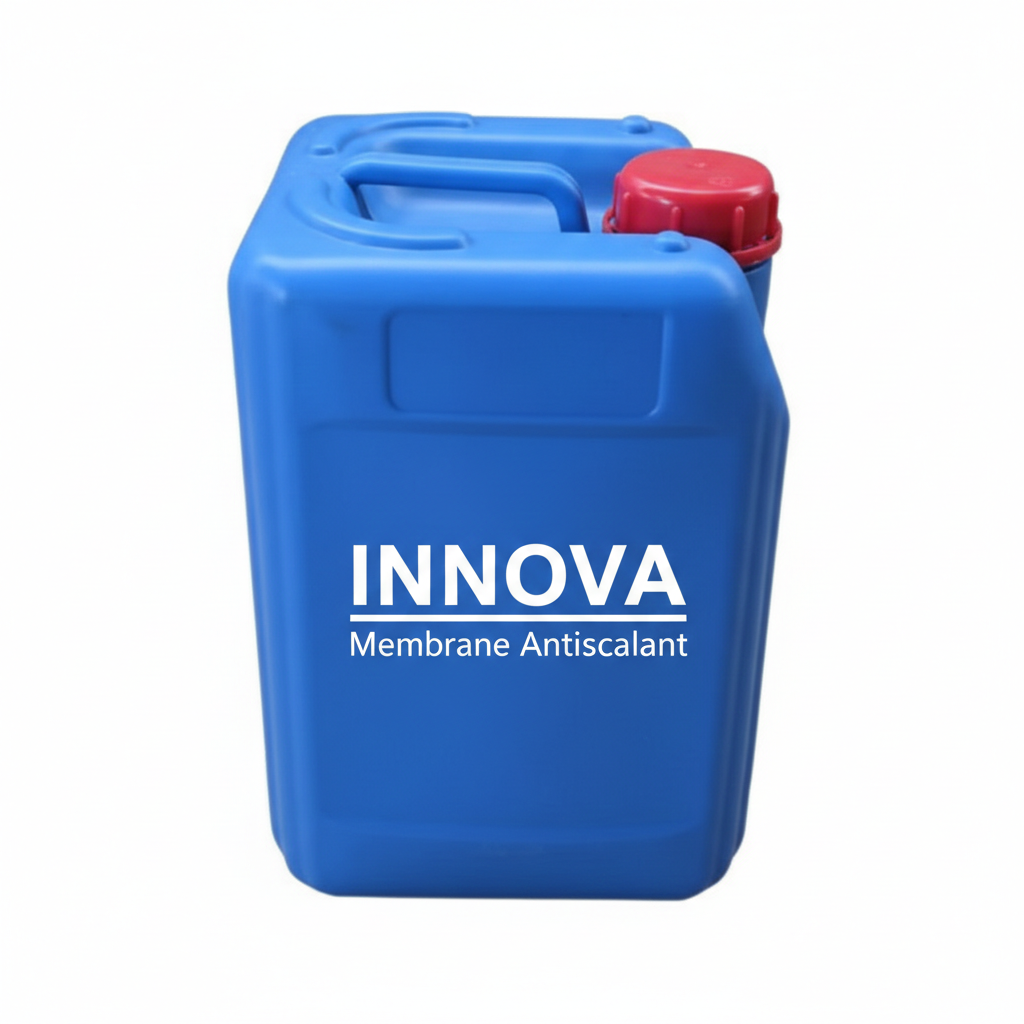
Membrane Antiscalant for Kenya Olkaria Geothermal & Naivasha Flower Farm RO (High-Temperature Scale Inhibitor)
Innova Corporate (India) supplies a high-temperature stable Membrane Antiscalant in Kenya for two of Kenya's most challenging industrial water applications — Olkaria geothermal cooling water above 40°C with 100–200 ppm dissolved silica, and Naivasha flower farm irrigation water from Lake Naivasha with volcanic Rift Valley silica at 40–80 ppm. Standard antiscalants hydrolyse and lose effectiveness at Olkaria's temperatures. This formulation maintains full performance at 40–60°C, providing comprehensive protection against carbonate, sulfate and silica scaling in high-temperature feed water. It is also used in tea and coffee processing RO in Kericho and Nyeri, dairy processing in Eldoret, and industrial process water plants across the Rift Valley.
By controlling the rate of scale formation, this chemical helps Kenyan plants maintain stable normalized flow. Whether you are running a geothermal cooling water RO at Olkaria, a flower farm irrigation RO at Naivasha, or a large industrial plant in Eldoret, our antiscalant ensures you get the maximum volume of clean water with minimal chemical intervention. It provides comprehensive protection against a broad spectrum of foulants found in Kenyan Rift Valley water sources, including Calcium Carbonate, Calcium Sulfate, Barium/Strontium/Magnesium Sulfates, Calcium Fluoride, Iron and Silica. This versatile chemical barrier keeps ions in suspension, preventing the scaling that leads to flux decline and high energy consumption.
High-Temperature Water Chemistry — Kenya Rift Valley vs Standard:
| Parameter | Standard RO Feed | Kenya Olkaria Geothermal |
|---|---|---|
| Water Temperature | 20 – 25°C | 40 – 60°C |
| Dissolved Silica | 20 – 40 ppm | 100 – 200 ppm |
| Scaling Rate | Normal | 2–3× faster due to temperature |
| Antiscalant Stability | Standard formulations work | Only high-temp stable formulations work |
| CIP Frequency Without Treatment | 6–8 weeks | 3–4 weeks at Olkaria |
Key Features & Strategic Benefits for Kenya Geothermal & Flower Farm RO:
- High-Temperature Stability: Maintains full performance at 40–60°C — critical for Olkaria geothermal cooling water where standard antiscalants fail.
- Dual-Mechanism Silica Control: Threshold inhibition for carbonate/sulfate scaling plus silica-specific chelation for reactive silica polymerization in Rift Valley water.
- Enhanced System Recovery: Facilitates high recovery rates by maintaining clean membrane surfaces in Kenya's geothermal and industrial RO systems.
- Broad-Spectrum Control: Effective against calcium carbonate, calcium sulfate, barium sulfate, strontium sulfate, calcium fluoride, iron and silica — full Rift Valley foulant spectrum.
- EU Flower Export Compliant: No harmful residue — meets EU buyer standards for Naivasha cut flower exports.
- Low Dosage Efficiency: Highly concentrated formula requires 4–8 ppm, extending CIP intervals from 4 weeks to 3 months at Olkaria.
- Phosphate-Free Performance: Unlike SHMP, it does not cause calcium or iron-based phosphate deposition in Kenyan hard-water systems.
- Universal Compatibility: Safe for all Polyamide, Thin-Film Composite and Cellulose Acetate membranes used in Kenya.
- NEMA Compliant: Meets Kenya National Environment Management Authority guidelines for Rift Valley industrial discharge.
Industries We Serve in Kenya's Rift Valley & Highland Regions:
Geothermal Power (Olkaria, Nakuru): Olkaria geothermal cooling water RO uses high-temperature stable antiscalant for 40–60°C feed water with 100–200 ppm silica — the most challenging application in Kenya.
Cut Flower Farms (Naivasha): Flower farms use antiscalant for irrigation water RO with 40–80 ppm volcanic silica, meeting EU buyer residue standards for roses and summer flowers.
Tea Processing (Kericho, Nyeri): Tea factories use antiscalant for highland process water RO with moderate silica and iron content from volcanic soil.
Coffee Processing (Nyeri, Thika): Coffee washing stations and processing plants use antiscalant for process water RO with Rift Valley volcanic minerals.
Dairy Processing (Eldoret, Nakuru): Dairy plants use antiscalant for RO and pasteurisation water with combined silica and iron in western Kenya groundwater.
Municipal Water (Rift Valley Towns): Municipal RO plants in Nakuru, Naivasha and Rift Valley towns use potable-grade antiscalant for community water supply.
Dosage & Application Guide for Kenya Geothermal & Rift Valley RO:
- Olkaria Geothermal (40–60°C, 100–200 ppm Silica): 8–12 ppm in feed water at 60–70% recovery. High-temperature formulation required — standard antiscalants fail at these temperatures.
- Naivasha Flower Farm Irrigation (40–80 ppm Silica): 4–8 ppm in feed water at 65–70% recovery. No residue — meets EU flower export standards.
- Kericho & Nyeri Tea/Coffee Processing (Moderate Silica): 3–6 ppm in feed water at 70–75% recovery.
- Eldoret Dairy Processing (Combined Silica-Iron): 4–6 ppm with iron sequestration for western Kenya groundwater.
- Injection Point: Before cartridge filter and static mixer, on the feed side of the RO membranes.
- Dilution: Always dilute with RO permeate water, never with raw geothermal or lake water.
- Monitoring: Track silica, LSI, iron, temperature, differential pressure and permeate flow weekly to confirm effectiveness.
Common Scaling Problems in Kenya's Geothermal & Rift Valley RO Systems:
Olkaria High-Temperature Silica Scaling: Olkaria geothermal water above 40°C with 100–200 ppm silica scales 2–3× faster than ambient-temperature water. High-temperature stable antiscalant is essential.
Standard Antiscalant Failure at Olkaria: Standard antiscalants hydrolyse and lose effectiveness above 40°C. Only high-temperature stable formulations maintain performance at Olkaria's temperatures.
Naivasha Volcanic Silica: Lake Naivasha water carries volcanic Rift Valley silica at 40–80 ppm. Flower farm irrigation RO faces progressive silica fouling at 65–70% recovery.
Kericho Tea Processing Silica: Highland tea factory process water contains volcanic silica from Rift Valley soil. RO membranes face gradual silica accumulation.
Eldoret Combined Silica-Iron: Western Kenya groundwater contains both silica and iron. Combined fouling is more difficult to remove than either alone.
CIP Difficulty at High Temperature: Once silica has polymerized at Olkaria, standard acid and alkaline CIP chemicals cannot fully remove it. Prevention is far more effective than removal.
Technical Specifications:
| Appearance | Clear to pale yellow liquid |
| pH (as is) | 2.0 – 4.0 |
| Specific Gravity | 1.10 – 1.25 |
| LSI Tolerance | Up to +3.0 |
| Silica Tolerance (Reject) | Up to 325 ppm (mg/L) |
| Iron Tolerance (Reject) | Up to 3 ppm |
| High-Temperature Stability | Effective at 40 – 60°C for Olkaria geothermal water |
| Recommended Dosage | 4 – 12 ppm (application dependent) |
| Certification | NEMA compliant |
| Shelf Life | 12 months in original sealed container |
Frequently Asked Questions (Kenya):
Q: What is membrane antiscalant used for in Kenya's geothermal and industrial plants?
A: It prevents carbonate, sulfate and silica scaling in Olkaria geothermal cooling water RO, Naivasha flower farm irrigation RO, and industrial process water RO systems. Essential in high-temperature Rift Valley feed water.
Q: Why does Olkaria geothermal water need special antiscalant?
A: Olkaria geothermal water is above 40°C with 100–200 ppm dissolved silica. Standard antiscalants hydrolyse and lose effectiveness at these temperatures. Our high-temperature stable membrane antiscalant maintains performance at 40–60°C.
Q: Which Kenyan industries use membrane antiscalant the most?
A: Geothermal power plants in Olkaria (Nakuru), cut flower farms in Naivasha, tea and coffee processing in Kericho and Nyeri, dairy processing in Eldoret, and industrial process water plants across the Rift Valley.
Q: How does membrane antiscalant handle combined silica and carbonate scaling?
A: It uses a dual-mechanism formulation — threshold inhibition for carbonate and sulfate scaling, plus silica-specific chelation for reactive silica polymerization. This handles mixed fouling in Kenya's Rift Valley water.
Q: What dosage of membrane antiscalant is recommended for Kenyan plants?
A: Typical dosage is 4–8 ppm in feed water. For Olkaria geothermal water above 40°C, dosage may go up to 10–12 ppm. Our team provides free dosage guidance.
Q: Do you supply membrane antiscalant across Kenya's Rift Valley and highland regions?
A: Yes, we supply to geothermal, flower farm, tea, coffee and dairy plants across Kenya's Rift Valley and highland regions, including Nakuru, Naivasha, Kericho, Nyeri, Eldoret and Thika.
Storage & Stability: Store in original containers in a cool, dry place at your Kenya facility, away from heat sources and direct sunlight. For precise dosing calculations based on your Kenyan feed water analysis, consult our technical team and refer to the Material Safety Data Sheet (MSDS).
Related Products: Explore our RO Antiscalant Chemicals for Kenya, High Silica Antiscalant for Kenya, and Silver Hydrogen Peroxide Disinfectant for a complete RO chemical programme across Kenya.