- 2B / BW Shalimar Bagh, Opp. BQ Market, Near DLF Mall New Delhi - 110088, India.
- :+91-9312-871-070

Manufacturers, Exporters, Suppliers of Silver Hydrogen Peroxide Based Disinfectant
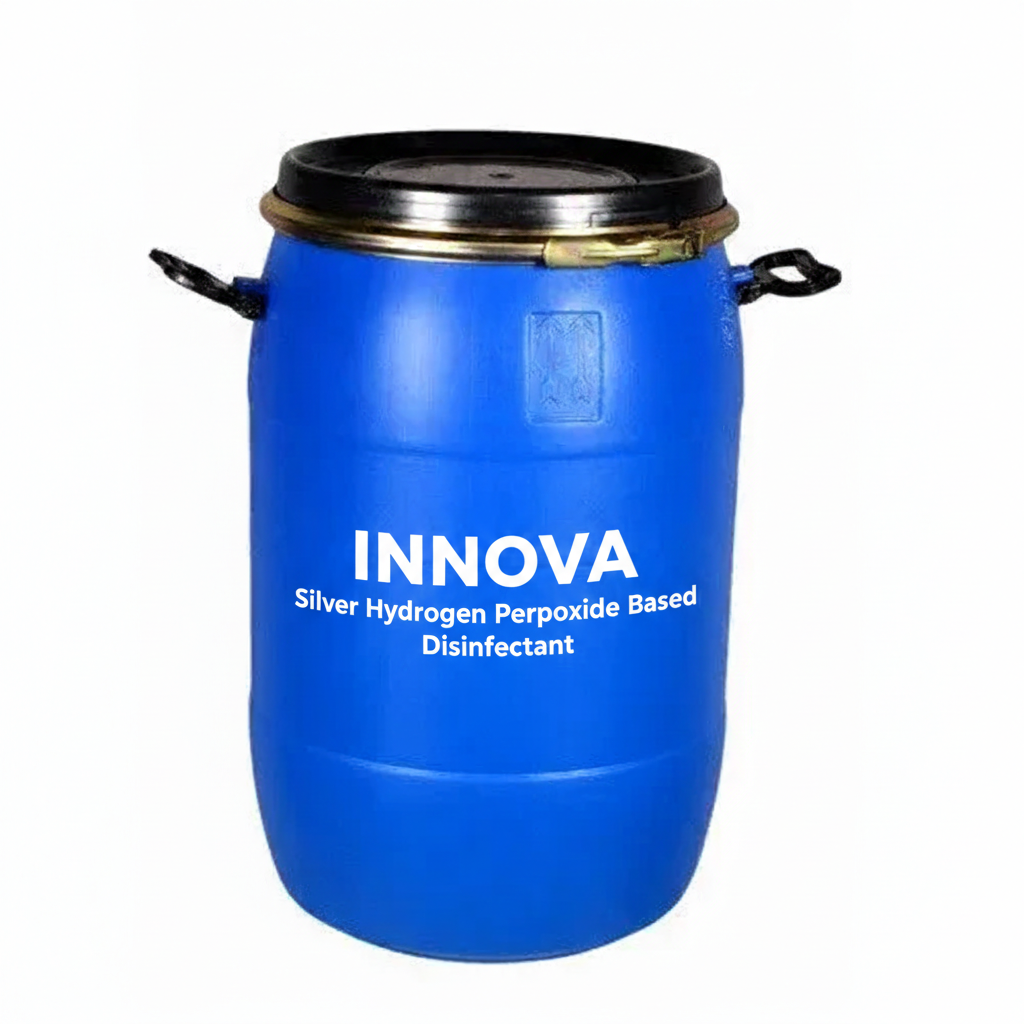
Silver Hydrogen Peroxide Disinfectant in Kenya for Nairobi Bottling, Kisumu Fish & Naivasha Flower Farms (Residue-Free Biocide)
Innova Corporate (India) supplies Silver Hydrogen Peroxide Disinfectant in Kenya for Nairobi and Thika bottling plants, Kisumu fish processing facilities, Naivasha cut flower farms, Mombasa coastal hotels, and dairy and tea processing plants across Central Kenya. This advanced disinfectant is a synergized blend of stabilised hydrogen peroxide and trace silver ions, processed under precise pH and temperature control. It is a powerful, biodegradable cold sterilant that requires no heat for effective disinfection across Kenya industrial sectors. Unlike chlorine, it leaves no taste, odour or harmful disinfection by-products (DBPs) — a critical requirement for Kenyan bottling, fish processing and export-focused flower farms where NEMA discharge limits and international buyer standards apply.
Our formulation is non-toxic at recommended dosage and complies with Kenya Bureau of Standards (KEBS) drinking water guidelines and NEMA industrial discharge limits. It is extensively used in Kenyan dairies, breweries, bottling plants, fish processing facilities and flower farms for sterilising pipelines, storage tanks, evaporators and aseptic packaging equipment. Silver ions provide long-lasting residual protection that hydrogen peroxide alone cannot deliver, making this disinfectant a preferred alternative to chlorine in Kenya's food, beverage and agricultural export sectors.
Kenya Water Disinfection Challenges — City-Wise Guide:
| Kenyan City | Industry | Disinfection Challenge |
|---|---|---|
| Nairobi | Bottling, beverage | Chlorine taste in products, NEMA DBP limits |
| Thika | Food processing, bottling | Microbial control without tainting |
| Kisumu | Fish processing | High microbial load from Lake Victoria water |
| Naivasha | Cut flower farms | Organic load, EU export residue limits |
| Mombasa | Hotels, resorts | Guest chlorine taste complaints |
| Nakuru | Dairy, geothermal | High-temperature water, biofilm |
Key Features & Strategic Benefits for Kenya Bottling, Fish & Flower Farms:
- NEMA Compliant: No harmful DBPs — meets Kenya NEMA discharge limits for industrial and municipal plants.
- KEBS Drinking Water Compliant: Suitable for potable water RO systems across Kenya.
- Bottling-Grade: No chlorine taste or odour — critical for Nairobi and Thika beverage plants.
- Fish-Processing Safe: Kills bacteria without tainting fish products — ideal for Kisumu facilities.
- EU Export Compliant: No residue — meets EU buyer standards for Naivasha cut flower exports.
- Biofilm Destroyer: Penetrates and destroys tough biofilm layers in dairy and geothermal cooling systems.
- Cold Sterilant: Works at ambient temperature — ideal for Kenya's tropical and highland climates.
- Long-Lasting Residual: Silver ions provide persistent microbial protection in distribution networks.
- Versatile Application: Suitable for RO disinfection, CIP, fogging, spraying and cooling tower treatment across Kenya.
Industries We Serve Across Kenya:
Bottling & Beverage (Nairobi, Thika): Bottling plants use silver H2O2 for CIP of RO and filling lines — no chlorine taste, no DBPs, NEMA-compliant discharge.
Fish Processing (Kisumu): Fish processing facilities use silver H2O2 for RO water disinfection — no tainting of fish products, meets export quality standards.
Cut Flower Farms (Naivasha): Flower farms use silver H2O2 for irrigation water disinfection — no residue, meets EU buyer standards for export roses and flowers.
Dairy Processing (Nakuru, Eldoret): Kenyan dairies use silver H2O2 for CIP of RO and pasteurisation lines, meeting KEBS food safety standards.
Hotels & Resorts (Mombasa, Diani): Coastal hotels use silver H2O2 for potable water treatment — no chlorine taste, no guest complaints.
Tea Processing (Kericho, Nyeri): Tea factories use silver H2O2 for process water RO disinfection, meeting export quality standards.
Municipal Water (All Cities): Municipal utilities use silver H2O2 for post-treatment disinfection, complying with KEBS drinking water guidelines.
Silver Hydrogen Peroxide vs Chlorine — Why Kenyan Plants Prefer Silver H2O2:
| Parameter | Chlorine | Silver Hydrogen Peroxide |
|---|---|---|
| Taste / Odour | Chlorine taste in beverages and fish | No taste, no odour |
| NEMA Discharge | DBP limits exceeded | Fully compliant |
| EU Export Standards | Residue risk | No residue |
| Lake Victoria Water | Forms chloramines with organics | No chloramine formation |
Application & Dosage in Kenya:
This disinfectant is used for bacterial eradication in process water, beverage CIP, fish processing and flower farm irrigation water across Kenya. Typical dosage ranges from 0.002% to 0.5% w/w depending on the application:
- Nairobi & Thika Bottling CIP: 0.1–0.5% w/w for RO and filling line sanitisation — no chlorine taste, NEMA-compliant.
- Kisumu Fish Processing: 0.1–0.3% w/w for RO water disinfection — no tainting of fish products.
- Naivasha Flower Farm Irrigation: 2–5 ppm in irrigation water — no residue, meets EU export standards.
- Mombasa Hotel Water Treatment: 0.5–2 ppm for residual protection in potable water networks.
- Nakuru Dairy CIP: 0.1–0.3% w/w for RO and pasteurisation line sanitisation, meeting KEBS standards.
- Fogging & Spraying: 0.1–0.5% w/w for surface and air disinfection in food and beverage facilities.
Note: Please consult your Innova technical representative in Kenya for specific dosage protocols based on your system requirements and NEMA compliance.
Common Microbial Problems in Kenya Bottling, Fish & Flower Farm RO Systems:
Chlorine Taste in Beverages: Nairobi and Thika bottling plants face taste complaints from chlorinated CIP water. Silver H2O2 provides residue-free disinfection without chlorine taste.
Fish Product Tainting: Kisumu fish processing plants cannot use chlorine — it taints fish products. Silver H2O2 disinfects without tainting and meets export quality standards.
Lake Victoria Algal Blooms: Kisumu and Naivasha water sources face seasonal algal blooms that increase microbial load. Silver H2O2 controls this without chloramine formation.
EU Export Residue Limits: Naivasha cut flower farms face strict EU buyer standards for chemical residue. Silver H2O2 leaves no harmful residue.
Dairy Biofilm: Nakuru and Eldoret dairies face biofilm formation in RO and pasteurisation lines. Silver H2O2 penetrates and destroys biofilm.
Guest Chlorine Complaints: Mombasa and Diani hotels face guest complaints about chlorine taste in water. Silver H2O2 provides chlorine-free disinfection.
Technical Specifications:
| Appearance | Clear colourless liquid |
| Active Ingredients | Hydrogen peroxide + stabilised silver ions |
| pH (as is) | 2.0 – 4.0 |
| Specific Gravity | 1.05 – 1.15 |
| Recommended Dosage | 0.002% – 0.5% w/w (application dependent) |
| Certification | NEMA compliant, KEBS drinking water compliant |
| Shelf Life | 12 months in original sealed container |
Frequently Asked Questions (Kenya):
Q: What is silver hydrogen peroxide disinfectant used for in Kenya?
A: It is used for residue-free microbial control in Nairobi and Thika bottling plants, Kisumu fish processing RO, Naivasha flower farm irrigation water, Mombasa hotel water treatment and municipal drinking water systems.
Q: Why is silver hydrogen peroxide compliant with Kenya NEMA guidelines?
A: Silver hydrogen peroxide breaks down into water, oxygen and trace silver — no harmful DBPs like trihalomethanes. This meets Kenya NEMA guidelines for industrial and municipal discharge.
Q: Which Kenyan industries use silver hydrogen peroxide disinfectant the most?
A: Bottling and beverage plants in Nairobi and Thika, fish processing in Kisumu, cut flower farms in Naivasha, coastal hotels in Mombasa, dairy processing in Central Kenya, and municipal drinking water RO plants across Kenya.
Q: Why do Kenya's bottling and fish processing plants prefer silver H2O2 over chlorine?
A: Chlorine leaves taste and odour in beverages and fish products, and forms harmful DBPs. Kenyan bottling and fish processing industries have strict quality and NEMA discharge limits. Silver H2O2 disinfects without taste, odour or DBPs.
Q: What dosage of silver hydrogen peroxide is recommended for Kenyan plants?
A: Typical dosage is 1–10 ppm in feed water depending on microbial load and application. For Nairobi bottling CIP, 0.1–0.5% w/w is used. For Naivasha irrigation water, 2–5 ppm is typical.
Q: Do you supply silver hydrogen peroxide disinfectant across Kenya?
A: Yes, we supply to bottling, fish processing, flower farm, hotel and municipal RO plants across Kenya, including Nairobi, Mombasa, Kisumu, Thika, Naivasha, Nakuru, Eldoret and Nyeri.
Safety & Handling:
While handling at your Kenya facility, wear splash goggles, lab coats, vapour respirators and gloves. In case of skin contact, wash with water immediately. For eye splashes, flush with fresh water and seek medical attention. Do not inject. Store in original vented containers in a cool, well-ventilated area, away from heat and sunlight. Refer to the MSDS for comprehensive safety data.
Related Products: Explore our RO Antiscalant Chemicals for Kenya, RO Disinfectant Chemicals, and Membrane Antiscalant for a complete RO chemical programme across Kenya.