- 2B / BW Shalimar Bagh, Opp. BQ Market, Near DLF Mall New Delhi - 110088, India.
- :+91-9312-871-070

Manufacturers, Exporters, Suppliers of RO Alkalinity Builder
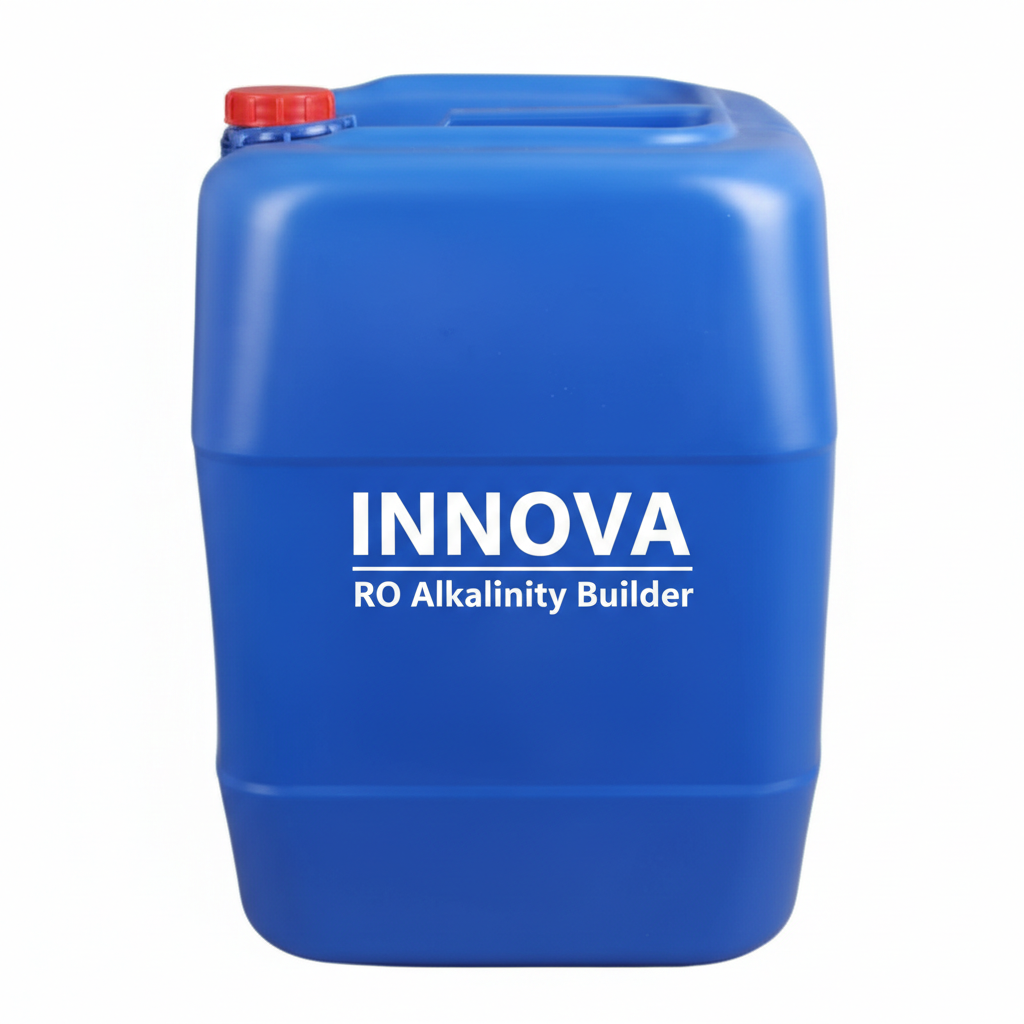
RO Alkalinity Builder in Kenya for Municipal, Hospital & Dairy Permeate pH Correction (Post-Treatment Stabilizer)
Innova Corporate (India) supplies RO Alkalinity Builder in Kenya for municipal drinking water utilities in Nairobi and Kisumu, hospital dialysis and sterile water systems in Kisumu and Nairobi, dairy processing in Nakuru and Eldoret, and Mombasa hotel water treatment. RO permeate from Nairobi borewell, Kisumu Lake Victoria and Mombasa coastal groundwater is naturally low in minerals and slightly acidic — pH typically 5.5 to 6.5. Without post-treatment correction, this acidic water corrodes steel, cement-lined and galvanised distribution pipelines in Kenyan municipal networks, hospitals and hotels, causing red water complaints and structural degradation. Our potable-grade alkalinity builder raises permeate pH and stabilises the Langelier Saturation Index to protect Kenyan water infrastructure.
Unlike antiscalants that work on the feed side of the membrane, this alkalinity builder is dosed on the permeate side after the RO membranes. It increases carbonate and bicarbonate alkalinity, raising LSI into the protective range and forming a thin calcium carbonate layer inside pipelines that prevents acidic corrosion. It is used by municipal water utilities in Nairobi and Kisumu, hospital dialysis systems in Kisumu and Nairobi, dairy processing plants in Nakuru and Eldoret, and hotel water systems in Mombasa and Diani — meeting Kenya Bureau of Standards (KEBS) drinking water guidelines for potable applications.
Kenya Post-Treatment Needs — Facility-Wise Guide:
| Kenyan City | Facility Type | Post-Treatment Challenge |
|---|---|---|
| Nairobi | Municipal utility | Large-volume acidic permeate, distribution corrosion |
| Kisumu | Hospital dialysis | Patient-critical pH, must meet KEBS dialysis standards |
| Nakuru | Dairy processing | pH affects pasteurisation and CIP equipment |
| Eldoret | Dairy, grain processing | Acidic permeate corroding stainless steel lines |
| Mombasa | Hotels, resorts | Guest plumbing corrosion, red water complaints |
| Thika, Nyeri | Institutions | School and hospital water system protection |
Key Features & Benefits for Kenyan Municipal, Hospital & Dairy RO:
- pH Restoration: Raises acidic RO permeate pH from 5.5–6.5 to stable 7.2–7.8 for Kenyan municipal, hospital and dairy systems.
- LSI Stabilisation: Increases carbonate and bicarbonate alkalinity, bringing Langelier Saturation Index into the protective range and reducing pipeline corrosion.
- Dialysis Water Safe: Meets strict pH stability requirements for hospital dialysis and sterile water systems in Kisumu and Nairobi.
- KEBS Compliant: Potable-grade formulation complying with Kenya Bureau of Standards drinking water guidelines for municipal and institutional applications.
- Dairy CIP Compatible: pH-stable permeate protects pasteurisation and CIP equipment in Nakuru and Eldoret dairy plants.
- Liquid Precision: Ready-to-use liquid form ensures easy dosing and uniform mixing at Kenyan plant sites.
- Post-Treatment Ready: Designed specifically for permeate side dosing — not for membrane feed — making it safe for all RO membrane types.
- Stable Formulation: Maintains effectiveness even in high-purity hospital and pharmaceutical water systems.
Facilities We Serve Across Kenya:
Municipal Drinking Water (Nairobi, Kisumu, Mombasa): Municipal RO plants use potable-grade alkalinity builder to stabilise permeate pH before it enters the distribution network.
Hospital Dialysis Water (Kisumu, Nairobi): Hospitals use alkalinity builder for dialysis and sterile water systems — pH stability is critical for patient safety.
Dairy Processing (Nakuru, Eldoret): Dairy plants use alkalinity builder for RO permeate used in pasteurisation and CIP — pH stability protects stainless steel equipment.
Hotels & Resorts (Mombasa, Diani): Coastal hotels use alkalinity builder to protect guest plumbing and prevent red water complaints.
Schools & Institutions (Thika, Nyeri): Educational institutions use potable-grade alkalinity builder for drinking water RO systems.
Bottling & Beverage (Nairobi, Thika): Bottling plants use alkalinity builder to stabilise pH of process water RO permeate, ensuring consistent beverage taste.
Feed-Side Antiscalant vs Permeate-Side Alkalinity Builder — Kenya Application:
| Parameter | Antiscalant (Feed Side) | Alkalinity Builder (Permeate Side) |
|---|---|---|
| Dosing Point | Before RO membranes | After RO membranes |
| Purpose | Prevent scaling inside membranes | Correct permeate pH and prevent corrosion |
| Kenya Application | Nairobi borewell, Mombasa SWRO | Municipal, hospital, dairy, hotel |
| Typical Dosage | 2–8 ppm in feed water | 5–30 ppm in permeate |
Dosage & Application Guide for Kenyan RO Plants:
- Municipal Drinking Water (Nairobi, Kisumu): 10–30 ppm in permeate to raise pH from 5.5–6.5 to 7.2–7.8 for distribution networks.
- Hospital Dialysis Water (Kisumu, Nairobi): 5–15 ppm in permeate — pH stability critical for patient safety, must meet KEBS dialysis standards.
- Dairy Processing (Nakuru, Eldoret): 10–20 ppm in permeate to protect pasteurisation and CIP stainless steel equipment.
- Hotel Water Systems (Mombasa, Diani): 8–20 ppm in permeate to protect guest plumbing and prevent red water.
- Injection Point: After RO membranes, before storage tanks or distribution network.
- Control Parameters: Monitor permeate pH and LSI daily. Adjust dosage to maintain pH in the 7.2–7.8 range.
- Compatibility: Compatible with post-treatment chlorine dosing and other permeate-side chemicals.
Common Permeate Problems in Kenyan Municipal, Hospital & Dairy RO Systems:
Acidic Permeate: Nairobi, Kisumu and Mombasa RO permeate typically has pH 5.5–6.5, which is corrosive to steel and cement-lined pipes in distribution networks.
Hospital Dialysis pH Instability: Kisumu and Nairobi hospital dialysis systems require stable pH in the 7.2–7.4 range. Acidic permeate is unsafe for patients.
Dairy Equipment Corrosion: Nakuru and Eldoret dairy plants face corrosion in pasteurisation and CIP stainless steel equipment from acidic permeate.
Hotel Red Water Complaints: Mombasa and Diani hotels face guest complaints about red-brown water from corroded plumbing. Alkalinity builder prevents this.
Municipal Distribution Corrosion: Nairobi and Kisumu municipal networks face long-term concrete and steel degradation from acidic permeate.
Bottling Taste Variation: Nairobi and Thika bottling plants face taste variation from unstable permeate pH. Alkalinity builder ensures consistent pH.
Technical Specifications:
| Parameter | Value / Description |
|---|---|
| pH (as such) | 9.0 – 10.0 |
| Appearance | Clear Liquid |
| Water Solubility | 100% Completely Soluble |
| Specific Gravity | 1.07 – 1.11 |
| Recommended Dosage | 5 – 30 ppm in permeate |
| Certification | NEMA compliant, KEBS drinking water compliant |
| Shelf Life | 12 months in original sealed container |
Frequently Asked Questions (Kenya):
Q: Why does RO permeate need pH correction in Kenya?
A: RO permeate from Nairobi borewell, Kisumu Lake Victoria and Mombasa coastal groundwater is naturally low in minerals and slightly acidic. Without pH correction, this acidic water corrodes steel, cement-lined and galvanised distribution pipelines in Kenyan municipal networks, hospitals and hotels.
Q: Which Kenyan institutions need RO alkalinity builder the most?
A: Municipal drinking water plants in Nairobi, Kisumu and Mombasa, hospital dialysis and sterile water systems in Kisumu and Nairobi, dairy processing plants in Nakuru and Eldoret, Mombasa and Diani hotels, and Nairobi and Thika bottling plants.
Q: Is this alkalinity builder compliant with KEBS drinking water standards?
A: Yes. Our potable-grade RO alkalinity builder is formulated to comply with Kenya Bureau of Standards (KEBS) drinking water guidelines. It is suitable for municipal drinking water, hospital dialysis water and food-grade applications across Kenya.
Q: How does RO alkalinity builder prevent pipeline corrosion in Kenya?
A: The alkalinity builder increases carbonate and bicarbonate alkalinity in the permeate, raising the Langelier Saturation Index (LSI) into a non-corrosive range. This forms a thin protective calcium carbonate layer inside pipelines.
Q: What dosage of alkalinity builder is recommended for Kenyan RO plants?
A: Typical dosage is 5–30 ppm in permeate. For hospital dialysis water in Kisumu, dosage is kept at the lower end to meet strict KEBS standards. Our team provides free dosage guidance.
Q: Do you supply RO alkalinity builder across Kenya?
A: Yes, we supply to municipal, hospital, dairy, hotel, bottling and industrial RO plants across Kenya, including Nairobi, Mombasa, Kisumu, Nakuru, Eldoret, Thika, Naivasha and Nyeri.
Storage & Handling: Store in a cool, dry place in its original container at your Kenya facility. Ensure the cap is tightly sealed to avoid contamination. As an alkaline liquid, wear gloves and eye protection during handling. For dosage calculations and technical support, please refer to the Technical Data Sheet (TDS) or contact our experts specializing in Kenya water treatment solutions.
Related Products: Explore our RO Antiscalant Chemicals for Kenya, RO Disinfectant Chemicals, and Silver Hydrogen Peroxide Disinfectant for a complete RO chemical programme across Kenya.