- 2B / BW Shalimar Bagh, Opp. BQ Market, Near DLF Mall New Delhi - 110088, India.
- :+91-9312-871-070

Manufacturers, Exporters, Suppliers of High pH Membrane Cleaner
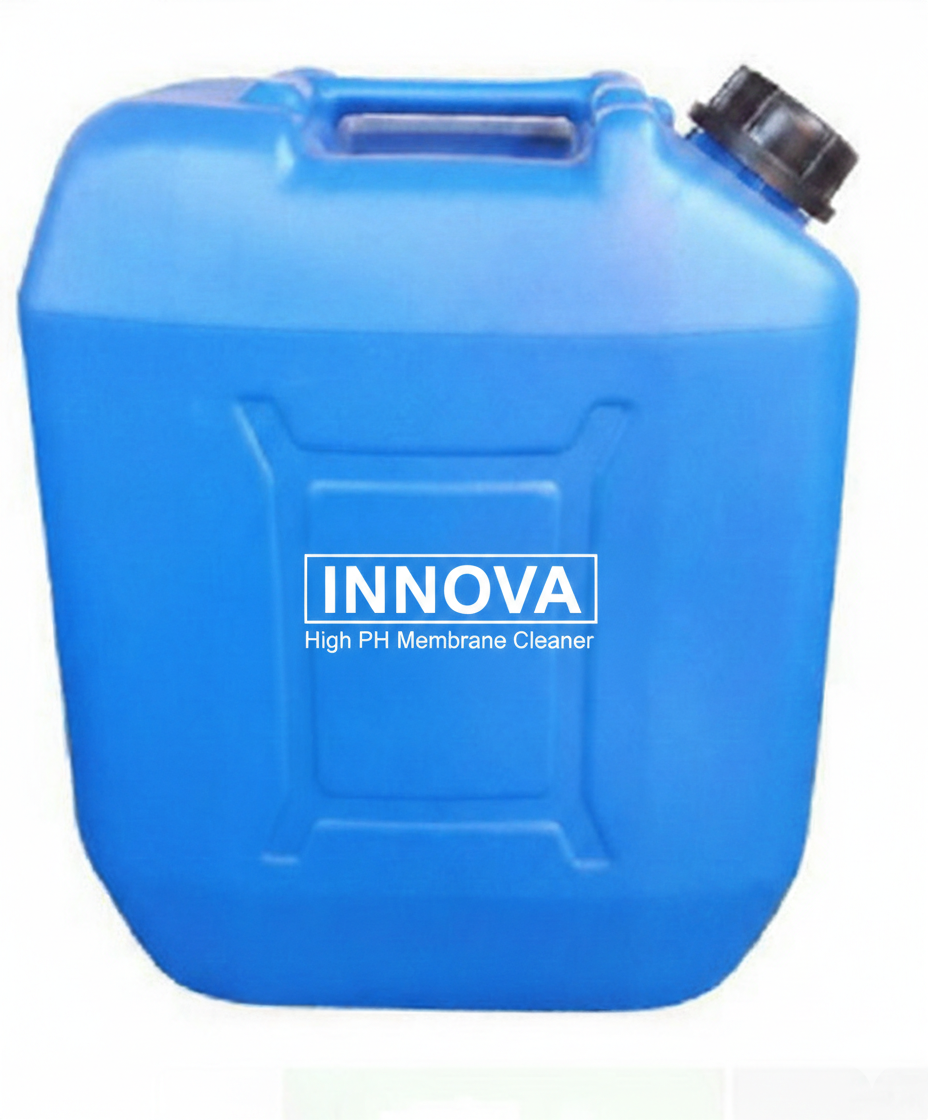
High pH Alkaline Membrane Cleaner for Oman's SWRO, Petrochemical & Food Processing RO Plants
Biological fouling and organic buildup are recurring challenges for RO plants operating along Oman's warm Gulf coast. Innova Corporate (India) manufactures a specialized high pH membrane cleaner in Oman engineered to emulsify oils, dissolve bio-slime, and lift away the organic layers that drive up differential pressure and cut permeate flow. This formulation is essential for Oman's petrochemical operations in Sohar and Duqm, food and beverage plants in Salalah Free Zone, and coastal SWRO facilities near Barka, Ghubrah and Sur, where the warm seawater environment accelerates biological growth on membrane surfaces.
Unlike generic alkaline cleaners, our formulation is built specifically to handle the type of fouling that builds up in Omani RO systems — the heavy organic matrix created by algae blooms in Gulf seawater, hydrocarbon carryover from oilfield produced water in the Interior, and food-processing organic loads in Dhofar during Khareef season. The cleaner penetrates deep into the biofilm layer, breaks down the polysaccharide matrix that holds it to the membrane, and disperses the entire deposit into the cleaning solution so it can be flushed out cleanly.
The result is a restoration of membrane performance to near-original levels — recovered flux, reduced differential pressure, lower energy consumption, and extended membrane service life. Used as part of a regular maintenance schedule, this high pH cleaner protects the long-term productivity of RO plants across the Sultanate and reduces the frequency of expensive membrane replacements.
Key Features & Strategic Benefits for Oman Facilities:
- Superior Organic Clean-up: High pH alkaline formulation specifically targets organic matter, bio-slime, oils and colloidal deposits found in Oman's coastal SWRO and industrial RO systems.
- Biofilm Penetration: Deeply penetrates biological films and colloidal clay structures for complete removal — not just surface cleaning.
- Low Foaming Formula: Engineered for high-velocity recirculation CIP without foam overflow issues in automated cleaning skids.
- High Concentration Economics: Delivers exceptional results at low dilution ratios (2–5% v/v working solution), making it cost-effective for high-volume Omani plants.
- Silica Scale Assistance: Also helps loosen silica deposits when used in combination with low pH cleaning, useful for Interior brackish RO plants.
- Environmentally Responsible: Biodegradable formulation compliant with modern wastewater discharge norms at Oman industrial facilities.
- Broad Membrane Compatibility: Fully compatible with RO, Nanofiltration (NF), and Ultrafiltration (UF) membranes from all major manufacturers used across Oman.
- Khareef & Algae Season Ready: Effectively removes the organic loads that spike during Dhofar's monsoon season and Gulf algae bloom periods.
- Flux Restoration: Returns membranes to near-original flux, reducing operating pressure and specific energy consumption for Omani plants.
Why High pH Cleaning Is Critical in Oman's Warm Climate
Oman's Gulf coastal waters maintain temperatures between 22°C and 33°C through most of the year. This range is ideal for biological growth, and SWRO plants in Sohar, Duqm, Barka and Salalah routinely see organic fouling develop faster than plants in cooler climates. The fouling manifests as rising differential pressure across the pressure vessels, declining permeate flow, and gradually increasing energy consumption — but salt rejection stays relatively stable, which is the classic signature of organic rather than scale fouling. Standard acid cleaners do nothing for this type of deposit. Only a high pH alkaline cleaner can break the biofilm matrix, dissolve the organic material, and restore the membrane surface to a clean condition. For Omani plants dealing with coastal feed water, high pH cleaning is not optional — it's a mandatory part of any effective CIP program.
High pH vs Low pH Cleaning: When to Use Which in Oman
| Parameter | Low pH (Acid) Cleaner | High pH (Alkaline) Cleaner |
|---|---|---|
| Target Foulants | CaCO₃, CaSO₄, iron oxide | Organics, bio-slime, oil, algae |
| Typical Use in Oman | Interior brackish plants | Coastal SWRO + F&B + petrochemical |
| Differential Pressure Symptom | Rise with flux decline | Rise with stable flux |
| Working Dilution | 1 – 3% v/v | 2 – 5% v/v |
| Cleaning Duration | 60 – 120 minutes | 2 – 4 hours + soak |
| CIP Sequence Position | Typically after alkaline | Typically first in sequence |
| Khareef Season Priority | Low | High (Salalah plants) |
Case Study: SWRO Plant Near Sohar Industrial Port
A 500 m³/hr SWRO facility near Sohar Industrial Port was experiencing rapid organic fouling on its first-stage membranes. Differential pressure across the lead pressure vessels had risen from 1.2 bar to 3.4 bar within 8 weeks of each CIP, and permeate flow had dropped by 19% versus baseline. Standard acid-only cleaning was ineffective — differential pressure recovered only partially, and the fouling returned within days. After introducing Innova's high pH alkaline cleaner into a sequential CIP program (alkaline first, then acid), the facility reported differential pressure restored to 1.3 bar after each clean, permeate flow recovered to 98% of baseline, and CIP frequency extended from every 8 weeks to every 16 weeks. Annual energy consumption dropped by 11% due to reduced feed pressure requirements, translating to substantial operational savings at Omani utility rates.
Application Guidelines: For optimal restoration of RO systems in Oman, dilute with DM or permeate water to prepare a 2–5% v/v working solution. Recirculate the solution through the membrane system for 2–4 hours at the recommended temperature (typically 25–35°C, which is naturally achieved in Oman's ambient conditions), allowing for a 30–60 minute soak period. Continue flushing with DM water until the pH stabilizes at both the feed and permeate ends. If the cleaning solution becomes heavily turbid or dark during the process — a common occurrence on the first clean of a badly fouled membrane — it should be replaced with a fresh batch and the cycle repeated. Full step-by-step procedures are provided in our Technical Procedure Sheet.
Frequently Asked Questions — High pH Membrane Cleaner in Oman
Q1: How often should high pH cleaning be performed in Oman SWRO plants?
Frequency depends on feed water quality and biological activity. Coastal SWRO plants in Sohar, Duqm
and Salalah typically need high pH cleaning every 8–16 weeks, more often during algae bloom periods.
Food and beverage plants in Salalah may need more frequent cleaning during Khareef. Interior brackish
plants may need it only every 4–6 months. The right frequency is best determined by monitoring
differential pressure trends across the pressure vessels.
Q2: Can this cleaner be used on food-grade RO systems in Oman?
Yes. The formulation is biodegradable and leaves no harmful residue when used per recommended protocols.
After cleaning, a proper flush with permeate water is performed until pH stabilizes — then the system
is ready for food-grade service. It is widely used at food and beverage facilities in Salalah Free
Zone, Sohar Free Zone, and other Omani industrial zones.
Q3: Does it work on both SWRO and brackish RO membranes in Oman?
Yes. The cleaner is compatible with all TFC and polyamide membranes used in both SWRO and brackish
applications. Salinity and feed source do not affect the cleaner's chemistry — it targets the organic
foulant layer regardless of the mineral content of the feed water.
Q4: Do you supply high pH membrane cleaner across Oman's industrial zones?
Yes. We supply across Oman including Muscat, Barka, Sohar, Duqm, Salalah, Nizwa, Sur, Ibri and all
major industrial zones. Standard packaging of 25 kg, 250 kg, and 1000 kg IBC is available with regular
dispatch from India to Omani ports. Bulk pricing and technical support are available for multi-site
industrial operators.
Storage & Handling: Always shake the container well before use. Store in a cool, dry place in original packaging at your Oman facility, away from direct sunlight and heat sources. Do not allow the product to freeze. Please refer to our Material Safety Data Sheet (MSDS) and Technical Procedure Sheet for detailed safety protocols and step-by-step cleaning instructions specific to your plant configuration.