- 2B / BW Shalimar Bagh, Opp. BQ Market, Near DLF Mall New Delhi - 110088, India.
- :+91-9312-871-070

Manufacturers, Exporters, Suppliers of Membrane Biocides
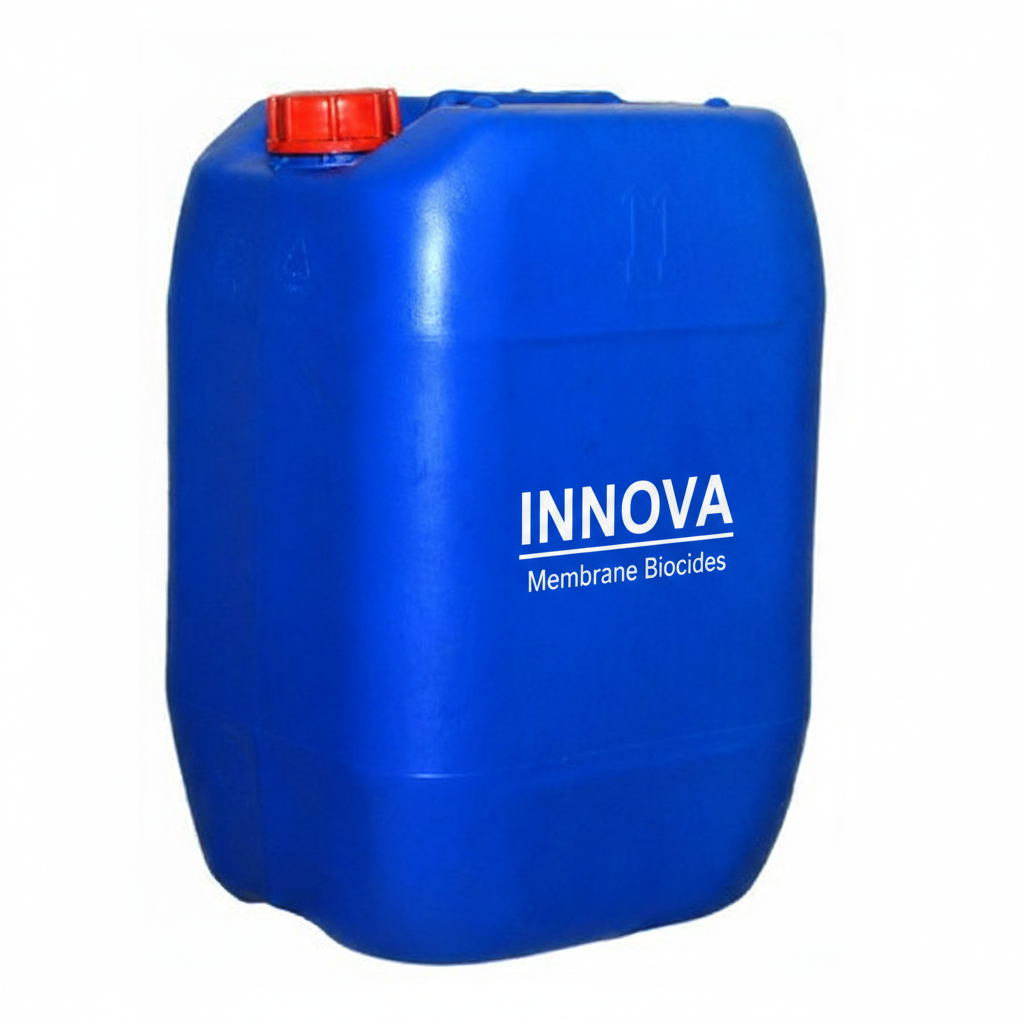
Membrane Biocides in Oman for Non-Oxidizing RO Biofouling Control (SWRO, Refinery & Municipal RO)
Innova Corporate (India) supplies non-oxidizing Membrane Biocides in Oman for SWRO desalination plants in Muscat and Barka, refinery boiler feed and cooling water systems in Sohar, and municipal drinking water RO plants in Salalah and Nizwa. Biofouling is one of the most persistent problems in Omani RO systems — bacteria, fungi, algae and sulfate-reducing bacteria (SRB) form biofilm layers on membrane surfaces that reduce permeate flow, raise differential pressure and increase energy cost. Chlorine-based biocides cannot be used directly on polyamide membranes because they cause irreversible oxidation damage. Our non-oxidizing biocides control microbial growth without attacking membrane surfaces, making them the preferred choice for Omani SWRO, refinery and municipal plants.
Our biocide range is designed for continuous feed dosing or intermittent CIP sanitisation of RO, NF and UF membranes used across Oman. It is highly effective against a broad spectrum of microorganisms — bacteria, fungi, algae, viruses and SRB — at low dosage, reducing chemical consumption cost for Omani plants. The liquid formulation is easy to dose with standard metering pumps and is compatible with all major membrane brands. For potable water RO systems in Salalah, Nizwa and Muscat, food-grade formulations are available that meet Omani drinking water treatment guidelines.
Key Features & Strategic Benefits for Oman SWRO, Refinery & Municipal RO:
- Broad-Spectrum Microbial Control: Rapidly eliminates bacteria, fungi, algae, viruses and SRB that cause biofouling in Oman SWRO and industrial RO systems.
- Non-Oxidizing Formula: Does not attack polyamide or TFC membranes — unlike chlorine, which causes irreversible oxidation damage in Omani plants.
- SRB Control: Penetrates anaerobic biofilm zones in refinery and power plant water systems and kills sulfate-reducing bacteria that produce corrosive hydrogen sulfide.
- Potable Water Safe: Food-grade formulations available for municipal RO plants in Salalah and Nizwa, meeting Omani drinking water treatment guidelines.
- Biodegradable & Eco-Friendly: Breaks down into non-toxic components, minimising environmental impact at Oman discharge points.
- System Compatibility: Fully compatible with all RO, NF and UF membrane types, housings and CIP skids used in Oman.
- Flux Maintenance: Prevents slimy deposits that cause pressure drop and permeate flow decline in Omani plants.
Industries We Serve Across Oman:
SWRO Desalination (Muscat, Barka): Seawater RO plants use non-oxidizing biocide for continuous feed dosing to control algae and biofilm without damaging membranes.
Oil & Gas Refineries (Sohar): Refinery cooling water and process water systems use non-oxidizing biocide to control SRB and biofilm without corrosion risk.
Power Generation Plants: Cooling tower make-up and boiler feed RO systems across Oman use non-oxidizing biocide to prevent microbial growth without chlorine-related corrosion.
Municipal Drinking Water (Salalah, Nizwa): Potable water RO plants use food-grade non-oxidizing biocide for community water supply safety.
Industrial Process Water (Duqm): Mining and heavy industrial RO systems use non-oxidizing biocide for consistent microbial control in high-load feed water.
Non-Oxidizing Biocide vs Chlorine — Why Oman Plants Prefer Non-Oxidizing:
| Parameter | Chlorine (Oxidizing) | Non-Oxidizing Biocide |
|---|---|---|
| Effect on Polyamide Membranes | Degrades membrane surface | Safe for polyamide and TFC |
| Effect on Cooling System Metallurgy | Corrosive at high doses | Non-corrosive to steel and copper |
| SRB Control | Limited — does not penetrate biofilm | Penetrates biofilm and kills SRB |
| Dechlorination Step | Required before RO membranes | Not required |
Dosage & Application Guide for Oman RO Plants:
- Continuous Feed Dosing: 2–10 ppm in feed water, depending on microbial load and system volume. Ideal for refinery and power plant RO systems running 24/7.
- CIP Shock Dosing: 50–200 ppm during shutdown sanitisation, followed by permeate flush.
- Injection Point: Before cartridge filter and static mixer, on the feed side of the RO membranes.
- Dilution: Can be fed neat or diluted up to 10% with RO permeate water. Never dilute with raw water.
- Monitoring: Track microbial counts, differential pressure and permeate flow to confirm biocide effectiveness.
Common Biofouling Problems in Oman RO Systems:
Biofilm Formation: Bacterial slime layers that resist standard cleaning. Non-oxidizing biocide penetrates and breaks down the biofilm matrix.
Sulfate-Reducing Bacteria: Thrive in anaerobic zones of refinery cooling systems in Sohar and produce hydrogen sulfide that corrodes steel and damages membranes.
Algal Growth in SWRO Intakes: Seasonal algal blooms in Muscat and Barka seawater intakes introduce organic matter and microbial load.
Legionella Risk: Warm cooling water in Oman is favourable for Legionella growth. Non-oxidizing biocide dosing reduces this risk.
Membrane Flux Decline: Biofilm deposits cause gradual but persistent loss of permeate flow and rising differential pressure.
Technical Specifications:
| Appearance | Clear to pale yellow liquid |
| Type | Non-oxidizing organic biocide |
| pH (as is) | 6.0 – 8.0 |
| Specific Gravity | 1.02 – 1.10 |
| Recommended Dosage | 2–10 ppm (continuous) / 50–200 ppm (CIP) |
| Solubility | Fully miscible in water |
| Shelf Life | 12 months in original sealed container |
Frequently Asked Questions (Oman):
Q: What are membrane biocides used for in Oman RO systems?
A: They control microbial growth and biofouling in RO membranes. They kill bacteria, fungi, algae and SRB that form biofilm on membrane surfaces, reducing permeate flow and increasing differential pressure.
Q: Why are non-oxidizing biocides preferred for Oman RO systems?
A: Non-oxidizing biocides do not attack polyamide or TFC membranes, unlike chlorine. This makes them the preferred choice for SWRO, refinery and municipal RO systems in Oman.
Q: Which Oman industries use membrane biocides the most?
A: SWRO desalination plants in Muscat and Barka, refineries in Sohar, power generation plants across Oman and municipal RO systems in Salalah and Nizwa.
Q: How do membrane biocides control sulfate-reducing bacteria in Oman?
A: Non-oxidizing biocides penetrate biofilm and kill SRB without oxidizing metal surfaces, protecting both membranes and system metallurgy in Oman plants.
Q: What dosage of membrane biocide is recommended for Oman RO systems?
A: Typical dosage is 2–10 ppm for continuous feed dosing, or 50–200 ppm for CIP sanitisation. Our team provides free dosage guidance based on feed water analysis.
Q: Do you supply membrane biocides across Oman industrial cities?
A: Yes, we supply to SWRO, refinery, power plant and municipal RO plants across Oman, including Muscat, Barka, Sohar, Salalah, Duqm, Nizwa and Sur.
Storage & Handling: Store in original, tightly sealed containers in a cool, dry, well-ventilated area at your Oman facility. Keep away from direct sunlight, heat sources and incompatible materials. For detailed dosing instructions, efficacy data and safety protocols, please refer to the Technical Data Sheet (TDS) and Material Safety Data Sheet (MSDS).
Related Products: Explore our Peracetic Acid RO Disinfectant, RO Antifoulant, and RO Dechlorination Chemicals for a complete RO chemical programme across Oman.