- 2B / BW Shalimar Bagh, Opp. BQ Market, Near DLF Mall New Delhi - 110088, India.
- :+91-9312-871-070

Manufacturers, Exporters, Suppliers of RO Antiscalant For High Iron Water
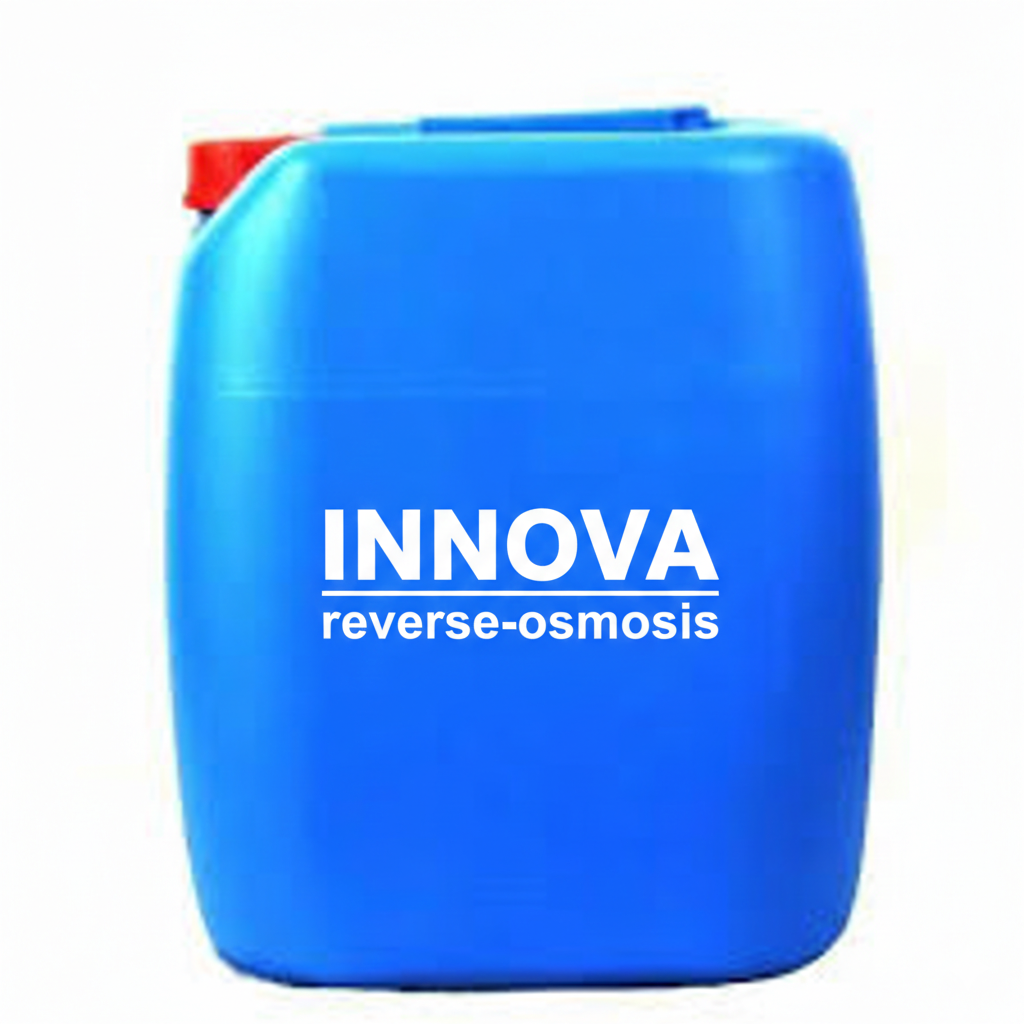
Iron Fouling RO Antiscalant for Oman's Iron-Rich Brackish, Oilfield & Mining Water
Innova Corporate (India) formulates advanced RO antiscalant for high iron water in Oman, engineered around the Sultanate's actual feed water challenges. Oman's inland aquifers in Al Batinah and the Interior region, oilfield produced water from Fahud and Yibal, and coastal brackish sources feeding plants in Sohar, Duqm, and Sur all carry dissolved iron, manganese, and metallic ions that standard antiscalants simply cannot manage. Our high-iron formulation keeps these metals dispersed so they exit through the concentrate stream instead of depositing on your membranes.
From the Barka and Ghubrah desalination plants serving Muscat to the industrial RO trains in Sohar Free Zone, Duqm SEZ, and Salalah Free Zone, reverse osmosis underpins Oman's water security under Oman Vision 2040. But when iron oxidizes inside an RO element, the resulting ferric hydroxide layer is stubborn, hard to remove, and rapidly drives up pressure drop while cutting permeate quality. Repeated acid cleanings slowly degrade membrane integrity. Our high iron RO antiscalant in Oman targets the root cause — keeping iron and other metal oxides suspended before they ever reach the membrane surface.
Key Features & Strategic Benefits for Oman Facilities:
- Iron Sequestration: Locks onto dissolved ferrous and ferric iron, preventing the red-brown staining and deposit buildup common in Al Batinah groundwater and Interior produced water.
- Manganese & Aluminium Control: Extends protection beyond iron to other metallic foulants frequently found in Oman's inland aquifers and oilfield brines.
- Flux Stability: Maintains consistent permeate flow by blocking the dense metallic scales that choke RO elements in high-iron service across Omani plants.
- Lower Cleaning Costs: Cuts the frequency of aggressive acid and caustic cleanings — a major saving for industrial and municipal plants from Sohar to Salalah.
- Wide pH Tolerance: Remains effective across the pH swings seen in brackish and produced water treatment, even under highly saturated conditions.
- Membrane Compatibility: Safe for all major Thin-Film Composite (TFC) and polyamide RO membranes used in Oman's desalination and industrial plants.
- Oilfield & Mining Ready: Suitable for produced water reinjection at Fahud and Yibal, mining process water in Duqm, and heavy industrial RO trains operating in Sohar Free Zone and Salalah Free Zone.
- Khareef Season Resilience: Helps plants in Dhofar and Salalah maintain stable performance during the monsoon months when feed water turbidity and organics spike.
Dosage & Application: Typical dosing for our high iron antiscalant in Oman ranges from 2–10 ppm based on feed water iron concentration and system recovery. In severe fouling conditions — often seen with Interior oilfield produced water or high-iron Al Batinah aquifers — the dosage may be raised up to 15 ppm. For precise dosing matched to your specific water analysis, our technical team will review your feed chemistry and recommend the optimal setpoint for your Oman site.
How It Works: Iron Sequestration Mechanism
When ferrous iron (Fe²⁺) enters an RO system and meets oxygen or oxidizing agents, it converts to ferric iron (Fe³⁺), which immediately precipitates as ferric hydroxide — the stubborn orange-brown deposit that clogs membranes. Our antiscalant interrupts this process at two stages: first, it binds dissolved iron molecules into stable soluble complexes; second, it disperses any iron oxide particles that do form, keeping them small enough to pass through the concentrate stream. This dual-action mechanism works even in the high-saturation conditions typical of Oman's Interior oilfield brines and Al Batinah aquifers.
Standard vs High-Iron Antiscalant: Oman Performance Comparison
| Parameter | Standard Antiscalant | Innova High-Iron Antiscalant |
|---|---|---|
| Iron Tolerance | Up to 1 ppm | Up to 5 ppm |
| Manganese Control | Limited | Excellent |
| pH Range | 5 – 8 | 3 – 11 |
| Cleaning Frequency (Oman) | Every 2–3 weeks | Every 8–12 weeks |
| Produced Water Suitability | Not Recommended | Ideal |
| Al Batinah Groundwater | Partial Protection | Full Protection |
Case Study: Sohar Free Zone Facility
A brackish water RO plant in Sohar Free Zone was struggling with feed water containing 3.2 ppm dissolved iron. Membrane cleaning was required every 3 weeks, and permeate flow had dropped by 28% within 6 months of operation. After switching to Innova's high-iron antiscalant at 8 ppm dosing, the facility reported cleaning frequency reduced to every 11 weeks, normalized permeate flow restored to design values within 4 weeks, and an estimated annual saving of over 40% in membrane maintenance costs.
Frequently Asked Questions — Oman High Iron Water
Q1: Which antiscalant works best for high iron water in Oman?
For Omani feed water with iron above 1 ppm, a dedicated high-iron antiscalant is essential. Standard
antiscalants only handle up to 1 ppm iron — beyond that, ferric hydroxide precipitation begins.
Innova's high-iron formulation handles up to 5 ppm iron and is specifically tested against Al Batinah
groundwater and Interior produced water chemistry.
Q2: What dosage is recommended for Al Batinah groundwater?
Al Batinah groundwater typically contains 2–4 ppm iron. For this range, we recommend 5–8 ppm dosing.
For higher iron levels or when manganese is also present, dosage may go up to 15 ppm. Always base
the final dosage on a complete water analysis — our technical team provides free dosing recommendations
for Oman clients.
Q3: Will this antiscalant work for Fahud and Yibal produced water?
Yes. Produced water from Fahud and Yibal oilfields often contains iron, manganese, and other metallic
ions in complex forms. Our antiscalant is formulated to handle these challenging conditions, making it
suitable for produced water reinjection RO systems in Oman's Interior oilfields.
Q4: Do I need extra dosing during Khareef season in Salalah?
During the Khareef monsoon in Dhofar, feed water turbidity and organic content spike significantly.
While iron levels may not change dramatically, the combination of organics and metals can accelerate
fouling. We recommend a 10–15% dosage increase during Khareef months, plus more frequent monitoring
of pressure differential across the membrane.
Storage & Stability: Keep containers tightly sealed and store in a cool, dry area away from direct sunlight, heat sources, and open flames at your Oman facility. Do not allow the product to freeze. For full handling protocols, shelf life, and safety information, please refer to our Technical Data Sheet (TDS) and Material Safety Data Sheet (MSDS).