- 2B / BW Shalimar Bagh, Opp. BQ Market, Near DLF Mall New Delhi - 110088, India.
- :+91-9312-871-070

Manufacturers, Exporters, Suppliers of Low pH Membrane Cleaner
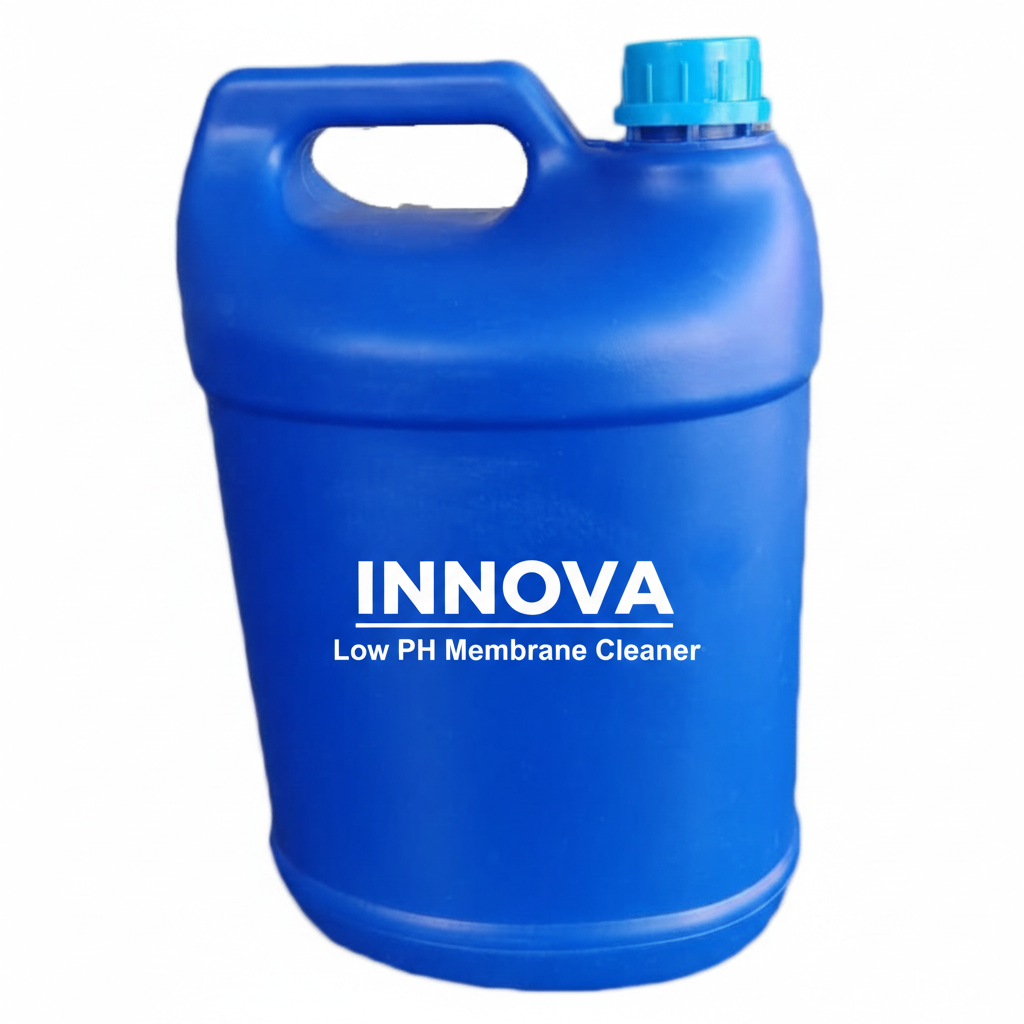
High-Performance Low pH Membrane Cleaner for Qatar's SWRO, IWPP & Industrial Plants (Acidic CIP Formula)
Mineral scaling is a major operational barrier for desalination plants in Qatar. Innova Corporate (India) offers a high-strength low pH membrane cleaner in Qatar, specifically formulated to dissolve calcium carbonate, calcium sulphate, iron oxide, manganese oxide and other mineral-based scales that accumulate on RO membranes. This acidic cleaner is essential for restoring membrane flux in Qatar's high-capacity industrial and municipal water facilities — from the SWRO complexes that supply the country's municipal drinking water to the process water systems serving Qatar's petrochemical, LNG and heavy manufacturing operations.
Regular maintenance with our low pH formula allows Qatar-based plants to maintain peak efficiency through every operating season, including the high-demand summer months when feed water temperatures rise and scaling kinetics accelerate. Our product is designed to meet the rigorous technical standards of Qatar's energy and utility sectors, ensuring that RO systems operate smoothly while extending the lifespan of filtration assets throughout Qatar. Used as part of a scheduled CIP program, it prevents the cumulative mineral buildup that eventually forces premature membrane replacement — one of the largest capital costs in any desalination facility.
Key Features & Strategic Benefits for Qatar:
- Inorganic Scale Dissolution: Rapidly dissolves calcium carbonate, calcium sulphate, and metal hydroxides in Qatar systems — the dominant scale types in high-hardness Gulf and brackish feed water.
- Iron Oxide Removal: Specifically effective against iron oxide and manganese oxide deposits that develop in industrial process water and certain brackish sources used across Qatar.
- Advanced Dispersing Agent: Features organic chemicals that ensure quick and easy removal of soil, silt and silicate deposits — even in heavily fouled membranes.
- Flux Restoration: Restores membrane permeability and lowers differential pressure — returning membranes to near-original performance after each CIP cycle.
- Low Foaming & Reusable: Optimized for recirculation CIP systems and can be reused if not heavily fouled — reducing chemical consumption for Qatar plants.
- Safe & Biodegradable: Environmentally responsible formula that is easy to handle in Qatar facilities — aligned with Qatar National Vision 2030 sustainability goals.
- High-Temperature Compatibility: Works effectively across the full range of Qatar's operating temperatures — from ambient to the 35°C+ conditions typical of summer CIP cycles.
- Universal Compatibility: Safe for use with all major brands of polyamide and thin-film composite membranes deployed across Qatar's desalination and industrial sectors.
Why Low pH Cleaning Is Essential for Qatar SWRO Plants
Qatar's SWRO plants operate on Gulf seawater with high calcium, magnesium and sulphate content. Even with effective antiscalant dosing, some mineral scale inevitably deposits on membrane surfaces over time — particularly on the lead elements, which see the highest concentration factors. This scale manifests as rising differential pressure, declining normalized permeate flow, and gradually increasing energy consumption. The signature is diagnostic: unlike organic fouling, mineral scale responds poorly to alkaline cleaning and requires acidic chemistry to dissolve. Low pH cleaners work by reacting with the carbonate and oxide deposits, converting them into soluble salts that can be flushed out of the membrane. Regular low pH CIP cycles keep Qatar SWRO plants operating at peak efficiency, prevent the cumulative scale buildup that eventually forces membrane replacement, and extend the useful service life of the entire membrane train.
Low pH vs High pH Cleaner: Qatar CIP Program Comparison
| Parameter | Low pH (Acid) Cleaner | High pH (Alkaline) Cleaner |
|---|---|---|
| Target Foulants | CaCO₃, CaSO₄, iron oxide, metal hydroxides | Organics, bio-slime, oils, algae |
| Typical Use in Qatar | SWRO and industrial RO mineral scale | Coastal SWRO biofouling, F&B CIP |
| Differential Pressure Symptom | Rise with flux decline | Rise with stable flux |
| Working Dilution | 2 – 5% v/v | 2 – 5% v/v |
| Cleaning Duration | 2 – 4 hours + soak | 2 – 4 hours + soak |
| CIP Sequence Position | Typically after alkaline | Typically first in sequence |
| Summer Priority (Qatar) | High (scale accelerates) | High (biofouling season) |
Case Study: SWRO Facility Near Jelaiah with Chronic Scale Buildup
A mid-sized SWRO facility near Jelaiah was experiencing recurring scale buildup on its first-stage membranes despite regular alkaline CIP cycles. Differential pressure across the lead pressure vessels had risen from 1.1 bar to 3.6 bar within 10 weeks of each cleaning, and permeate flow had declined by 17% versus baseline. Membrane autopsy confirmed the presence of both calcium carbonate scale and iron oxide deposits that the alkaline cleaner was not dissolving. The facility adopted a sequential CIP program using Innova's high pH cleaner first (removing organic layer) followed by low pH cleaner (removing mineral scale), with a 45-minute soak in each solution. After the switch, differential pressure recovered to 1.2 bar post-CIP, CIP frequency extended from every 10 weeks to every 16 weeks, and the affected membranes regained 93% of original flux. The facility also reported reduced energy consumption due to lower feed pressure requirements.
Cleaning Protocol: For best results in Qatar water treatment plants, dilute with DM or RO permeate water to prepare a 2–5% v/v solution. This working solution should be recirculated through the membranes for 2–4 hours, including a 30–60 minute soaking period. After cleaning, flush the system thoroughly with permeate water until the pH level is balanced at both the feed and reject ends. For sequential CIP programs combining high pH and low pH chemistries, begin with the high pH cleaner, rinse to neutral, then proceed with the low pH cleaner for optimal foulant removal.
Frequently Asked Questions — Low pH Membrane Cleaner in Qatar
Q1: How often should low pH cleaning be performed in Qatar SWRO plants?
Frequency depends on feed water quality and antiscalant performance. SWRO plants in Qatar typically
need low pH cleaning every 8–16 weeks, depending on feed water hardness, recovery rate and the
effectiveness of the antiscalant program. The right frequency is best determined by monitoring
differential pressure trends and normalized permeate flow across the pressure vessels.
Q2: Can low pH cleaner be used alone, or does it always need high pH first?
It depends on the dominant foulant. For pure mineral scale situations (high LSI feed water without
significant organic loading), low pH cleaner alone is sufficient. For mixed fouling — common in
Qatar where SWRO plants see both scale and seasonal biofouling — sequential cleaning with high pH
first, then low pH, delivers the best results. Our technical team advises on the correct sequence
based on your membrane autopsy or performance data.
Q3: Is it safe for TFC and polyamide membranes used in Qatar?
Yes. The formulation is compatible with all major Thin-Film Composite (TFC), polyamide and cellulose
acetate membranes. It respects the pH and temperature limits specified by Dow FilmTec, Toray,
Hydranautics, LG and Koch membrane manufacturers. Operating parameters are within membrane warranty
limits for all major brands used in Qatar.
Q4: Do you supply low pH membrane cleaner across Qatar?
Yes. We supply across Qatar including Al Kheesa, Simaisma, Al Dhakira, Ras Matbakh and Al Khor
Coastal through Hamad Port. Standard packaging of 25 kg, 250 kg and bulk drums is available with
regular dispatch from India. Bulk pricing and consolidated shipments are available for multi-site
operators.
Storage & Handling: Store in original, hermetically sealed containers in a cool, dry area in Qatar away from direct sunlight and heat sources. Do not allow the product to freeze. Always wear appropriate PPE — splash goggles, chemical-resistant gloves and protective clothing — during handling. For detailed chemical properties and safety data, please refer to our Material Safety Data Sheet (MSDS) and Technical Data Sheet (TDS).