- 2B / BW Shalimar Bagh, Opp. BQ Market, Near DLF Mall New Delhi - 110088, India.
- :+91-9312-871-070

Manufacturers, Exporters, Suppliers of RO Disinfectant Chemicals
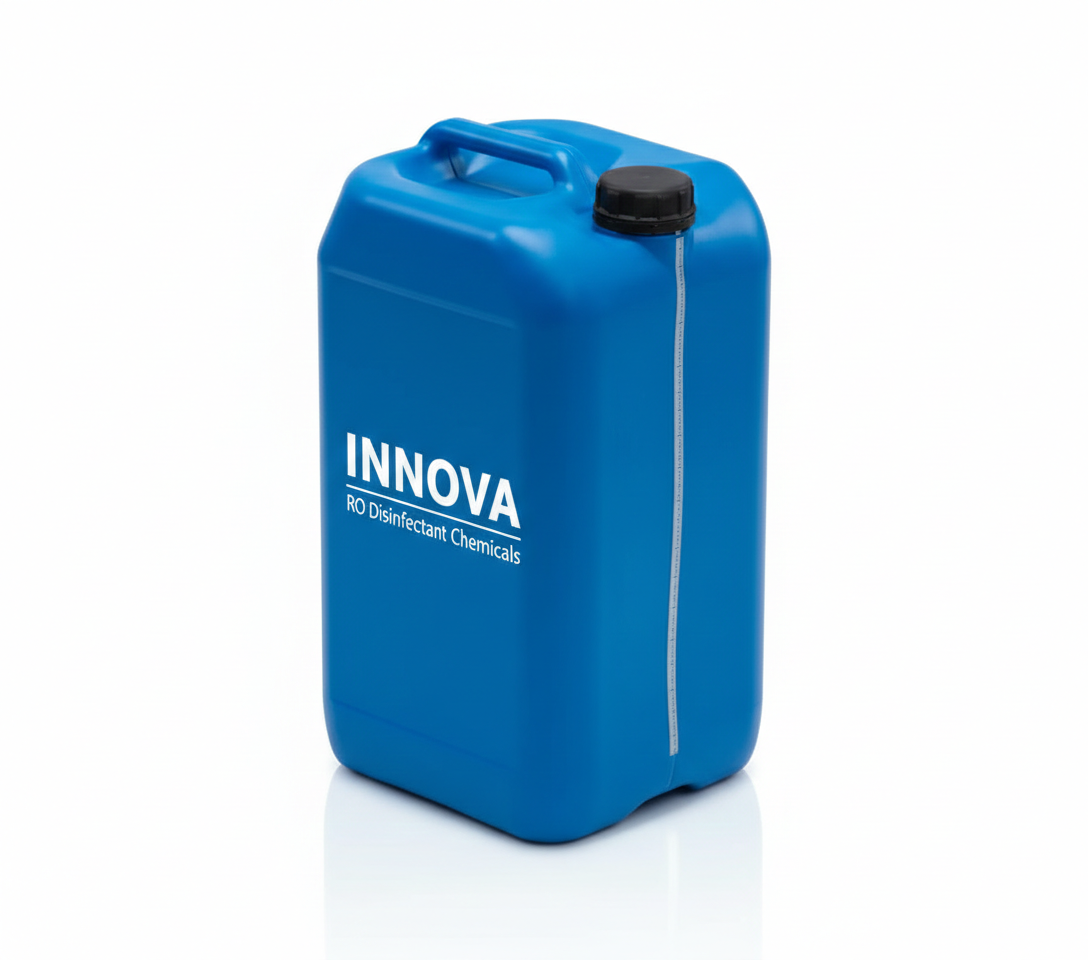
Non-Oxidizing RO Disinfectant Chemicals for Qatar's SWRO, IWPP & Industrial Water Systems
Innova Corporate (India) is a premier manufacturer, supplier and exporter of high-efficacy RO disinfectant chemicals in Qatar. Biological fouling and bio-film growth can severely restrict membrane flow and compromise water quality — a critical concern for Qatar's SWRO, IWPP and industrial RO plants operating in the warm Gulf environment where microbial growth thrives year-round. Our specialized non-oxidizing microbiocide is engineered to eliminate a broad spectrum of microorganisms without damaging the sensitive polyamide and TFC membrane structures used across Qatar's desalination fleet.
Our RO disinfectant in Qatar is a safe and powerful solution for the disinfection of reverse osmosis systems, including those used for potable water production. It effectively targets bacteria, fungi and algae common in Qatar's local water sources, ensuring that your membrane system remains free from biological sliming and maintains peak performance through every season — including peak summer months when feed water temperatures exceed 35°C. The non-oxidizing mechanism means no chlorine exposure, no membrane damage, and no disinfection byproducts — just clean, biologically stable water.
Key Features & Strategic Benefits for Qatar:
- Broad-Spectrum Efficacy: Highly effective against a wide range of microorganisms, preventing bio-fouling and pressure drops in Qatar's high-load systems — including heterotrophic bacteria, algae, fungi and sulfate-reducing organisms.
- Potable Water Safe: Certified safe for use in RO systems producing drinking water for Qatar residents when used as per guidelines — suitable for municipal supply and bottled water applications.
- Non-Oxidizing Formula: Unlike chlorine, it does not oxidize or degrade polyamide or TFC membranes — the two membrane types used in nearly every Qatari SWRO plant.
- Eco-Friendly & Biodegradable: Environmentally responsible formulation that breaks down safely after use, meeting Qatar's modern environmental standards and Qatar National Vision 2030 sustainability goals.
- Total System Compatibility: Fully compatible with all RO membrane components, housings and high-pressure pumps used across Qatar's industrial and municipal water infrastructure.
- Extended Residual Protection: Maintains antimicrobial activity in storage tanks and distribution lines between dosing cycles — reducing the risk of regrowth.
- High-Temperature Stability: Maintains full antimicrobial efficacy through Qatar's peak summer when feed water temperatures exceed 35°C — chlorine loses effectiveness in this range.
- Bulk Supply for Multi-Site Operators: Available in 25 kg, 250 kg and bulk drum packaging for large Qatar facilities and multi-site industrial groups.
Why Non-Oxidizing Disinfectants Are Critical for Qatar SWRO Plants
Qatar's SWRO plants and IWPPs operate in an environment that presents unique microbial control challenges. Gulf seawater stays warm year-round, with summer temperatures that accelerate biological growth. Industrial process water and cooling systems add further complexity. Chlorine — the traditional disinfectant — cannot be used directly on polyamide membranes because it irreversibly oxidizes the active layer. Even brief exposure at low concentrations causes measurable salt rejection loss, and higher concentrations can destroy membrane elements within days. Sodium bisulfite dechlorination downstream of chlorination adds cost, complexity and risk. Non-oxidizing disinfectants eliminate this entire problem. They kill microorganisms without attacking membrane chemistry, they work in the high-temperature conditions that reduce chlorine effectiveness, and they can be dosed directly into the RO feed without requiring special isolation or flushing protocols. For Qatar's water infrastructure, non-oxidizing disinfectants are the only chemistry that provides reliable, safe microbial control from intake to membrane to distribution.
Non-Oxidizing vs Oxidizing Disinfectants: Qatar Application Comparison
| Parameter | Chlorine / Hypochlorite | Non-Oxidizing Disinfectant |
|---|---|---|
| Membrane Safety (TFC/Polyamide) | Damages at low ppm | Fully safe |
| Dechlorination Required | Yes (sodium bisulfite) | No |
| High-Temperature Performance (35°C+) | Rapid activity loss | Full efficacy maintained |
| Disinfection Byproducts | THMs, HAAs | None |
| Biofilm Penetration | Limited | Excellent |
| Residual Stability | Decays rapidly in warm conditions | Extended protection |
| Continuous Dosing on RO Feed | Not possible | Standard practice |
Case Study: IWPP Cooling Water Disinfection Near Al Thakhira
A large IWPP facility near Al Thakhira was using chlorination for its cooling water and process water disinfection but facing two recurring problems: biofilm formation in the cooling tower circulation loop that was causing heat transfer efficiency loss, and occasional microbial excursions in the RO permeate that required additional treatment. Chlorination levels could not be increased without risking downstream membrane damage. After switching to Innova's non-oxidizing disinfectant at 3 ppm continuous dosing for the RO feed and 15 ppm shock dosing for the cooling loop, the facility reported complete elimination of biofilm-related heat transfer issues, consistent clean microbial results in the RO permeate across 12 months of monitoring, and simplification of the chemical program by eliminating the bisulfite dechlorination step. The facility also noted reduced corrosion on cooling tower components compared to the previous chlorination regime. The sister facility in the Sealine Area adopted the same treatment approach.
Application & Dosage for Qatar Plants:
Dosage depends on the severity of biological fouling. We recommend two primary methods for Qatar facilities:
- Shock Dosing (Immediate Disinfection): Use a concentration of 5–10% v/v for rapid system sterilization during shutdowns, commissioning or after any biological event.
- Continuous Dosing (Preventative): Maintain a concentration of 2.5 ppm on the feed water for round-the-clock microbial control. This is the preferred approach for SWRO, IWPP and industrial facilities where consistent water quality is critical.
Recommended Membrane Cleaning Protocol for Qatar:
- Disinfect the system with Innova RO Disinfectant.
- Flush thoroughly with permeate water.
- Circulate a High pH Membrane Cleaner solution for 30 minutes, then soak for 1–2 hours.
- Final flush with permeate water before returning the Qatar plant to normal service.
*Note: In multi-pass systems, clean each pass individually for the best results. Replace cleaning solutions if they become excessively turbid.*
Frequently Asked Questions — RO Disinfectant in Qatar
Q1: Can I eliminate chlorination and dechlorination from my Qatar RO plant?
Yes, and many Qatar facilities have done so. The switch typically involves removing the upstream
chlorination step and the downstream sodium bisulfite dechlorination step, then dosing non-oxidizing
disinfectant directly into the RO feed. This simplifies operations, reduces chemical consumption,
eliminates the risk of chlorine breakthrough, and cuts the number of injection points from two to one.
Q2: How do I know if my plant has a biofouling problem?
The classic signs are rising differential pressure across pressure vessels between CIPs, declining
normalized permeate flow, and occasional HPC excursions in permeate testing. In Qatar specifically,
biofouling is more likely during peak summer when feed water temperatures are highest and microbial
activity is greatest. A membrane autopsy or feed water microbial analysis can confirm the diagnosis.
Q3: Is this product safe for potable water production in Qatar?
Yes. The formulation uses food-grade-compatible active ingredients and is suitable for potable water
applications when dosed per recommended guidelines. It's widely used by municipal water authorities,
bottling plants and industrial facilities across Qatar where drinking water quality is regulated.
Q4: Do you supply RO disinfectant across Qatar?
Yes. We supply across Qatar including Al Adaid, Al Kharrara, Al Ghariya and Al Karaana through
Hamad Port. Standard packaging of 25 kg, 250 kg and bulk drums is available with regular dispatch
from India. Bulk pricing and consolidated shipments are available for multi-site operators.
Safety & Handling: Proper PPE — splash goggles, lab coats, chemical-resistant gloves and vapor respirators — must be worn while handling. Store in original containers in a cool, dry place at your Qatar site, away from direct heat or sunlight. Do not allow the product to freeze. Refer to the MSDS for comprehensive safety details and handling protocols specific to your application.