- 2B / BW Shalimar Bagh, Opp. BQ Market, Near DLF Mall New Delhi - 110088, India.
- :+91-9312-871-070

Manufacturers, Exporters, Suppliers of RO Antiscalants High Silica
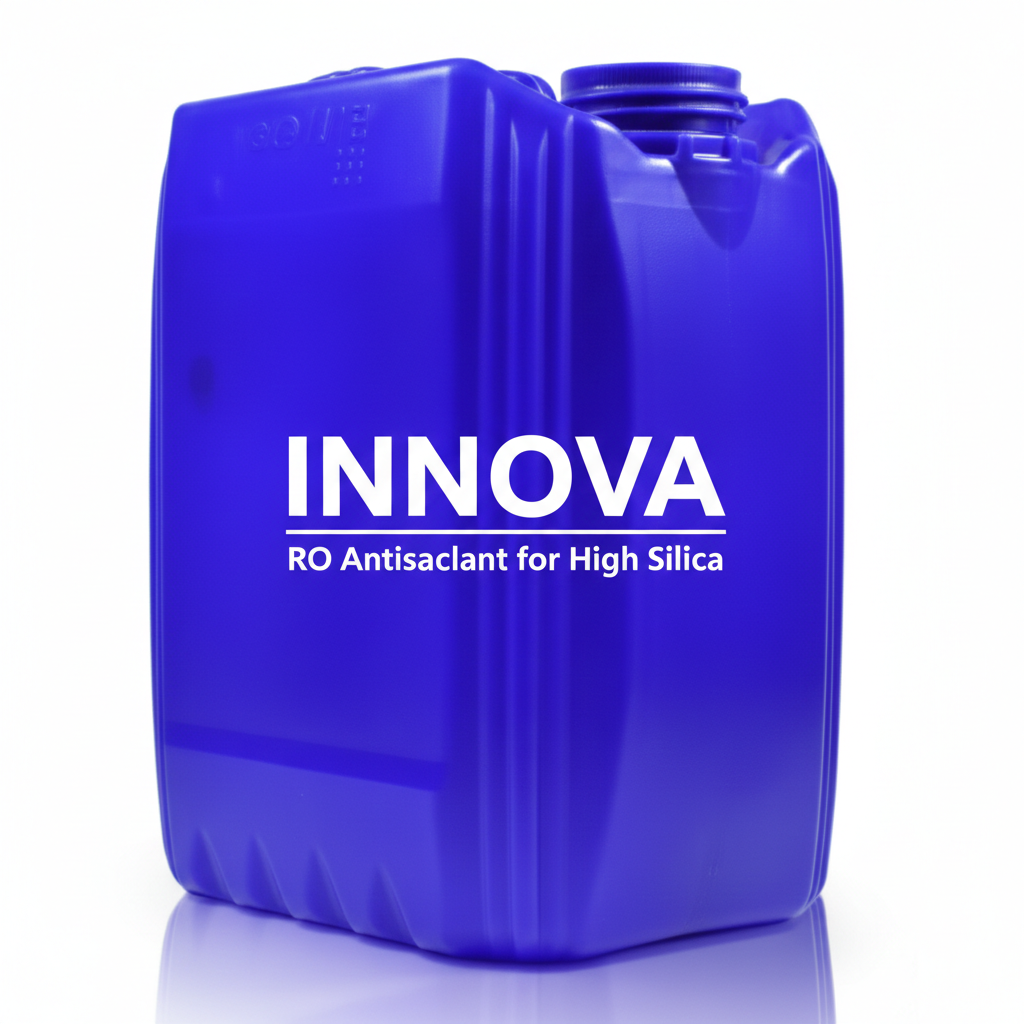
RO Antiscalant for High Silica & Metal Oxides in Qatar (Extreme Concentration Formula)
Innova Corporate (India) is a specialized manufacturer, supplier and exporter of high silica RO antiscalants in Qatar. Silica scaling is one of the most difficult challenges in RO membrane maintenance — the glass-like deposits it forms cannot be dissolved by standard acid or caustic cleaners once polymerization has occurred. Our high-performance formulation is specifically engineered to handle elevated silica levels alongside metal oxides, ensuring your system operates smoothly even in the most demanding water conditions found across Qatar's industrial and municipal water treatment sector.
Our high silica RO antiscalant in Qatar is a targeted solution designed to control the deposition of inorganic scales. By stabilizing silica and preventing its polymerization on the membrane surface, it significantly increases membrane life and reduces unscheduled shutdowns for expensive cleaning operations. The formulation is exceptionally effective for water with an LSI up to +2.5, iron up to 1.5 ppm in reject, and silica levels up to 325 ppm (mg/L) in reject — pushing the envelope of what RO membranes can safely handle without silica fouling. For Qatar plants dealing with high-silica industrial process water or inland brackish sources, this is the most advanced protection available.
Key Features & Strategic Benefits in Qatar:
- Critical Silica Control: Prevents complex silica-based scales that are often irreversible — effective at reject-side silica concentrations up to 325 ppm.
- Iron Fouling Sequestration: Effectively manages high iron content to prevent red-brown membrane staining — common in industrial process water and certain brackish sources across Qatar.
- Metal Oxide Tolerance: Handles aluminium, manganese and other metal oxide foulants that compound silica scaling problems.
- Optimized Recovery: Allows for higher water recovery rates even with high TDS and silica concentrations — critical for Qatar's water-efficient industrial operations.
- Membrane Compatibility: Safe and compatible with all major brands of polyamide, TFC and NF membranes used across Qatar's industrial sector.
- Environmentally Responsible: Completely organic and biodegradable formulation — aligned with Qatar National Vision 2030 sustainability goals.
- Maintenance Reduction: Drastically reduces the frequency of chemical cleanings and element replacements for Qatar plants — extending intervals from weeks to months.
- High-Temperature Stability: Maintains full inhibition performance through Qatar's peak summer conditions when feed water temperatures exceed 35°C.
Why Silica + Metal Oxide Fouling Requires a Dedicated Solution
Standard antiscalants are designed around calcium carbonate and sulphate scales — chemistry that responds well to pH adjustment and standard threshold inhibitors. Silica follows an entirely different mechanism. It polymerizes into an amorphous glass structure held together by strong siloxane (Si-O-Si) bonds that resist both acidic and alkaline cleaning. When iron or aluminium oxides are also present — as they often are in Qatar's industrial process water and certain brackish sources — they can co-precipitate with silica and accelerate the fouling process. This combined silica-metal oxide fouling pattern defeats general-purpose antiscalants entirely. Our dedicated high silica antiscalant is formulated to interfere with the silica polymerization reaction while simultaneously sequestering metal oxides, providing dual-action protection against one of the most difficult fouling combinations in RO operation.
High Silica Antiscalant Performance: Qatar Water Source Comparison
| Parameter | Standard Antiscalant | Innova High Silica Antiscalant |
|---|---|---|
| Silica Tolerance (Feed) | Up to 50 ppm | Up to 120 ppm |
| Silica Tolerance (Reject) | Up to 100 ppm | Up to 325 ppm |
| Iron Tolerance (Reject) | Up to 0.8 ppm | Up to 1.5 ppm |
| LSI Tolerance | Up to +1.8 | Up to +2.5 |
| Polymerization Prevention | Limited | Full inhibition |
| Max Recovery (Industrial Qatar) | 65 – 70% | 75 – 80% |
| CIP Frequency (High Silica Feed) | Every 3–4 weeks | Every 10–14 weeks |
Case Study: Industrial RO Plant at Ras Laffan Industrial City
A 45 m³/hr industrial RO facility within Ras Laffan Industrial City was processing process water with 72 ppm silica, 1.4 ppm iron, and an LSI of +2.2. The plant had been running a standard antiscalant at 4 ppm dosing but was experiencing rapid combined silica-iron fouling on the lead elements. CIP was required every 4 weeks, and after 14 months of operation the lead membrane set had already been replaced due to irreversible silica damage. After switching to Innova's high silica antiscalant at 12 ppm dosing, the facility reported CIP frequency extended from every 4 weeks to every 12 weeks, no further membrane damage incidents across the following 18 months, and the ability to safely operate at 78% recovery instead of the previous 68% limit. The plant has not required a membrane replacement since the switch, and the facility's sister site in the Ras Abu Fontas desalination area has adopted the same formulation for its brackish pretreatment stage.
Dosage & Application Guidelines for Qatar:
High silica RO antiscalant should be dosed directly into the feed water line (after pretreatment). Standard dosage ranges from 2 ppm to 20 ppm, depending on calcium hardness, iron, TDS and silica content at your Qatar facility:
- Moderate Hardness: 2–3 ppm is sufficient for alkalinity and hardness control in standard industrial water.
- High Iron (0.5 – 1.0 ppm): Increase dosage by 5–7 ppm to effectively stabilize the system against iron-rich industrial process water.
- Extreme Silica (Up to 325 ppm): A dosage of approximately 10–15 ppm is recommended for full inhibition in the reject stream.
- Combined Silica + Iron: 12–15 ppm dosing is recommended when both foulants are present at elevated concentrations.
Frequently Asked Questions — High Silica Antiscalant in Qatar
Q1: Can silica scale be removed if it has already formed on membranes?
Once polymerized silica has formed on a membrane surface, it is extremely difficult to remove.
Standard acid and caustic CIP chemicals are largely ineffective — the siloxane bonds that hold
silica together are chemically resistant to both. Some success has been reported with specialized
silica removal cleaners, but the recovery is often incomplete and the risk of permanent membrane
damage is high. Prevention with a high silica antiscalant is by far the more economical strategy.
Q2: What silica level can this antiscalant handle in Qatar water?
Our formulation is effective at feed silica levels up to 120 ppm and reject-side silica up to
325 ppm, depending on pH and temperature. This covers the most demanding industrial process water
and brackish aquifer conditions found in Qatar. For extreme scenarios, dosage may need adjustment
or combination with other treatment approaches — our team advises based on your specific water
analysis.
Q3: Is this product safe for potable water production in Qatar?
Yes. The formulation is made with ingredients suitable for potable water applications and complies
with drinking water quality guidelines applicable in Qatar when dosed per our recommendations. It
is used by bottling plants, food processing facilities and municipal water systems across the
country.
Q4: Do you supply high silica antiscalant across Qatar?
Yes. We supply across Qatar through Hamad Port with delivery to all major industrial zones
including Mesaieed Industrial City, Ras Laffan Industrial City, Qatar Free Zones and Qatar
Economic Zones, plus the Ras Abu Fontas and Umm Al Houl desalination areas. Standard packaging of
25 kg, 250 kg and bulk drums is available.
Storage & Handling: Store in original, tightly sealed containers in a cool and dry environment at your Qatar site. Keep away from direct heat, sunlight and incompatible oxidizers. Do not allow the product to freeze. For customized dosing schedules based on your specific Qatar water analysis, please consult our Technical Data Sheet (TDS) and Material Safety Data Sheet (MSDS), or reach out to our technical team for free consultation.