- 2B / BW Shalimar Bagh, Opp. BQ Market, Near DLF Mall New Delhi - 110088, India.
- :+91-9312-871-070

Manufacturers, Exporters, Suppliers of Membrane Antiscalant
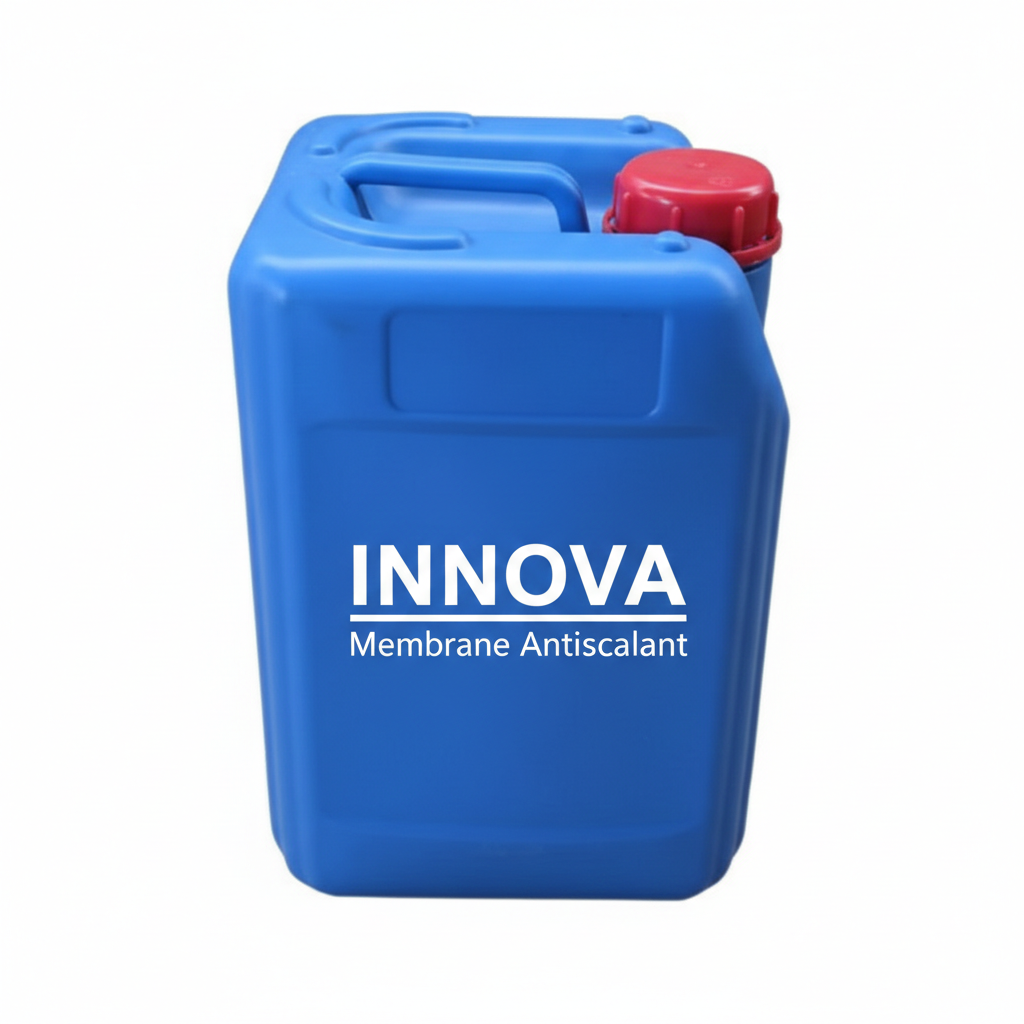
Universal RO Membrane Antiscalant & Antifoulant for Qatar's SWRO, IWPP & Industrial Plants
Innova Corporate (India) is a leading manufacturer and exporter of membrane antiscalant in Qatar. Our universal-grade antiscalant serves as the primary defense against mineral precipitation, ensuring that RO membranes in Qatar's petrochemical, power and desalination facilities remain clean and productive. It is a critical chemical for continuous performance of water treatment plants across Qatar's industrial landscape — from the SWRO and IWPP complexes that supply the country's municipal water to the process water systems serving refining, LNG and heavy manufacturing operations.
By effectively inhibiting scale formation, our product allows Qatar businesses to maximize water recovery — a critical capability for a country where every cubic meter of produced water matters. This is essential for Qatar's focus on sustainable resource management under Qatar National Vision 2030. Our advanced formula provides long-term protection, making it a trusted choice for membrane care across the full range of water conditions encountered in the Qatar region — from high-salinity Gulf seawater to inland brackish aquifers with variable chemistry.
The formulation provides comprehensive protection against a broad spectrum of foulants found in Qatar water sources, including calcium carbonate, calcium sulphate, barium sulphate, strontium sulphate, magnesium sulphate, calcium fluoride, iron and silica. This versatile chemical barrier keeps ions in suspension, preventing the scaling that leads to flux decline, increased energy consumption and premature membrane replacement. Qatar facilities using this universal-grade formulation get protection across the entire foulant spectrum from a single chemical program — no need for separate products at separate injection points.
Key Features & Strategic Benefits in Qatar:
- Enhanced System Recovery: Facilitates high recovery rates by maintaining clean membrane surfaces — critical for Qatar's SWRO fleet operating at 40–50% recovery on high-TDS Gulf water.
- Broad-Spectrum Control: Single formulation effective against carbonate, sulphate, fluoride, iron and silica foulants — reduces the number of chemicals needed in the treatment program.
- Low Dosage Efficiency: Highly concentrated formula requires minimal dosage (typically 2–6 ppm), ensuring cost-effective operations even at high flow rates.
- Phosphate-Free Performance: Unlike older SHMP-based products, it does not cause calcium or iron-based phosphate deposition — a common problem in high-hardness water sources.
- Extended Cleaning Intervals: Dramatically reduces the frequency of membrane CIP cycles in Qatar — from weeks to months, cutting chemical, labor and downtime costs.
- Universal Membrane Compatibility: Safe for use with all polyamide, Thin-Film Composite (TFC) and cellulose acetate membranes used across Qatar's desalination and industrial sectors.
- Safe Handling: Non-hazardous and stable formulation for easy industrial application in Qatar — no special ventilation or protective equipment beyond standard chemical handling gear.
- High-Temperature Stability: Maintains full-scale inhibition performance through Qatar's peak summer conditions when feed water temperatures exceed 35°C.
Why Universal-Grade Antiscalant Matters for Qatar Facilities
Qatar's water treatment plants operate on a variety of feed water sources — Gulf seawater with 45,000+ ppm TDS, inland brackish aquifers with variable chemistry, industrial process water from refineries and petrochemical plants, and municipal recycled water. Each of these sources presents different scaling challenges. A plant that switches between sources, or a company that operates multiple facilities on different water sources, needs chemical flexibility. That is where universal-grade antiscalant delivers its real value. Instead of stocking and dosing multiple antiscalant products for different scaling scenarios, facilities can standardize on a single universal formulation that handles the full range of foulants. This simplifies procurement, reduces storage requirements, eliminates the risk of using the wrong product at the wrong site, and typically lowers total chemical costs. For Qatar's multi-site industrial operators and municipal utilities, universal-grade antiscalant is the practical choice.
Universal Antiscalant vs SHMP & Standard Inhibitors: Qatar Comparison
| Parameter | SHMP (Old Tech) | Standard Antiscalant | Innova Universal Antiscalant |
|---|---|---|---|
| Scale Types Covered | CaCO₃ only | CaCO₃, CaSO₄ | CaCO₃, CaSO₄, BaSO₄, SrSO₄, CaF₂, Fe, Silica |
| Phosphate Deposition Risk | High | Medium | None (phosphate-free) |
| Dosage (Typical) | 10–20 ppm | 4–8 ppm | 2–6 ppm |
| Acid Dosing Required | Yes | Sometimes | No |
| Membrane Compatibility | All types | TFC, Polyamide | TFC, Polyamide, CA |
| CIP Frequency (Qatar SWRO) | Monthly | Every 6–8 weeks | Quarterly or longer |
| High-Temperature Performance | Reduced | Adequate | Full efficacy at 35°C+ |
Case Study: Multi-Site Industrial RO Operator Near Al Aziziya
A multi-site industrial operator managing three RO plants in the Al Aziziya area was using different antiscalant products at each site — one for seawater RO, one for brackish water, and one specifically for silica control. The complexity was causing recurring issues: mixing up chemicals between sites, inconsistent CIP scheduling, and higher total chemical costs. After switching all three sites to Innova's universal-grade antiscalant at 4 ppm dosing, the operator reported CIP frequency reduced by an average of 42% across the three plants, elimination of chemical mix-up incidents, simplified procurement with one SKU replacing three, and an estimated 22% reduction in total antiscalant spend. The operator has since standardized the universal formulation across two additional sites in the Al Mamoura and Barwa City areas, and reported that the standardized program has made staff training and cross-site staffing significantly easier.
Dosage & Application: For most Qatar plants, the universal formulation is dosed at 2 to 6 ppm into the RO feed line after pretreatment and before the cartridge filter. Plants facing extreme conditions — high LSI, elevated iron, or heavy organic loading — may require dosing up to 8 ppm. Our technical team provides free dosage recommendations based on your specific feed water analysis, recovery target and system configuration. A single injection point is all that's required, which simplifies plant design and reduces monitoring overhead for Qatari operators.
Frequently Asked Questions — Universal Membrane Antiscalant in Qatar
Q1: What makes a "universal" membrane antiscalant different from a standard one?
A universal antiscalant handles the full spectrum of foulants — carbonate, sulphate, fluoride, iron
and silica — in a single formulation. Standard antiscalants cover only carbonate and some sulphate.
For Qatar's varied water sources (Gulf seawater, inland brackish, industrial process), a universal
formulation avoids the need to stock and switch between multiple products.
Q2: Can this replace acid dosing in our Qatar RO plant?
Yes. Because the formulation is a super-threshold stabilizer, it keeps supersaturated salts dissolved
without pH adjustment. This eliminates the safety and corrosion risks of handling sulfuric or
hydrochloric acid — a major operational improvement for plants in Qatar's hot climate where acid
handling adds significant risk.
Q3: Is it compatible with cellulose acetate membranes used in older Qatar plants?
Yes. Unlike many modern antiscalants that work only with TFC and polyamide membranes, our universal
formulation is also safe for cellulose acetate (CA) membranes. This is useful for older desalination
and industrial RO units still operating in parts of Qatar.
Q4: Do you provide free water analysis and dosing support for Qatar clients?
Yes. We review your feed water analysis (TDS, hardness, sulphate, silica, iron, pH, temperature and
recovery) and provide a free dosing recommendation tailored to your plant. Ongoing technical support
is available for all Qatar facilities we supply — including adjustments when feed water quality
changes seasonally. Bulk supply is available through Al Waab, Al Soudan and Al Sheehaniya distribution
points via Hamad Port.
Storage & Stability: To maintain product integrity for our Qatar clients, store in original containers in a cool, dry place. Keep away from heat sources and direct sunlight. Do not allow the product to freeze. For precise dosing calculations based on your Qatar feed water analysis, please consult our technical team and refer to the Material Safety Data Sheet (MSDS) and Technical Data Sheet (TDS).