- 2B / BW Shalimar Bagh, Opp. BQ Market, Near DLF Mall New Delhi - 110088, India.
- :+91-9312-871-070

Manufacturers, Exporters, Suppliers of Membrane Biocides
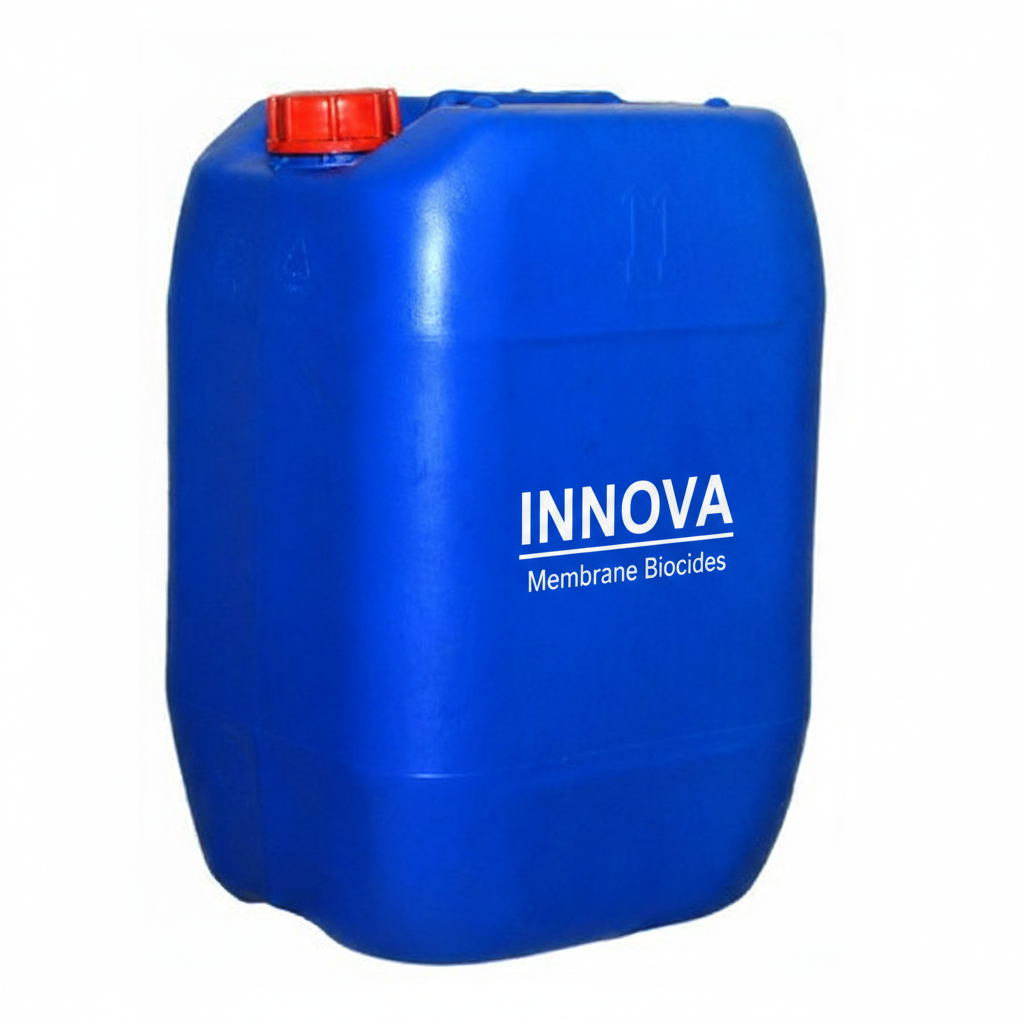
High-Efficacy Membrane Biocides for Qatar's RO, NF & UF Water Treatment Systems
Innova Corporate (India) is a leading manufacturer, supplier and exporter of advanced membrane biocides in Qatar. We provide world-class disinfection solutions designed to eliminate microbiological growth in water treatment plants across Qatar — from the SWRO and IWPP complexes that supply the country's municipal water to the industrial RO facilities serving petrochemical, power and manufacturing operations. Our biocides are formulated using high-purity raw materials to ensure maximum pathogen control while adhering to strict industrial quality and safety standards.
Our membrane biocide in Qatar range is essential for preventing bio-fouling and the spread of water-borne diseases. We offer two specialized variants: oxidizing and non-oxidizing microbiocides. These formulations are engineered for the disinfection of RO, NF and UF membranes across Qatar. Our oxidizing variant is specifically designed to be safe for potable water systems, offering a broad-spectrum kill rate against bacteria, algae and fungi. The non-oxidizing variant provides extended residual protection and compatibility with polyamide and TFC membranes — a critical requirement for Qatar's SWRO fleet where membrane integrity drives operational economics.
Key Features & Strategic Benefits in Qatar:
- Broad-Spectrum Control: Rapidly eliminates a wide variety of microorganisms and prevents biofilm formation — including heterotrophic bacteria, algae, fungi and sulfate-reducing organisms.
- Dual Variant Portfolio: Both oxidizing (potable-safe) and non-oxidizing (membrane-safe) formulations available — plants can select the right chemistry for each application.
- Chlorine-Free Formula: Totally chlorine-free, ensuring no oxidative damage to sensitive polyamide membranes — critical for Qatar's TFC-based SWRO plants.
- Potable Water Safe: Formulations available that are fully compliant with drinking water safety standards — suitable for Qatar's municipal water supply chain.
- Biodegradable & Eco-Friendly: Breaks down into non-toxic components, minimizing environmental impact in Qatar and aligning with Qatar National Vision 2030 sustainability goals.
- System Compatibility: Fully compatible with all RO membrane types, housings and system components — including the stainless steel CIP piping used across Qatar's industrial infrastructure.
- Enhanced Flux Maintenance: Prevents the slimy deposits that cause pressure drops and flux decline in Qatar plants — maintaining stable permeate flow through every season.
- Low Dosage Economics: Highly effective even at low concentrations, making them a cost-efficient choice for industrial and municipal water plants in Qatar.
Oxidizing vs Non-Oxidizing Biocides: When to Use Which in Qatar
Membrane biocide selection in Qatar depends on the specific application and membrane type. Oxidizing biocides provide rapid microbial kill and are well-suited for pretreatment disinfection of potable water systems, raw water intake treatment, and CIP cycles where contact time is controlled. They are effective against a broad range of organisms and break down quickly after use. Non-oxidizing biocides are the preferred choice for continuous dosing in membrane systems — they do not attack polyamide or TFC membrane active layers, provide extended residual protection through the system, and are effective against biofilm-forming organisms that resist oxidizing chemistries. For Qatar's SWRO plants, non-oxidizing biocides are the standard for continuous feed-side protection. For potable water systems, oxidizing biocides offer superior safety and regulatory compliance. Many facilities use both — oxidizing for periodic shock treatment and non-oxidizing for continuous protection.
Oxidizing vs Non-Oxidizing Biocides: Qatar Application Guide
| Parameter | Oxidizing Biocide | Non-Oxidizing Biocide |
|---|---|---|
| Primary Application | Pretreatment, potable water | Continuous membrane protection |
| Membrane Compatibility | Requires controlled dosing | Fully compatible with all membranes |
| Residual Protection | Short-lived | Extended (days to weeks) |
| Biofilm Penetration | Limited | Excellent |
| Typical Dose (Continuous) | Not recommended | 1 – 5 ppm |
| Typical Dose (CIP/Shock) | 5 – 100 ppm | 50 – 200 ppm |
| Potable Water Approved | Yes (specific products) | Yes (specific products) |
Case Study: SWRO Plant Near Al Gharrafa with Mixed Biocide Program
A large SWRO facility near Al Gharrafa was using only oxidizing biocide for both pretreatment and periodic CIP. The plant was facing recurring problems: biofilm formation on first-stage membranes despite regular cleaning, occasional membrane performance loss after CIP (likely from chlorine exposure during the disinfection cycle), and declining salt rejection on the lead elements after 24 months of operation. The facility adopted a mixed biocide program using Innova's non-oxidizing biocide at 2 ppm continuous dosing into the feed line, plus the oxidizing biocide for periodic shock treatment during extended shutdowns (with proper membrane isolation). Over the following 12 months, biofilm formation on first-stage membranes dropped to negligible levels, no further membrane performance loss after CIP was observed, and the affected membranes recovered significant salt rejection. The facility now runs a documented two-product biocide program with clear guidance on when to use each chemistry. The sister facility in the Madinat Khalifa industrial area adopted the same approach.
Regular application of our microbiocides in Qatar not only ensures sterile water output but also significantly extends the life of your membranes by preventing irreversible biological fouling. These products are highly effective even at low concentrations, making them a cost-efficient choice for industrial and municipal water plants in Qatar. Whether you operate a single RO train or a multi-site water treatment operation, our biocide portfolio gives you the flexibility to address every microbial control scenario with the correct chemistry.
Frequently Asked Questions — Membrane Biocides in Qatar
Q1: How do I choose between oxidizing and non-oxidizing biocide for my Qatar plant?
The choice depends on the application. For continuous protection of SWRO and industrial RO membranes,
non-oxidizing biocide is the standard choice because it does not damage polyamide or TFC membranes.
For pretreatment disinfection, raw water treatment or potable water systems, oxidizing biocide offers
rapid kill and regulatory compliance. Most Qatar facilities benefit from having both in their
chemical program.
Q2: Can I use oxidizing biocide for continuous dosing in my Qatar RO plant?
No. Oxidizing biocides like chlorine attack polyamide and TFC membranes and should not be used for
continuous dosing on the RO feed. They can be used for pretreatment (with proper dechlorination
downstream) or for shock treatment during shutdowns (with membrane isolation). For continuous
protection, use non-oxidizing biocide.
Q3: Are your biocides safe for potable water systems in Qatar?
Yes. Both our oxidizing and non-oxidizing biocide variants are available in formulations that
comply with drinking water safety standards. These are suitable for Qatar's municipal water supply
systems, hotel water systems, hospital water systems, and any facility producing drinking water
from RO or SWRO processes.
Q4: Do you supply membrane biocides across Qatar?
Yes. We supply across Qatar including Al Luqta, Al Markhiya, Al Duhail, Al Sadd and Bin Mahmoud
through Hamad Port. Standard packaging of 25 kg, 250 kg and bulk drums is available with regular
dispatch from India. Bulk pricing and consolidated shipments are available for multi-site operators.
Storage & Handling: Store in original, tightly sealed containers in a cool, dry and well-ventilated area at your Qatar facility. Keep away from direct sunlight, heat sources and incompatible materials. Do not allow the product to freeze. For detailed dosing instructions, efficacy data and safety protocols, please refer to the Technical Data Sheet (TDS) and Material Safety Data Sheet (MSDS).